
Pruning
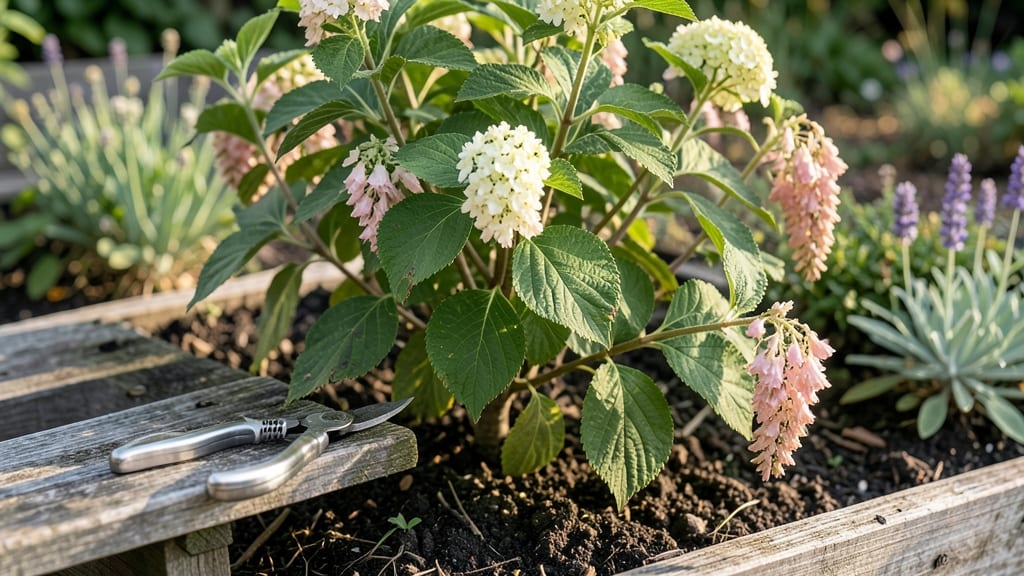
To prune Peegee hydrangeas, cut back faded stems by half after their first bloom cycle in late summer or early fall. This timing encourages vigorous new growth and ensures bigger, healthier blooms next season while maintaining the plant’s compact shape.
Peegee hydrangeas bloom on old wood, meaning last year’s growth produces this year’s flowers.
When you prune after blooming, you’re removing spent stems while leaving the plant’s energy reserves intact for next year’s buds. 🌿 The key is to trim only the faded stems—never the fresh green growth—since those contain next season’s flower buds.
I’ve seen dramatic results by pruning in September, just as the plant begins storing nutrients for winter dormancy.
This method also helps prevent overcrowding, which can lead to fewer but larger blooms. Many gardeners mistakenly prune in early spring, but this risks cutting off next year’s flower buds before they’ve formed.
For best results, use clean, sharp pruners and sterilize them with rubbing alcohol between cuts to prevent disease.
💡 In This Article
- Best Pruning Timing for Peegee Hydrangea Blooms
- Step-by-Step Guide to Pruning Peegee Hydrangeas
Best pruning timing for Peegee hydrangea blooms
Peegee hydrangeas bloom on last year’s growth, so the timing of your cuts directly impacts next season’s flower production. When you prune in late summer—typically between mid-August and early September—you’re tapping into the plant’s natural cycle.
This is when Peegee hydrangeas begin storing carbohydrates in their roots for winter dormancy, and removing faded stems redirects that energy toward new shoot development. Think of it like giving your plant a fresh start while preserving its energy reserves.
The science behind this involves auxin hormones, which regulate cell growth. When you cut back stems, auxin levels drop, triggering the plant to produce new lateral shoots from dormant buds. These new shoots will develop into next year’s flower clusters.
If you prune too early (spring), you risk cutting off these potential buds before they’ve formed, while waiting too long (late fall) can leave the plant vulnerable to winter damage. 🌿 The ideal window is just after the first flush of blooms has faded but before hard frosts arrive.
Contrast this with early-spring pruning, which is risky for Peegee varieties. Many gardeners make the mistake of trimming in March or April, but this often removes the flower buds that formed on last year’s stems.
These buds are already set by late summer, and cutting them off prematurely can leave you with sparse or no blooms. I’ve seen Peegee hydrangeas completely skip flowering after aggressive early-spring pruning—something you definitely want to avoid with this showy shrub.
Another critical factor is your climate zone. In warmer regions (zones 7-9), you might extend your pruning window into early October, while gardeners in colder zones (5-6) should finish by mid-September. The goal is to complete pruning before the first hard frost, which typically occurs around 28°F.
This timing ensures the plant has time to heal and won’t be stressed by winter conditions after being cut back.
For visual confirmation, look for stems that have completely finished blooming and are turning brown at the tips. These are your candidates for pruning. Leave any stems that still have green growth or new buds—they’re carrying next year’s potential flowers.
The visual cue of faded blooms paired with brown stem tips is your green thumb’s best guide to perfect timing. 💫
What most people don’t realize is that Peegee hydrangeas respond differently to pruning than other varieties like Bigleaf or Panicle types. While those can be pruned more aggressively in early spring, Peegees require this delicate late-summer approach.
The payoff? A bushier plant with more abundant blooms that arrive earlier in the season—often by 2-3 weeks compared to unpruned plants.
To maximize results, combine your late-summer pruning with a 2-inch layer of mulch around the base. This helps retain moisture and protects the roots during winter, giving your Peegee the best chance to recover and produce stunning blooms next year.
The combination of proper timing and follow-up care makes all the difference in transforming a lackluster shrub into a garden star. ✨