
Watering
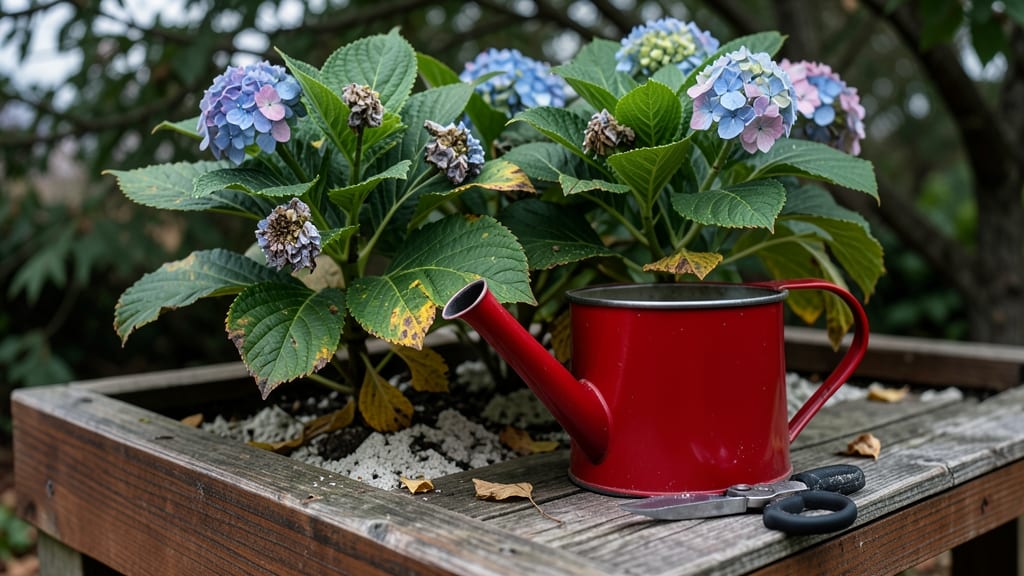
Your drooping hydrangeas might just need a 5-minute soak to bounce back—no drama, just science. 💧 I’ve revived wilted heads in my own garden with this simple trick, and the difference is shocking within hours.
The key is diagnosing whether they’re thirsty, overwatered, or struggling with pests before jumping to solutions.
Most wilt happens from either too much or too little water, but pests like spider mites or fungal issues can sneak in too. Start by checking the soil: if it’s bone-dry, a deep soak restores moisture fast.
If it’s soggy, let it dry out before watering again. For pests, a blast of water from the hose often knocks them off—no harsh chemicals needed.
Once you’ve fixed the root cause, your hydrangeas will perk up with vibrant green leaves and fuller blooms within days. The secret is consistency: water deeply 2-3 times a week (depending on your climate) and mulch to keep roots happy. This method works for bigleaf, oakleaf, and panicle types alike.
For stubborn cases, a weekly foliar spray with neem oil keeps pests at bay, and pruning deadheads in early fall prevents next year’s wilting. Trust me—your hydrangeas will thank you with lush, show-stopping blooms all season long.
Root Causes of Wilting
When your hydrangeas start looking droopy and sad, it’s usually a sign that something’s gone awry beneath the surface. Understanding the why behind wilting is the first step to bringing them back to life.
Let’s break down the most common culprits—each with a clear scientific explanation and actionable insights to help you diagnose the issue.
Hydrangeas are thirsty plants, but too much water—especially in poorly draining soil—can suffocate their roots. When soil stays soggy, oxygen can’t reach the roots, leading to anaerobic conditions. This forces roots to switch to inefficient fermentation for energy, weakening them and causing wilting.
🔍 Signs:
- Yellowing leaves (chlorosis)
- Mushy, blackened stems at the base
- Soil that stays damp for days after watering
💡 Fix: Ensure your hydrangeas are planted in well-amended soil with organic matter (like compost) to improve drainage. If your garden soil is heavy clay, consider raised beds or containers with drainage holes.
Hydrangeas are sensitive to temperature swings. Prolonged heatwaves or drought force plants into water stress, causing cells to lose turgor pressure (the "plumpness" that keeps stems upright). Without enough water, leaves curl, stems droop, and buds fail to open.
🔍 Signs:
- Crispy, brown leaf edges
- Dry, brittle stems
- Soil pulling away from pot edges (if container-grown)
💡 Fix: Water deeply 1–2 inches per week (more in extreme heat). Mulch around the base to retain moisture and protect roots from temperature shocks. Morning watering is best—it reduces evaporation and fungal risks.
Cold snaps can damage hydrangea roots, especially if they’re not winter-hardy varieties (like Hydrangea macrophylla, which thrives in USDA Zones 5–9). Frozen roots can’t absorb water or nutrients, leading to wilting even if the soil seems moist.
🔍 Signs:
- Wilting despite damp soil
- Blackened or mushy root tips
- Slow recovery after cold nights
💡 Fix: In colder climates, mulch heavily (3–4 inches) with straw or leaves. For potted hydrangeas, move them to a sheltered spot or wrap containers in bubble wrap. Avoid watering before frost—wet roots freeze faster.
Sap-sucking pests (like aphids or spider mites) and fungal diseases (such as powdery mildew) weaken hydrangeas by disrupting nutrient flow. Infestations clog stomata (leaf pores), reducing water uptake and causing wilting.
🔍 Signs:
- Sticky residue (honeydew) on leaves
- White webbing or tiny bugs on undersides of leaves
- Grayish-white fungal growth on stems/leaves
💡 Fix: Spray leaves with neem oil or insecticidal soap for pests. For fungal issues, prune affected areas and apply a copper fungicide. Improve airflow by spacing plants 3–5 feet apart.
Now that you know the why, the next step is reviving your hydrangeas with targeted care. Stay tuned for our quick-soak revival method to bring them back to full, lush glory!
Quick Fixes to Restore Life
Reviving wilted hydrangeas starts with identifying the root cause—but once you know the issue, action is simple! Below are practical, step-by-step solutions tailored to common problems, plus prevention tips to keep your blooms thriving. Think of this as your hydrangea first-aid kit!
Problem: Soggy soil or compacted roots suffocate hydrangeas, causing wilting even when thirsty.
Fix It Fast:
- Stop Watering Immediately 🚰
- Let the soil dry out completely before watering again. Stick your finger 2 inches deep—if damp, wait 24–48 hours.
- Improve Drainage 🏗️
- Amend the soil with perlite, sand, or compost (20% mix) to loosen it. For container plants, repot if roots are circling or mushy.
- Prune Damaged Roots ⚰️ (If Severe)
- Gently loosen the soil and trim any black, mushy roots with sterilized scissors. Replant in fresh, well-draining soil.
- Revive with a Soak 🌧️
- After 2–3 days of dryness, give a deep watering (1–2 gallons per plant) to rehydrate roots without drowning them.
Prevent Future Issues:
- Water at the base (avoid overhead spraying).
- Use a moisture meter or your finger to check soil before watering.
- Choose pots with drainage holes—no exceptions!
Problem: Wilting in hot weather? Hydrangeas need consistent moisture—skipping watering = limp leaves.
Fix It Fast:
- Soak the Roots 💦
- Water deeply (6–8 inches down) until it drains from the bottom. Repeat every 2–3 days in heatwaves.
- Mulch Like a Pro 🌿
- Spread 2–3 inches of mulch (wood chips, straw) around the base to retain moisture and cool roots.
- Provide Temporary Shade 🌳
- Use a lightweight shade cloth (30–50%) or move potted plants to a morning-sun spot for 1–2 weeks.
- Fogging Trick 🌫️ (For Extreme Cases)
- Mist leaves early morning/evening to boost humidity (avoid midday to prevent fungal issues).
Prevent Future Issues:
- Water early morning (6–9 AM) to reduce evaporation.
- Group plants together to create a microclimate.
- Upgrade to self-watering pots for forgetful gardeners!
Problem: Yellow leaves or weak stems? Hydrangeas may be starving for key nutrients.
Fix It Fast:
- Flush the Soil 🚿
- Water heavily to leach out salt buildup, then apply a balanced fertilizer (10-10-10) at half strength.
- Target-Specific Fixes 📊
- Yellow leaves? → Iron supplement (chelated iron) for chlorosis.
- Purple stems? → Potassium boost (banana peel tea or wood ash).
- Slow growth? → Nitrogen-rich fertilizer (fish emulsion or compost tea).
- Epsom Salt Soak 🧂 (For Magnesium)
- Mix 1 tbsp Epsom salt per gallon of water and drench the soil monthly.
Prevent Future Issues:
- Fertilize in early spring (before blooming) and mid-summer (after pruning).
- Use organic matter (compost, worm castings) to improve soil long-term.
- Avoid over-fertilizing—hydrangeas prefer moderate feeding over heavy doses.
Problem: Bugs like aphids, spider mites, or slugs sap energy, causing wilting.
Fix It Fast:
- Spot the Culprits 🔍
- Check undersides of leaves (aphids), webs (spider mites), or chewed edges (slugs).
- Blast Them Off 💦
- Aphids/Mites: Spray with soapy water (1 tsp mild soap + 1 quart water) or neem oil.
- Slugs: Set up beer traps (bury a cup filled with beer) or use diatomaceous earth around the base.
- Encourage Predators 🐞
- Attract ladybugs or birds with nearby native plants to keep pests in check.
Prevent Future Issues:
- Inspect plants weekly during growing season.
- Remove debris where pests hide.
- Use row covers for young plants.
No matter the issue, this 3-step reset works for most wilted hydrangeas:
- Prune Dead Blooms ✂️ – Cut back wilted flowers to redirect energy to new growth.
- Deep Water + Mulch 🌧️🌿 – Soak roots and protect soil moisture.
- Monitor & Adjust 📅 – Check soil moisture daily for 1 week, then taper to 2–3x/week.
Pro Tip: 💡 If all else fails, trim back 1/3 of the plant—hydrangeas are resilient and often bounce back with fresh growth!
Frequently asked questions
How long does it take to revive wilted hydrangeas with a quick soak?
Most hydrangeas show noticeable improvement within 24-48 hours after a deep soak, especially if wilting was caused by thirst. For severe cases (like root suffocation), expect 3-5 days of consistent care before full recovery. Monitor soil moisture daily and adjust watering as needed!
Can I use tap water or should I use rainwater for reviving hydrangeas?
Tap water works fine for most cases, but rainwater is ideal because it's naturally soft and free of chlorine/fluoride that can build up in soil over time. If you must use tap water, let it sit out for 24 hours before watering to allow chlorine to dissipate. For container plants, rainwater reduces salt buildup that can stress roots.
What's the difference between wilting from overwatering vs. underwatering?
Overwatered hydrangeas have yellow leaves, mushy stems, and soil that stays damp for days, while underwatered ones show crispy brown edges, dry soil, and pull away from pot edges. The key test: stick your finger 2 inches deep—if it's bone-dry, they're thirsty; if soggy, they're drowning. Both need opposite fixes!
Will pruning help revive wilted hydrangeas, or should I wait?
Pruning dead blooms and damaged stems is actually one of the fastest ways to revive hydrangeas! Cut back wilted flowers to the first set of healthy leaves, and remove any blackened or mushy stems. This redirects the plant's energy to new growth. Just avoid heavy pruning until you've addressed the root cause (like water issues).
Can I revive hydrangeas that have been wilted for more than a week?
It depends! If the roots are still alive (check by gently tugging on stems—if they resist, roots are intact), you can revive them with consistent care. For plants that have been wilted for 10+ days, focus on saving the roots first: trim back all foliage, soak the roots, and monitor closely. Many gardeners successfully revive plants that look completely dead—hydrangeas are tougher than they appear!