
Watering
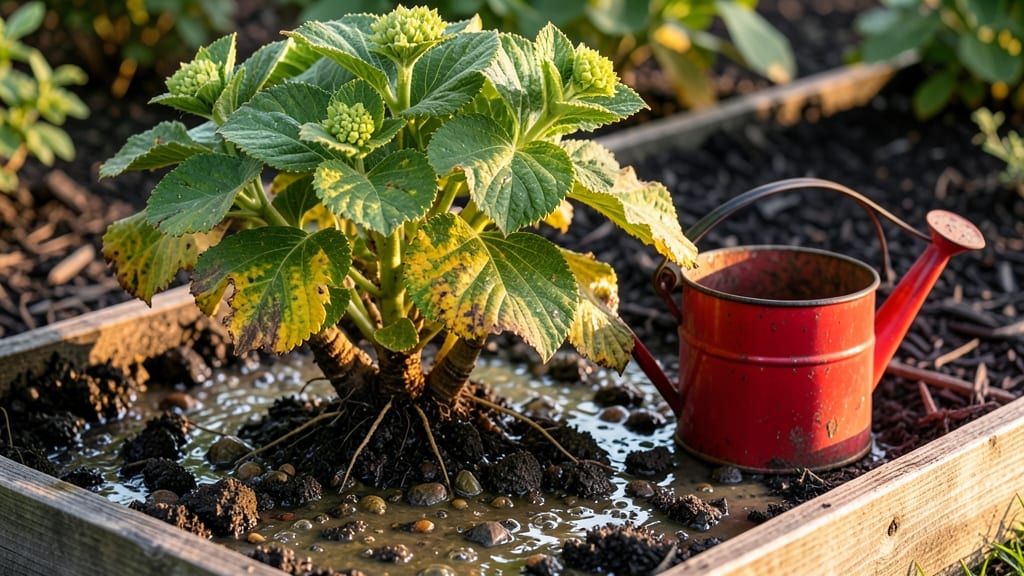
Your hydrangeas might be drowning in water, not thirsty for more. 💧 I’ve watched overwatered hydrangeas go from lush blooms to sad, yellowing messes—and the first sign is often those telltale limp stems and soggy leaves you’d swear were just fine yesterday.
When roots sit in wet soil for too long, they suffocate, leading to yellowing leaves that start at the bottom and creep upward. Worse, stems turn mushy when you touch them, and the plant smells faintly sour—like a damp basement.
This isn’t wilting from heat; it’s a silent cry for help from roots that can’t breathe.
Fixing it starts with letting the soil dry out completely before watering again. Dig around the base to check for rot, and if the roots look dark or mushy, trim them back to healthy tissue.
Then, improve drainage by adding compost or perlite to the soil—hydrangeas hate soggy feet just like we do.
Once you’ve adjusted watering, keep an eye out for new growth. Within weeks, those sad stems should firm up, and fresh leaves will emerge in vibrant green. Prevention? Stick your finger in the soil before watering—if it’s damp, wait another day. Trust me, your hydrangeas will thank you.
Root Causes Of Overwatering
Overwatering your hydrangeas might seem like a harmless mistake—after all, who doesn’t love a lush, thriving plant? But too much water can actually suffocate your hydrangeas, leading to those dreaded yellowing leaves and mushy stems.
Let’s break down the science behind why this happens, so you can fix the problem at its source.
Hydrangeas thrive in well-draining soil, but if your garden beds or pots lack proper drainage, excess water lingers around the roots. Here’s why this is a disaster:
- Oxygen Deprivation: Roots need oxygen to breathe. When soil stays soggy, oxygen gets displaced by water, forcing roots to suffocate. This triggers anaerobic conditions, where harmful bacteria and fungi multiply, rotting roots and stems.
- Nutrient Lockout: Overwatered soil washes away essential nutrients like nitrogen, phosphorus, and potassium—critical for leaf health. Without these, chlorophyll production drops, leading to yellowing foliage.
- Compacted Soil: Heavy clay or poorly amended soil compacts when wet, creating air pockets that trap water instead of allowing it to drain. Test your soil: If it stays damp for more than a day after watering, drainage is likely the culprit.
Pro Tip: 💡 Amend heavy soil with perlite, sand, or compost to improve aeration. For pots, use a mix with 30% perlite or orchid bark to prevent waterlogging.
Even with good drainage, watering too frequently or giving your hydrangeas more than they need can lead to disaster. Here’s how:
- Frequency Over Need: Hydrangeas typically need 1–1.5 inches of water per week, including rainfall. If you water daily (especially in humid climates), roots never dry out, creating a breeding ground for root rot.
- Surface Watering: Pouring water directly onto leaves or stems can cause fungal infections (like powdery mildew) while also oversaturating the soil. Always water at the base of the plant.
- Ignoring Seasonal Needs: Newly planted hydrangeas need more water to establish roots, but mature hydrangeas in winter often require little to none. Overwatering in cold, dormant months stresses the plant unnecessarily.
Quick Fix: ⏰ Use your finger to check soil moisture—if the top 1–2 inches are dry, it’s time to water. If it’s still damp, wait.
Sometimes, overwatering isn’t your fault—it’s Mother Nature’s doing. Watch for these red flags:
- Heavy Rainfall + Poor Drainage: A week of downpours can drown hydrangeas if the soil doesn’t dry between rains. Yellow leaves after storms? That’s your clue.
- Shady, Humid Spots: Hydrangeas love shade, but low sunlight slows evaporation, keeping soil wet longer. Combine this with high humidity, and you’ve got a recipe for botrytis blight (a fungal disease that causes brown, mushy stems).
- Container Constraints: Pots dry out faster than garden beds, but small pots with no drainage holes act like water traps. Even if you water less, the confined space keeps roots soggy.
Solution: 🌡️ Move potted hydrangeas to a slightly sunnier spot in summer to speed up drying. For garden plants, ensure they’re in a location with partial shade and good airflow.
Once soil stays too wet, pathogens move in. The most common offenders:
- Phytophthora Root Rot: A water-loving fungus that thrives in soggy conditions. It blocks water and nutrient uptake, causing wilting, yellowing, and blackened roots.
- Pythium & Rhizoctonia: These fungi attack roots and stems, leading to mushy, discolored tissue that collapses easily. You might even see white, cottony growth at the soil line.
- Bacterial Soft Rot: Caused by Erwinia bacteria, this turns stems brown and mushy within days. It spreads rapidly in wet, warm conditions.
Prevention Tip: ✨ If you suspect fungus or bacteria, stop watering immediately and let the soil dry completely. For severe cases, prune affected stems with sterilized shears and treat with a copper fungicide.
Fixing Overwatered Hydrangeas Fast
Now that you’ve spotted the warning signs—yellowing leaves, drooping stems, or even that dreaded mushy rot—it’s time to take action. The good news? Hydrangeas are resilient, and with the right steps, you can nurse them back to health.
Below, we’ll match the cause of your hydrangea’s woes with the best fix, plus tips to keep them thriving long-term.
Problem: Your hydrangea’s roots are drowning in soggy soil, starved of oxygen, and breeding fungus or bacteria.
How to Fix It:
- 🔥 Stop Watering Immediately Let the soil dry out completely before watering again. Stick your finger 2 inches into the soil—if it’s damp, wait.
- 🍳 Improve Drainage with Aeration
- Dig around the base of the plant (6–12 inches deep) to loosen compacted soil.
- Mix in organic matter like compost, perlite, or coarse sand to break up clay-heavy soil.
- For containers, repot into a mix with 30% perlite or orchid bark to prevent future sogginess.
- 👨🍳 Raise the Plant (If Needed) If your hydrangea sits in a low spot where water pools, mound soil or use a garden ring to create a slight elevation.
💡 Prevention Tip: Plant hydrangeas in well-draining soil and avoid heavy clay. If your yard floods easily, consider a raised bed or container gardening.
Problem: Mushy, blackened stems or white fungal growth mean rot has set in—often from overwatering + poor airflow.
How to Fix It:
- ⏰ Trim the Damage Use sterilized pruners to cut away all mushy, discolored stems back to healthy green tissue. Dispose of infected parts in the trash (not compost).
- 🔪 Apply Fungicide (If Needed) Spray with a copper-based fungicide or neem oil solution to prevent spread. Reapply every 7–10 days if humidity is high.
- 🌡️ Adjust Watering & Airflow
- Water only at the base (avoid wetting leaves to reduce fungal spores).
- Prune nearby plants to improve air circulation around your hydrangea.
💡 Prevention Tip: Space hydrangeas 3–5 feet apart and avoid overhead watering. In humid climates, water in the early morning so foliage dries quickly.
Problem: Too much water + too many nutrients = fertilizer burn, causing yellow leaves with brown edges.
How to Fix It:
- 🥗 Flush the Soil Water deeply for 10–15 minutes to leach excess salts/nutrients from the root zone.
- 🍎 Hold Off on Fertilizer Skip feeding for 4–6 weeks to let the plant recover. Resume with a balanced, slow-release fertilizer (like 10-10-10) in spring.
- 📊 Check Your Water If your tap water is hard (high in minerals), use rainwater or distilled water for watering moving forward.
💡 Prevention Tip: Follow the rule of thumb: Fertilize once in early spring and once in midsummer—hydrangeas don’t need heavy feeding!
Problem: Pots without drainage holes or overwatering in containers lead to root rot faster than in-ground plants.
How to Fix It:
- ✨ Drainage First! If your pot lacks holes, drill them (or repot immediately). Use a cache pot (a pot-within-a-pot) with gravel at the bottom to slow drainage.
- 🔥 Adjust Watering Schedule
- Check soil moisture daily—containers dry out faster but also drain faster.
- Water only when the top 1–2 inches are dry (stick your finger in to test).
- 🌱 Repot if Necessary If roots are circling or the soil is waterlogged, repot into a slightly larger container with fresh, well-draining mix.
💡 Prevention Tip: Use terracotta pots (they wick away moisture) and avoid saucers unless they have drainage holes. Elevate pots on feet or pebbles to prevent water pooling.
Final Thought: Most hydrangeas bounce back within 2–4 weeks with proper care. Monitor their progress, and soon you’ll have lush blooms instead of sad, soggy stems! 🌸
(Need a quick cheat sheet? Bookmark this: Less water + better soil = happy hydrangeas.)
Frequently asked questions
Why do my hydrangea leaves turn yellow first at the bottom?
Yellowing leaves starting from the bottom are classic signs of root stress from overwatering. When roots sit in soggy soil, they can't absorb oxygen or nutrients, causing the oldest leaves (with the longest nutrient journey) to show symptoms first. This is your hydrangea's way of saying, "I'm drowning!"
How can I tell if my hydrangea has root rot?
Gently pull back the mulch and check the soil—if it smells sour or looks waterlogged, that's your first clue. Look for dark, mushy roots instead of firm white ones. When you touch the stems, they should feel firm; if they're soft or collapse when pressed, you're dealing with rot.
Can I save my hydrangea if the stems are already mushy?
Yes, but act fast! Cut back all mushy stems to healthy green tissue with sterilized shears, then let the soil dry completely. For severe cases, repot with fresh, well-draining mix. With proper care, new growth should emerge within 2-4 weeks—just be patient and resist the urge to water until the soil is truly dry.
Is it better to underwater than overwater hydrangeas?
While both extremes are bad, hydrangeas are more forgiving of underwatering than overwatering. They can handle wilting better than they can handle soggy roots. The key is consistent moisture—water when the top 1-2 inches of soil are dry, then let it dry slightly between waterings to encourage deep root growth.
Will my hydrangea bloom again if I've overwatered it?
Hydrangeas are surprisingly resilient. Once you correct the watering habits and improve drainage, your plant will focus energy on recovery. You might see fewer blooms that first season as it regrows roots, but with proper care, it'll bounce back stronger than ever for next year's flowers.