
Aphids
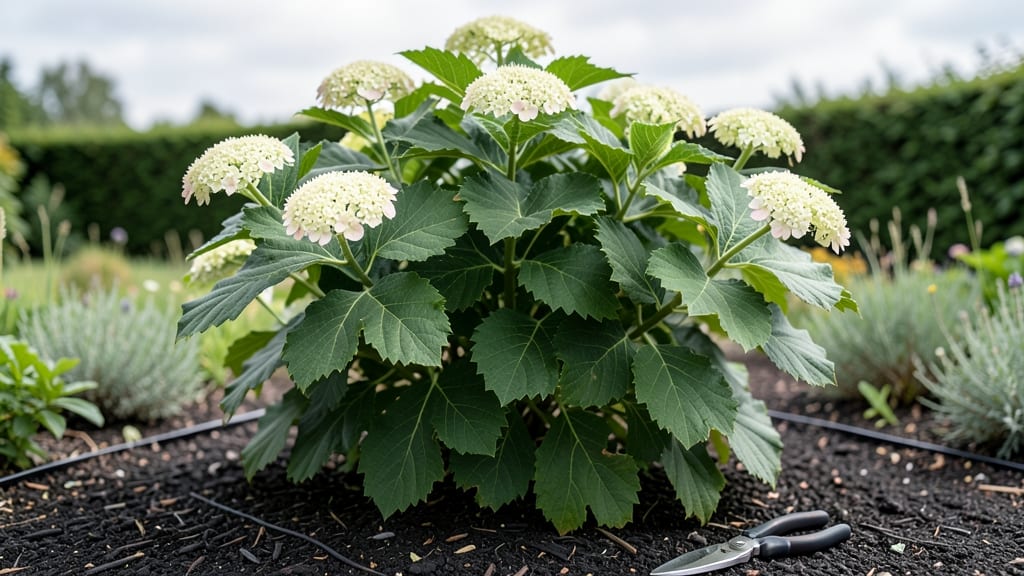
Your shade garden just got an elegant upgrade with Snowflake Oakleaf Hydrangea—those delicate white lacecap blooms and stunning oak-shaped leaves transform any dim corner into a dreamy retreat. 🌿 I fell for this variety after struggling with floppy hydrangeas in my wooded backyard; pole training keeps it upright while showcasing its architectural beauty all season long.
This hydrangea thrives where others fail: partial to full shade, rich but well-draining soil, and consistent moisture. The secret to its success? A sturdy support pole for those cascading branches and a pruning schedule that encourages both foliage and flowers.
Unlike mophead types, Snowflake blooms on old wood, so timing matters—cut back in late winter before new growth appears.
By summer, you'll be rewarded with clusters of snow-white flowers that last for weeks, followed by striking fall foliage in shades of burgundy and gold. The fragrance? Lightly sweet, like a summer breeze through a garden. Even in challenging shade spots, this variety delivers year-round interest with minimal fuss.
Perfect for foundation plantings, woodland gardens, or even container training near patios. The only challenge? Resisting the urge to prune too aggressively—this hydrangea rewards patience with dramatic seasonal transformations. Let's get yours established for a shade garden showstopper.
📚 In This Guide
- What you need
- Instructions
- Tips and common mistakes
- Wrapping up and next steps
What you need
- ● Snowflake Oakleaf Hydrangea (Hydrangea quercifolia ‘Snowflake’) – 1 mature plant (3–5 gallons) or 3–5 bare-root or container-grown young plants for better spacing.
- ● Pole or trellis – 6–8 ft tall, 1–2 inches in diameter (cedar or untreated wood recommended for longevity).
- ● Garden soil – Well-draining, slightly acidic (pH 5.0–6.0). Amend with compost (5–10 gallons) or peat moss (2–3 bags) if your soil is heavy clay.
- ● Mulch – 2–3 inches of pine bark or wood chips (avoid dyed mulch—it can harm roots!).
- ● Slow-release fertilizer – Balanced (10-10-10 or 20-20-20), 1–2 lbs per plant, applied in early spring.
- ● Pruning shears – Sharp, bypass-style shears (sterilize with rubbing alcohol between cuts!).
- ● Garden gloves – Heavy-duty (hydrangeas can be thorny!).
- ● Tape measure – To ensure proper spacing (10–15 ft apart for mature plants).
- ○ Stakes or twine – For temporary support while training vines to the pole (optional but helpful for young plants).
- ● Hydrangea food – Acid-loving plant supplement (like Miracle-Gro Azalea, Camellia & Rhododendron) for extra blooms.
- ● Watering can or hose with nozzle – Deep-watering capability (1–2 gallons per plant, 2–3 times per week).
- ● Plant tie or soft Velcro straps – To gently secure stems to the pole without damaging bark.
- ● Soil pH test kit – To monitor acidity (aim for blue hydrangea blooms with lower pH!).
Step-by-step guide to pole-training a Snowflake oakleaf hydrangea
This elegant shrub thrives when guided upward—here’s how to coax its delicate blooms into a vertical masterpiece.
🪴 Step 1: Select and Prepare the Planting Site
The snowflake oakleaf hydrangea (Hydrangea quercifolia ‘Snowflake’) loves partial to full shade and rich, moist soil. Choose a spot with 4-6 hours of dappled sunlight—morning sun and afternoon shade work best. If your soil drains poorly, amend it with 2-3 inches of organic compost mixed into the top 12 inches of soil.
Dig a hole twice as wide as the root ball but only as deep—planting too deep suffocates roots. Gently loosen the roots if they’re circling the pot, then position the plant so the top of the root ball sits 1 inch below soil level. This slight burial prevents stem rot while encouraging strong root growth.
☀️ Step 2: Install the Training Pole and Prune for Structure
Drive a 5-6 foot tall bamboo or metal trellis stake into the ground 6 inches from the plant’s main stem. Use a soft garden twine or flexible plant tie to loosely secure the hydrangea’s strongest upright stem to the pole. Avoid tight ties—they’ll girdle the stem as it thickens. I like to tie in a figure-eight pattern to allow growth while providing support.
At planting, cut back any weak or crossing stems to 4-6 inches from the base. This encourages 3-5 strong vertical shoots that will form the backbone of your trained plant. Leave 2-3 buds on each remaining stem—these will sprout into next year’s blooms. Prune in early spring before new growth begins.
🌿 Step 3: Water and Mulch for Vertical Growth
Water deeply right after planting to settle the soil around roots, then once weekly for the first month—2-3 gallons per plant—to ensure the root ball stays moist. Oakleaf hydrangeas hate soggy feet but wilting signals stress. Check soil moisture by sticking your finger 2 inches deep; if dry, water again. Mulch with 3 inches of shredded bark or pine needles to retain moisture and protect roots from temperature swings.
Fertilize lightly in early spring with a balanced 10-10-10 formula (½ cup per plant). Too much nitrogen promotes leafy growth at the expense of flowers. I skip fall fertilization—hydrangeas need a rest period to set next year’s buds. Watch for yellowing leaves in late summer; this is normal as the plant prepares for dormancy.
✂️ Step 4: Train and Prune for Seasonal Blooms
By late spring, guide the main stem upward, tying it to the pole every 12-18 inches as it grows. Remove any suckers at the base—these drain energy from your vertical display. In summer, pinch back the tips of side branches to encourage fuller blooms. The goal is a tapered, tree-like shape with the largest flowers at the top.
In winter, cut back dead or damaged stems to just above a healthy bud. Never prune into old wood—oakleaf hydrangeas bloom on new wood, so late winter/early spring cuts ensure vibrant summer flowers. If your plant outgrows the pole, replace it with a taller stake in early spring before new growth starts.
🌱 Step 5: Maintain and Enjoy Year-Round Interest
Oakleaf hydrangeas reward patience with four-season beauty. In fall, their leaves turn crimson or burgundy, and the exfoliating bark adds winter texture. Prune lightly in late winter to shape, but avoid heavy cuts—this shrub’s charm lies in its natural, layered growth. If flowers fade, deadhead spent blooms in late summer to redirect energy to next year’s buds.
For long-term success, feed lightly in early spring and water during droughts. A mature pole-trained hydrangea will produce 6-8 foot vertical cascades of white, lacecap blooms by mid-summer. The key is consistent training—like a bonsai, it responds best to gentle guidance over time. With this method, your snowflake hydrangea will become the centerpiece of any shaded garden.
Tips & tricks for pole-trained hydrangea mastery
Here's what nobody tells you about transforming your snowflake oakleaf hydrangea into a vertical showstopper.
Soil Science Matters: The 2-3 inches of organic compost we mix into the top 12 inches of soil isn't just about drainage—it's about creating a sponge-like environment that holds moisture while preventing compaction. I've seen hydrangeas struggle in amended soil that was too finely tilled, so use a broadfork to loosen the soil without destroying its structure. The goal is to mimic the leaf litter and organic matter these plants thrive in naturally. For heavy clay soils, consider adding perlite to improve aeration while maintaining moisture retention.
Pole Placement Precision: That 6-inch distance from the plant's main stem to the pole might seem arbitrary, but it's actually critical for stem development. Too close and you'll restrict growth; too far and the plant won't get proper support. I mark the spot with a stake before driving in the pole to ensure perfect placement. For larger plants, you might need two poles—position them at opposite sides of the main stem to create a natural V-shape as the plant grows upward.
Watering Wisdom: The 2-3 gallons per week recommendation is your baseline, but don't rely solely on a schedule. Oakleaf hydrangeas are drought-tolerant once established, but their large leaves transpire water quickly. I check soil moisture every morning during dry spells—if the top 2 inches are dry, it's time to water. Mulch acts as a moisture regulator, so maintain that 3-inch layer of shredded bark or pine needles. In containers, you'll need to water more frequently as potting mixes dry out faster.
Pruning Paradox: The early spring pruning window is non-negotiable for oakleaf hydrangeas, but there's an art to it. When you cut back those weak stems to 4-6 inches, look for the first set of buds—these are your growth points for the season. I make my cuts just above these buds at a 45-degree angle to prevent water from pooling on the cut surface. This technique ensures vigorous new growth while maintaining the plant's natural shape. Remember, these hydrangeas bloom on new wood, so aggressive pruning later in the season will remove next year's flower buds.
Pro Tips for Snowflake Oakleaf Hydrangea
- Here's what nobody tells you about transforming your snowflake oakleaf hydrangea into a vertical showstopper.
- Soil Science Matters: The 2-3 inches of organic compost we mix into the top 12 inches of soil isn't just about drainage—it's about creating a sponge-like environment that holds moisture while preventing compaction.
- Pole Placement Precision: That 6-inch distance from the plant's main stem to the pole might seem arbitrary, but it's actually critical for stem development.
Frequently asked questions
Got questions about growing and caring for Snowflake Oakleaf Hydrangea? You’re not alone! Here are answers to the most common queries—from planting to pest troubleshooting—so you can keep your shade garden thriving with ease.
When is the best time to plant Snowflake Oakleaf Hydrangea?
The ideal time to plant is in early spring or fall, when soil temperatures are cool (50–70°F). This gives roots time to establish before summer heat or winter frost. Avoid planting in mid-summer, as extreme heat can stress young plants. If you’re in a mild climate, fall planting is perfect—just make sure to water deeply before the first frost!
How fast does this hydrangea grow, and how big will it get?
Snowflake Oakleaf Hydrangea is a moderate grower, adding about 12–24 inches per year under ideal conditions. Mature size ranges from 8–12 feet tall and wide, but with pole training, you can guide it vertically to save space. Prune in late winter or early spring to control size and encourage bushier growth.
Are Snowflake Oakleaf Hydrangeas prone to aphids or other pests?
Yes, aphids and scale insects can be a nuisance, especially on new growth. To prevent infestations, inspect leaves regularly and spray with neem oil or insecticidal soap if needed. Encourage ladybugs and lacewings—natural predators that love munching on aphids! For severe cases, a hose blast can dislodge pests without chemicals.
Can Snowflake Oakleaf Hydrangea survive in full shade?
This variety thrives in partial to full shade (2–6 hours of sunlight daily), making it ideal for woodland gardens, north-facing walls, or under trees. However, too much deep shade (like dense forest canopies) may reduce flower production. If growth seems leggy, consider selective pruning or moving it to a slightly sunnier spot.
What’s the best way to overwinter Snowflake Oakleaf Hydrangea?
This hydrangea is hardy to USDA Zones 5–9, but young plants or those in Zone 5 may need extra protection. Mulch the base with 2–3 inches of organic mulch (like shredded bark) in late fall to insulate roots. In extreme cold (below 0°F), wrap the crown with burlap or a frost blanket. Avoid pruning until late winter to prevent frost damage to new buds.
What if my Snowflake Hydrangea isn’t flowering?
No flowers? Don’t panic! This variety blooms on old wood, so pruning in late winter/early spring (after blooms fade) is key. Ensure it gets adequate sunlight (at least 4 hours daily) and well-draining soil. Over-fertilizing with high-nitrogen feeds can also reduce blooms—opt for a balanced, acidic fertilizer (like 10-10-10) in early spring instead.
Wrapping up and next steps
The Snowflake Oakleaf Hydrangea is a stunning, low-maintenance choice for adding texture and elegance to shady spots in your garden. With its delicate blooms, vibrant foliage, and adaptability to pole training, it’s perfect for creating vertical interest—whether you’re a seasoned gardener or just starting out. 🌿
Ready to transform your space? Start by selecting the right spot, gathering your tools, and following the steps above. Before you know it, you’ll have a thriving, eye-catching garden feature that brings joy for years to come!