
Pruning
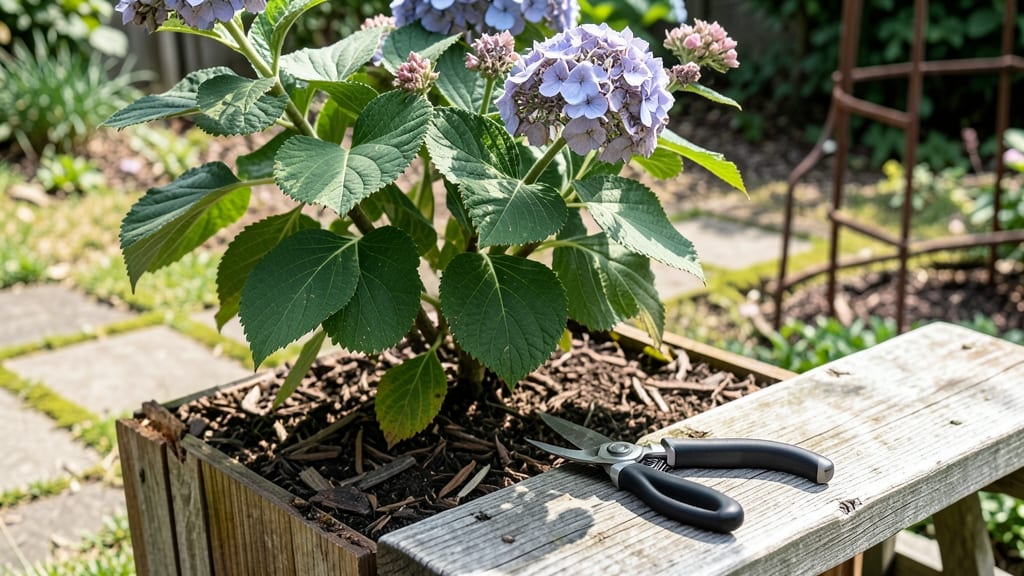
Trimming back hydrangeas for winter isn't just about tidying up—it's the secret to next year's showstopping blooms. ✂️ I learned this the hard way when my mophead hydrangeas produced half-sized flowers after a winter I skipped pruning.
The right cuts now mean bold, lush blooms by summer, not sad little clusters.
Timing matters most: wait until late fall or early winter after the first frost, but before hard freezes. This lets the plant heal before dormancy. You'll need sharp pruners, gloves, and a clear day—hydrangeas hate soggy stems.
The goal is to remove dead or weak growth while shaping the plant for next season's growth.
Three simple cuts transform a winter mess into a springtime powerhouse. First, snip out any brown, mushy stems at the base. Then, trim back 1/3 of the current year's growth to encourage new, vigorous shoots.
Finally, shape the plant by cutting just above a leaf node or outward-facing bud. This creates airflow and prevents pests from overwintering in dense foliage.
Regional timing varies: in zones 5-7, prune after the first frost but before 20°F temps; in warmer zones, wait until December or January. The payoff? Stronger stems, more blooms, and plants that bounce back faster after winter. Here's how to do it without a single guess.
📚 In This Guide
- What you need
- Instructions
- Tips and common mistakes
- Wrapping up and next steps
What you need
- ● Bypass pruners (sharp, clean, and sterilized with rubbing alcohol or a 10% bleach solution) – 1 pair (for small stems up to ½ inch thick).
- ● Loppers (long-handled, with a bypass blade) – 1 pair (for stems ½ to 1½ inches thick).
- ○ Hedge shears (for large, bushy hydrangeas like Hydrangea macrophylla) – 1 pair (optional but helpful for shaping).
- ● Gloves (gardening gloves with grip and cut-resistant palms) – 1 pair (to protect hands from thorns and sap).
- ● Disposable pruning saw (if dealing with thick, woody stems over 1½ inches) – 1 (for emergency cuts).
- ● Rubbing alcohol or bleach solution (1 part bleach to 9 parts water) – small bottle (for sterilizing tools between cuts).
- ● Garden twine or plant ties (if staking is needed for large hydrangeas) – 1 roll.
- ● Sharpie marker or labels (to mark specific cuts if needed) – 1.
- ● Wheelbarrow or bucket (for collecting pruned debris) – 1.
- ● Hose or watering can (to clean tools post-pruning) – 1.
- ● Hand pruners with a bypass blade – For smaller, detailed cuts on delicate stems.
- ● Knee pads – If your hydrangeas are ground-level or you’ll be kneeling for extended periods.
- ● Pruning sealant (for large cuts on older wood) – small tube (prevents disease entry).
- ● Notebook or pruning log – To track cuts and growth notes for future reference.
- ● Safety glasses – If working near dense foliage or using a saw.
Step-by-Step instructions for trimming back hydrangeas for winter
Here's how I simplify winter pruning—just three strategic cuts that keep your hydrangeas thriving year after year.
✂️ Step 1: Identify Your Hydrangea Type and Bloom Time
First, determine whether your hydrangea blooms on old wood (last year's growth) or new wood (current season's stems). Bigleaf and oakleaf varieties bloom on old wood, while panicle and smooth hydrangeas bloom on new wood. This distinction is critical—pruning at the wrong time will rob you of next year's flowers.
For old-wood bloomers, look for flower buds forming along last year's stems in late summer. These buds appear as plump, rounded growths near the stem tips. If you see them, you're dealing with an old-wood variety. New-wood bloomers, on the other hand, produce flowers on stems that grew this season, so their buds form later in the year.
✂️ Step 2: Time Your Pruning for Maximum Bloom Potential
Old-wood hydrangeas need their winter trim done immediately after they finish blooming in late fall or early winter (November through January). This allows the plant to set next year's buds during the dormant season. Never prune old-wood varieties in spring—you'll cut off the flowers before they even appear.
New-wood bloomers, like panicle hydrangeas, can be pruned anytime from late winter to early spring (February through March). These plants actually benefit from aggressive pruning, as it encourages bushier, more abundant growth. I like to wait until just before new growth begins to ensure I'm not cutting back any emerging buds.
✂️ Step 3: Make the Right Cuts for Each Type
For old-wood hydrangeas, cut back one-third of the oldest stems to the ground each year. This maintains the plant's shape while preserving enough stems to produce flowers. Always make cuts just above a bud or lateral branch—never leave stubs, as they can rot and invite disease. Use clean, sharp pruners to make 45-degree angles about ¼ inch above the bud.
New-wood hydrangeas should be pruned more aggressively. Cut back one-third to one-half of the plant's height, focusing on removing dead, weak, or crossing branches first. This encourages a fuller, more robust growth pattern. After pruning, shape the plant by trimming back any remaining stems to just above a strong outward-facing bud to maintain an open, airy structure.
🌿 Step 4: Clean Up and Protect for Winter
After pruning, remove all debris from the base of the plant and surrounding area to reduce the risk of fungal diseases. I like to spread a 2-3 inch layer of mulch around the base, keeping it 6 inches away from the stem to prevent rot. This helps insulate the roots and retain moisture during winter.
For old-wood hydrangeas in particularly cold climates, consider wrapping the stems in burlap or frost cloth after pruning. This extra protection can make the difference between a plant that survives winter and one that struggles to bloom the following year. Water deeply before the ground freezes to ensure the plant has enough moisture to sustain itself through dormancy.
Tips & tricks for perfect hydrangea winter pruning
These simple yet game-changing tips will help you avoid common mistakes and ensure your hydrangeas bloom beautifully next season.
Type Identification Tip: When checking for flower buds in Step 1, use a magnifying glass if needed—those plump, rounded buds on old wood are easy to miss at first glance. I've seen gardeners accidentally prune off next year's blooms because they couldn't spot the tiny buds. For new-wood varieties, wait until late winter when you see fresh green growth starting at the base of stems.
Timing Secret: The November-through-January window for old-wood pruning is non-negotiable, but don't stress about exact dates. Focus on when your hydrangeas finish blooming—prune within 2-3 weeks after the last flower fades. For new-wood varieties, I wait until I see fresh growth pushing through the soil in late winter, as this confirms no emerging buds are at risk.
Cutting Technique: In Step 3, make your 45-degree cuts about ¼ inch above the bud using clean, sharp pruners—this is where most gardeners go wrong. I always sterilize my pruners with rubbing alcohol between cuts to prevent disease spread. For old-wood varieties, rotate which stems you cut back each year to maintain a natural shape and prevent over-pruning any single stem.
Winter Protection: The 2-3 inch layer of mulch in Step 4 works wonders, but remember to keep it 6 inches away from the stem to prevent rot. For extra cold climates, I double up protection by wrapping stems in burlap after mulching. This creates a microclimate that can mean the difference between winter survival and spring dieback for old-wood varieties.
Pro Tips for Trimming Back Hydrangeas For Winter
- These simple yet game-changing tips will help you avoid common mistakes and ensure your hydrangeas bloom beautifully next season.
- Type Identification Tip: When checking for flower buds in Step 1, use a magnifying glass if needed—those plump, rounded buds on old wood are easy to miss at first glance.
- Timing Secret: The November-through-January window for old-wood pruning is non-negotiable, but don't stress about exact dates.
Frequently asked questions
Got questions about trimming back hydrangeas for winter? You’re not alone! Here are some of the most common concerns—and straightforward answers—to help you prep your plants like a pro.
When is the exact best time to trim hydrangeas for winter?
For most hydrangeas (like mopheads and bigleaf varieties), wait until late winter or early spring (just before new growth starts). Panicle and oakleaf types can be trimmed back in late winter or even early spring. Avoid cutting too early—frost can damage tender new growth!
Do I cut hydrangeas all the way back to the ground?
Not always! For mophead and bigleaf hydrangeas, trim back to 2-3 buds from the base. Panicle and oakleaf types can be cut harder (even to the ground) since they bloom on new wood. Over-trimming can reduce next year’s flowers, so less is often more!
What if I accidentally cut off the flower buds?
Don’t panic! Hydrangeas are resilient. If you’ve cut off old blooms (which are already spent), focus on next year’s growth. Just trim back to healthy stems with 2-3 sets of buds—this ensures robust regrowth in spring. If you’re unsure, a light trim is always safer than aggressive pruning.
Should I protect hydrangeas after trimming?
Yes! After trimming, wrap young or tender stems with burlap or use mulch (3-4 inches) around the base to insulate roots. Avoid heavy mulch against stems—it can trap moisture and cause rot. In harsh climates, a light frost cloth can also help shield delicate varieties.
Will trimming hydrangeas in winter kill them?
Not if done correctly! Hydrangeas are dormant in winter, so trimming won’t harm them—as long as you avoid cutting into old wood (woody stems without buds). Focus on shaping and removing dead growth. If your plant looks sad after trimming, it’s likely just resting—spring will bring fresh growth!
Still unsure? Snip a few stems and observe—hydrangeas are forgiving, and even a “mistake” can lead to a fuller bush next season!
Wrapping up and next steps
Trimming your hydrangeas for winter doesn’t have to be intimidating—just a few simple cuts can set the stage for stunning blooms all year. Remember, timing, technique, and plant type are key to keeping your hydrangeas thriving.
Now that you’re armed with the right knowledge, grab those pruners and give your garden the gift of next season’s beauty! 🌸
Ready to take the next step? Mark your calendar for late winter or early spring and get pruning—your hydrangeas will thank you with vibrant, lush blooms! For extra inspiration, browse hydrangea varieties to find your perfect match.