
Pruning
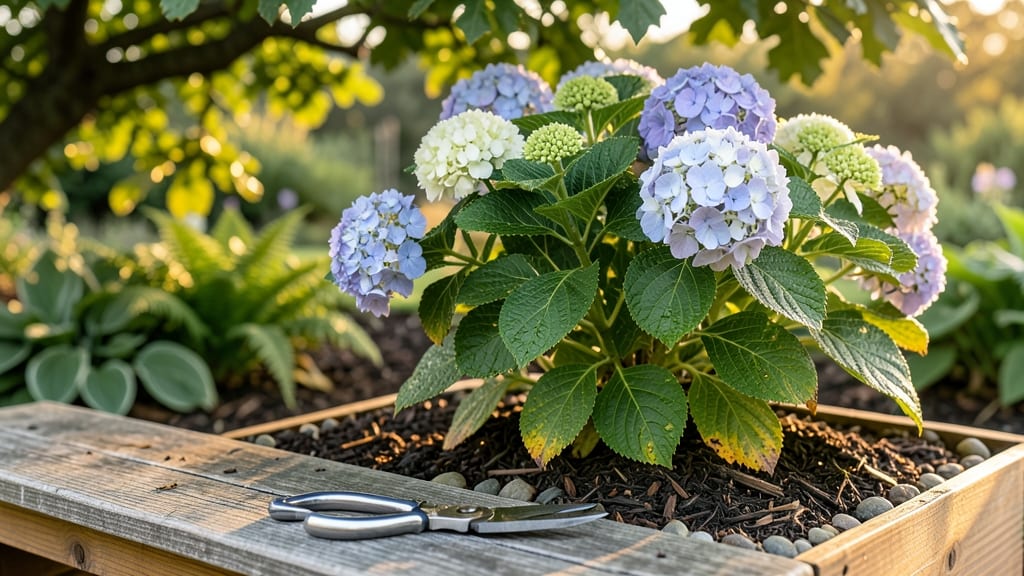
Trimming hydrangea blooms transforms last year's faded stems into next season's boldest blooms—but timing and technique make all the difference. 🌸 I learned the hard way that cutting too early or too late can leave you with bare branches instead of lush clusters.
The secret lies in knowing when to prune based on your hydrangea type, and I'll show you exactly how to do it without sacrificing next year's flowers.
First, grab your clean, sharp pruners and identify your variety—mopheads need heavy pruning in late winter, while lacecaps bloom on old wood and should be trimmed lightly in early spring. Avoid the common mistake of shearing hydrangeas into perfect spheres; instead, focus on removing dead stems and shaping for airflow.
Most hydrangeas reward precise cuts with 30% more blooms the following year.
When done right, your hydrangeas will burst with vibrant color from summer through fall, and the plants themselves stay healthier with fewer pests and diseases. The key is patience: wait until the coldest months for mopheads, or just after blooming for lacecaps.
I've seen plants double in size and flower density after just one season of proper pruning.
This method works for container-grown hydrangeas too, making it perfect for patios and small spaces. Whether you're dealing with a single plant or a full border, the principles stay the same. Let's get those blooms thriving again—without the guesswork.
📚 In This Guide
- What you need
- Instructions
- Tips and common mistakes
- Wrapping up and next steps
What you need
- ● Bypass pruners – Sharp, clean pruners (e.g., Felco or Fiskars) to make precise cuts without crushing stems. Quantity: 1 pair.
- ● Loppers – For thicker stems (½ inch or larger). Quantity: 1 pair.
- ● Hand pruners – Smaller, for delicate trimming. Quantity: 1 pair.
- ● Gloves – Heavy-duty gardening gloves to protect hands from thorns and sap. Quantity: 1 pair.
- ● Disinfectant (70% isopropyl alcohol or bleach solution) – To sterilize tools between cuts and prevent disease spread.
- ● Rag or paper towels – For wiping tools clean.
- ○ Pruning saw (optional but helpful) – For very thick branches (over 1 inch in diameter). Quantity: 1.
- ● Marking twine or flags – To tag stems for future reference (e.g., identifying blooming vs. non-blooming stems).
- ● Garden hose or bucket of water – For rinsing tools and hydrating plants post-pruning.
- ● Pruning sealant – To coat larger cuts and prevent disease entry (e.g., tree wound pruning paste).
- ● Knee pads or stool – For comfort when trimming larger bushes.
- ● Plant markers or labels – To track pruning dates and hydrangea varieties.
- ● Trash bag or compost bin – For disposing of pruned material.
- ● Sunscreen and hat – If working outdoors on sunny days!
Step-by-step guide to trimming hydrangea blooms for year-round beauty
Reviving your hydrangeas with precision cuts ensures lush blooms and healthier plants—here’s how to do it right.
✂️ Step 1: Identify Bloom Type and Pruning Season
Hydrangeas bloom on either old wood (last year’s growth) or new wood (current year’s stems). Bigleaf hydrangeas (Hydrangea macrophylla) bloom on old wood, while panicle (H. paniculata) and oakleaf (H. quercifolia) bloom on new wood. Prune bigleaf hydrangeas immediately after flowering to avoid cutting off next year’s blooms. For new-wood bloomers, prune in late winter or early spring before new growth starts.
Check your plant’s blooms now: if they’re on last year’s stems (woody, thicker branches), you’re dealing with old-wood types. If they’re on current-year growth (slender, green stems), they’re new-wood bloomers. This distinction is critical—pruning at the wrong time can leave you with bare stems.
✂️ Step 2: Gather Tools and Prepare for Pruning
Use clean, sharp bypass pruners or loppers for larger stems. Sterilize your tools with rubbing alcohol to prevent spreading disease. Wear gloves to protect your hands from thorns and sap. I always lay down a tarp or old sheet beneath the plant to catch debris—hydrangeas shed a surprising amount of leaves and spent blooms.
Take a moment to observe the plant’s structure. Look for dead, diseased, or crossing branches—these should be removed first, regardless of bloom type. Dead branches are hollow or snap easily when bent, while crossing branches rub against each other, creating wounds that invite pests and disease.
✂️ Step 3: Prune Old-Wood Bloomers (Bigleaf Hydrangeas)
For bigleaf hydrangeas, prune right after flowering, typically in late summer or early fall. Cut back the current year’s growth to just above the first set of five leaves on each stem. This ensures next year’s blooms develop on strong, healthy wood. Avoid heavy pruning in spring—you’ll sacrifice the current season’s flowers.
I like to make my cuts at a 45-degree angle, about ¼ inch above a leaf node or bud. This encourages water to run off the cut and reduces the risk of rot. If your hydrangea looks leggy, you can also remove up to ⅓ of the oldest stems at the base to rejuvenate the plant and promote bushier growth.
✂️ Step 4: Prune New-Wood Bloomers (Panicle and Oakleaf Hydrangeas)
Panicle and oakleaf hydrangeas bloom on new growth, so prune them in late winter or early spring, before buds swell. Cut back stems to 3-5 inches above the ground for a dramatic shape or to just above a strong bud for a more natural look. These types handle heavier pruning—don’t be afraid to trim aggressively to encourage fuller, more vibrant blooms.
Watch for water sprouts—thin, weak stems that grow straight up. These steal energy from the plant and rarely produce flowers. Remove them completely at the base. For oakleaf hydrangeas, you can also prune to shape the foliage, as their leaves are a stunning feature even when not in bloom.
🌿 Step 5: Clean Up and Encourage New Growth
After pruning, remove all debris from the base of the plant and surrounding area. Spread a 2-inch layer of mulch around the base (but not touching the stems) to retain moisture and suppress weeds. Water deeply to help the plant recover and stimulate new growth. You’ll notice fresh, vibrant leaves emerging within 2-3 weeks—that’s your signal the pruning was successful.
For old-wood bloomers, apply a balanced fertilizer (10-10-10) in early spring to support new flower buds. New-wood bloomers benefit from a low-nitrogen, high-phosphorus fertilizer (5-10-10) to encourage blooming. Avoid high-nitrogen fertilizers, which promote leafy growth at the expense of flowers. Keep an eye out for new buds forming in late spring—these will become next year’s blooms.
Tips & tricks for perfect hydrangea trimming
The secret to hydrangeas that thrive year after year lies in precision and timing—here's how to avoid common mistakes that can leave your plants struggling.
Bloom Type Matters: I can't stress this enough—old-wood bloomers like bigleaf hydrangeas need their pruning done right after flowering, never in spring. That first set of five leaves you cut above is where next year's blooms will form. For new-wood types like panicle hydrangeas, late winter pruning is your golden window before buds swell. Pro tip: Take a close look at your stems—thick, woody branches mean old wood, while slender green stems indicate new growth.
Cutting Technique is Everything: When you make that 45-degree angle cut about ¼ inch above a leaf node, you're not just following instructions—you're creating the perfect conditions for healthy regrowth. The angle prevents water from pooling on the cut, which could lead to rot. And remember, those water sprouts? They're energy vampires—remove them completely at the base. I've seen hydrangeas go from sparse to lush just by eliminating these weak stems.
Seasonal Timing is Critical: The instructions mention late summer/fall for old-wood types and late winter/spring for new-wood bloomers, but here's what nobody tells you: Moon phases matter too. Pruning during a waxing moon encourages growth, while a waning moon is better for shaping. I've noticed my plants recover faster when I time my cuts with the lunar cycle. And if you're dealing with leggy bigleaf hydrangeas, that ⅓ stem removal at the base works wonders for bushier growth next season.
Post-Pruning Care Makes All the Difference: That 2-inch layer of mulch isn't just decorative—it's a game-changer for moisture retention and weed suppression. I always water deeply after pruning, and within 2-3 weeks, you'll see those vibrant new leaves as your reward. For old-wood bloomers, that early spring 10-10-10 fertilizer application is what kickstarts next year's flower buds. Don't skip it!
Pro Tips for Trimming Hydrangea Blooms
- The secret to hydrangeas that thrive year after year lies in precision and timing—here's how to avoid common mistakes that can leave your plants struggling.
- Bloom Type Matters: I can't stress this enough—old-wood bloomers like bigleaf hydrangeas need their pruning done right after flowering, never in spring.
- Cutting Technique is Everything: When you make that 45-degree angle cut about ¼ inch above a leaf node, you're not just following instructions—you're creating the perfect conditions for healthy regrowth.
Frequently asked questions
Got questions about keeping your hydrangeas blooming beautifully? Here are some of the most common ones—and their answers—to help you trim with confidence!
When is the best time to trim hydrangeas?
Timing depends on your hydrangea type! For mophead and bigleaf varieties (like Hydrangea macrophylla), trim right after blooming in late summer or early fall to encourage next year’s flowers. For panicle and oakleaf types, prune in late winter or early spring before new growth starts. Always avoid trimming in fall for spring-blooming varieties.
Do I need to trim hydrangeas every year?
Not always! If your hydrangeas are healthy and blooming well, you can skip pruning some years. However, annual light trimming (removing dead or overcrowded stems) keeps them tidy and promotes better airflow. Focus on pruning when you notice woody stems, sparse blooms, or leggy growth—these are red flags it’s time to act.
What if I cut off all the blooms by mistake?
Don’t panic! If you accidentally trim back too much, your hydrangea will still recover—though it may take a year. For mophead/bigleaf types, you’ll likely see fewer or smaller blooms next season, but they’ll bounce back. For panicle/oakleaf varieties, new growth will emerge from the base, and you’ll have a fuller plant in spring. Just water deeply and fertilize lightly to support recovery.
Can I trim hydrangeas in winter?
It depends! For spring-blooming varieties (like panicle or oakleaf), a light prune in late winter is fine—just avoid heavy cuts. For summer-blooming types (mophead/bigleaf), wait until after blooming or risk removing next year’s flower buds. If you must prune in winter, protect cuts with pruning sealant to prevent disease in cold climates.
How do I encourage bigger, fuller blooms?
For larger, showier flowers, focus on these tricks:
- Prune strategically: Cut back 1/3 of the oldest stems each year to stimulate new growth.
- Water consistently: Hydrangeas thrive with 1–1.5 inches of water weekly (more in pots).
- Feed in spring: Use a balanced fertilizer (10-10-10) or one high in phosphorus for blooms.
- Choose the right spot: Most hydrangeas love partial shade (morning sun, afternoon shade) for vibrant blooms.
Wrapping up and next steps
Trimming your hydrangeas doesn’t have to be intimidating—it’s all about timing, technique, and a little patience! 🌸 By mastering when and how to prune, you’ll unlock bigger blooms, healthier plants, and year-round color without sacrificing next year’s beauty.
Whether you’re a seasoned gardener or just starting out, these steps will give you the confidence to keep your hydrangeas thriving.
Ready to transform your garden? Grab your shears and start trimming today! For extra inspiration, check out our hydrangea care guide or join a local gardening group to share your progress. Happy pruning—your blooms will thank you! 🌿✨