
Plants
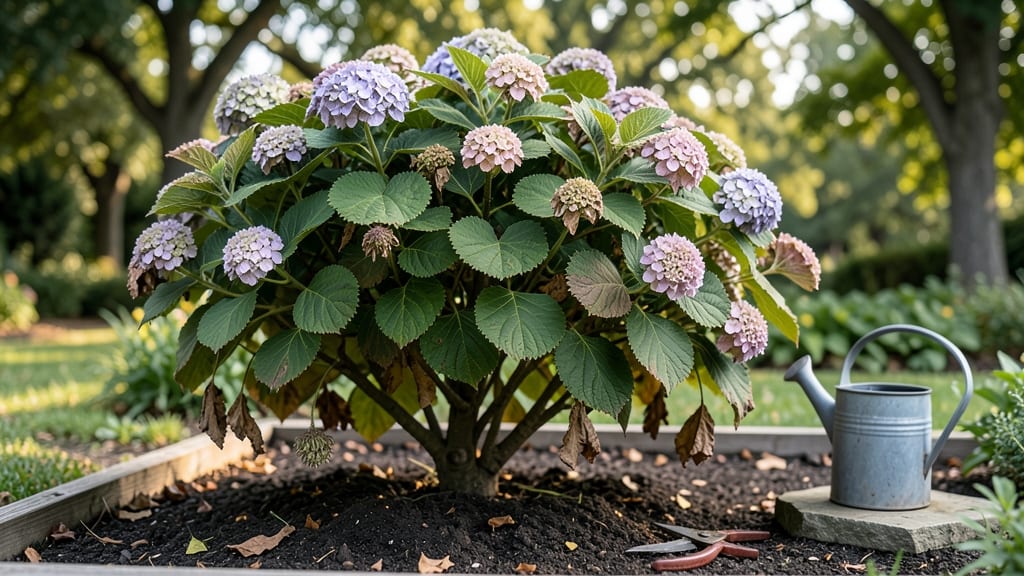
Winter hydrangeas might seem lifeless at first glance, but they're actually storing energy for spring. 🌱 The brown stems aren't dead—they're just dormant, with protective buds containing next year's flowers.
Evergreen varieties like oakleaf hydrangeas keep some foliage, while deciduous types lose everything. That's why pruning at the wrong time can accidentally remove next season's blooms.
What's fascinating is how these plants use their winter structure to survive. The swollen buds contain meristem tissue that will burst into growth when temperatures rise. Some gardeners even prune in late winter to shape bushes, but timing matters—cut too early and you risk removing flower buds before they've formed.
💡 In This Article
- Identifying Hydrangea Stem and Bud Structures in Winter
- Pruning Winter Hydrangeas: When and How to Prepare for Spring
Identifying hydrangea stem and bud structures in winter
Hydrangeas reveal their winter anatomy through distinct stem types and bud formations. Deciduous varieties like bigleaf or panicle hydrangeas shed all foliage, leaving woody brown canes that feel firm to the touch. These stems store nutrients in their bark layers, which thicken annually like tree rings.
Evergreen types such as oakleaf hydrangeas keep some leaves, though they turn brown and crispy, providing a subtle winter texture.
The real magic happens in the buds. Terminal buds (at stem ends) are larger and contain next year's main flower clusters, while lateral buds (along stems) produce leaves. These buds are wrapped in papery scales that protect delicate meristem tissue inside—think of them as nature's airtight containers.
A healthy bud feels plump and firm; shriveled buds indicate poor health. The color difference matters too: green-tipped buds show life, while uniformly brown ones may be dead.
Texture is your best friend when identifying live growth. Run your fingers along the stems—live canes have a slightly springy feel, while dead wood feels brittle and snaps easily. Look for tiny green shoots emerging from buds; these are your first sign of spring.
The bark on live stems often has a subtle sheen, while dead wood appears dull and cracked. This visual and tactile check helps you distinguish between winter dormancy and true plant death.
Seasonal variations affect what you see. In early winter, buds are tightly closed, but by late winter, some may swell slightly as temperatures fluctuate.
The dried flower heads you sometimes see on varieties like panicle hydrangeas are actually last year's blooms that turned papery brown—these provide winter interest but aren't the plant's energy source. The key is focusing on the stems and buds rather than these decorative remnants.
Consider these visual cues when assessing your hydrangeas:
- Stem firmness: Live stems bend slightly; dead stems snap like dry twigs
- Bud appearance: Plump with green tips = healthy; shriveled = struggling
- Bark texture: Smooth with subtle sheen = good; cracked/dull = poor
- New growth: Tiny green shoots = spring is coming
What most gardeners miss is that hydrangeas use their winter structure like a biological savings account. Those woody stems aren't just support—they're nutrient reservoirs that fuel spring's rebirth.
The papery bud scales even contain antifungal compounds to protect against winter diseases. This winter anatomy isn't just dormant; it's strategically prepared for renewal.