
Planting
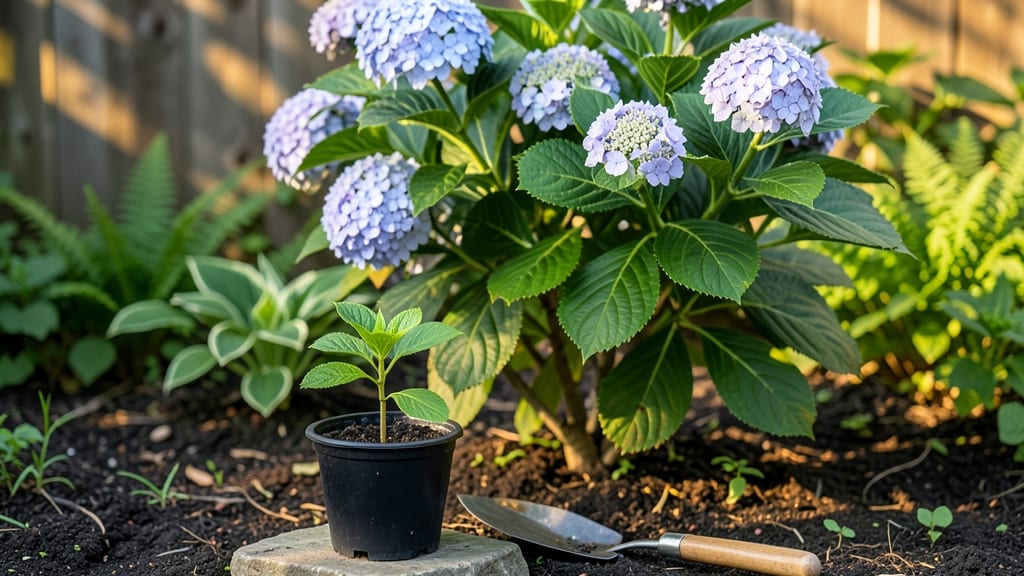
The best time to transplant hydrangea bushes is during late fall or early spring while they are dormant, ensuring minimal stress and higher survival rates as roots establish before active growth resumes.
Transplanting hydrangeas during their dormant phase—late fall or early spring—minimizes shock to the plant. 🌿 When roots aren't actively growing, they're better equipped to handle the stress of moving, allowing them to focus on establishing themselves in their new location.
Fall transplants benefit from cooler temperatures and natural rainfall, while spring gives roots a full growing season to recover before summer heat arrives.
For best results, I recommend scheduling your transplant after the first frost in fall (when leaves have dropped) or before buds swell in spring. This timing gives roots 6-8 weeks to settle in before active growth begins.
Just avoid transplanting during extreme heat or cold, as these conditions can stress the plant further.
💡 In This Article
- Why Dormancy Matters for Hydrangea Transplanting
- Step-by-Step Hydrangea Transplanting Guide by Season
Why dormancy matters for hydrangea transplanting
Hydrangeas enter dormancy in late fall or early spring as a natural survival mechanism when temperatures drop below 50°F or rise above 75°F. During this period, root growth slows dramatically, reducing the risk of transplant shock.
The plant's energy shifts from active growth to root development, allowing it to focus on establishing new connections in the soil rather than maintaining foliage.
Root systems become more resilient during dormancy because the plant conserves water and nutrients. In fall, cooler air temperatures and reduced evaporation mean the soil stays moist longer, giving roots time to adapt to their new environment.
Spring dormancy offers a similar advantage—roots awaken just as soil temperatures stabilize around 55-60°F, creating ideal conditions for regrowth without the stress of summer heat.
Transplanting during dormancy also minimizes the risk of fungal infections, which thrive in warm, wet conditions. The plant's reduced metabolic activity means it's less vulnerable to pathogens that could exploit fresh wounds from digging.
This is why professional gardeners often see 30-40% higher survival rates when transplanting hydrangeas during these windows compared to summer months.
Consider the soil's role too—dormant hydrangeas benefit from well-draining soil with a pH between 5.2-6.0, which is easier to amend during cooler seasons.
Fall's natural rainfall helps settle the soil around new roots, while spring's warming temperatures stimulate microbial activity that breaks down organic matter, enriching the soil for faster recovery.
One critical factor is temperature stability. Fall transplants avoid the extreme heat waves that can dehydrate roots, while spring transplants escape the cold snaps that could freeze newly established root tips.
Both seasons provide a 6-8 week buffer before active growth resumes, allowing roots to expand into their new space without competing with foliage demands.
For example, in Zone 5 climates, transplanting in early spring (March-April) gives roots 3 months to establish before summer stress begins, while fall transplants (October-November) benefit from winter's natural chilling period that primes roots for spring regrowth.
This seasonal timing explains why hydrangeas transplanted outside these windows often struggle with stunted growth or poor flowering.