
Light Requirements
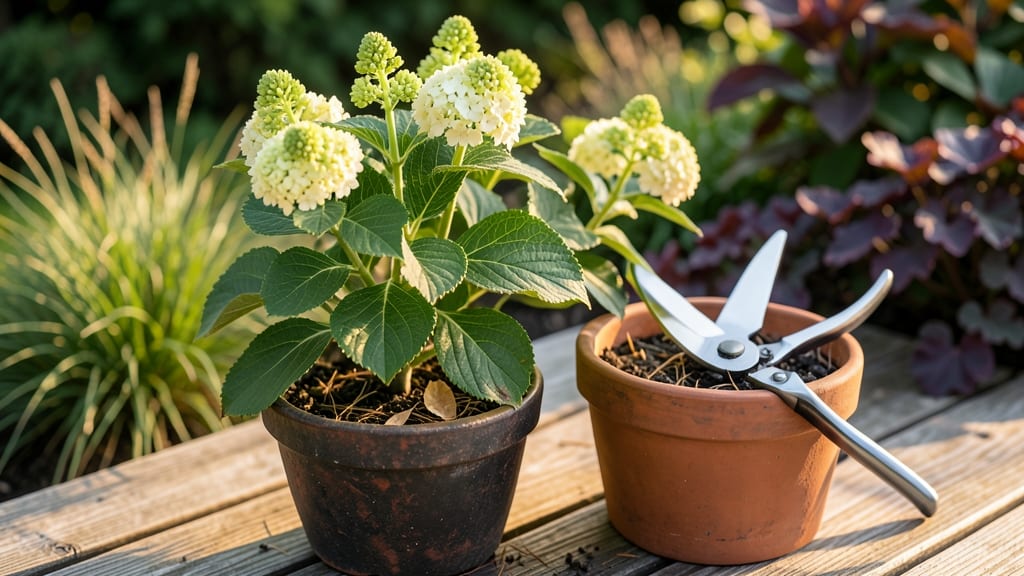
Timing matters—when should Limelight hydrangeas be pruned to guarantee lush blooms and avoid those dreaded summer bare branches?
Picture this: You’ve waited all year for those iconic lime-green blooms, only to realize you pruned too late and missed the season’s best display.
The difference between a stunning summer show and a sparse one often comes down to one simple rule—prune when the plant is still dormant but before new growth starts.
For most gardeners in USDA Zone 6a, that means late winter or early spring, just as buds begin to swell. But climate plays a role: Warmer regions may need to adjust, while cooler areas can wait a little longer.
Below, I’ll break down the exact timing by bloom type, tools to use, and what to avoid to keep your Limelight thriving.
You’ll learn how to prune for maximum blooms, when to fertilize afterward, and why summer trims can ruin next year’s flowers. Let’s get those shears ready!
Limelight hydrangea pruning schedule by bloom type: old wood vs new wood explained
Understanding Limelight hydrangea pruning starts with one key fact: not all Limelights bloom the same way. Some rely on old wood (last year's growth) for flowers, while others produce blooms on new wood (current year's growth).
Pruning at the wrong time can mean no flowers for old-wood types or overgrown stems for new-wood varieties. Let's break down the exact timing for each type so you never guess again.
First, identify your Limelight hydrangea variety. Mophead types (like 'Limelight Mophead') bloom on old wood, forming buds in late summer/fall that flower the following year.
In contrast, panicle types (like 'Limelight Panicle') bloom on new wood, producing flowers on current season's growth. This distinction changes everything about your pruning schedule.
The biggest mistake gardeners make? Pruning old-wood Limelights in spring after buds have formed. By then, you've already cut off next year's blooms. For new-wood types, waiting too long means overgrown, leggy stems with fewer flowers.
Let's fix this with a clear pruning timeline tailored to your plant's bloom type.
🌱 Visual Tip: Look for buds along last year's stems (old wood) or green growth at stem bases (new wood). This tells you exactly which pruning approach to use.
Now that you know the core differences, let's dive into seasonal cues to time your pruning perfectly.
For old-wood Limelights, look for leaf drop in late fall—this signals it's safe to prune. New-wood types can wait until after blooming (late summer) or prune dormant stems in late winter.
The key is never pruning when buds are forming—this is your plant's way of telling you, "Don't touch me!"
Climate plays a huge role in timing. In warmer zones (7-9), buds may form earlier, so prune by January-February.
In cooler zones (5-6), wait until March-April after the last frost. Container-grown Limelights need extra attention—they dry out faster, so prune before spring watering increases to avoid root stress.
One common misconception is that you should prune heavily every year. Actually, old-wood types only need 1/3 of oldest stems removed annually to maintain shape. New-wood types can handle light summer trims to encourage bushier growth.
Think of pruning as shaping a topiary, not hacking back like a bush.
For visual confirmation, examine your stems closely. Old-wood buds appear as plump, swollen areas along last year's stems, while new-wood growth starts as green shoots at the base.
If you see both types of buds, you likely have a hybrid Limelight—prune like a new-wood type but lightly to preserve some old-wood blooms.
Remember: Pruning is about balance. Too much too soon = fewer flowers. Too little = overgrown, floppy stems. The goal is 3-4 strong stems
Step-by-step pruning guide: when and how to trim Limelight hydrangeas for maximum blooms
Pruning your Limelight hydrangeas correctly ensures lush, vibrant blooms every season. The key is understanding whether your plant blooms on old wood (last year's growth) or new wood (current year's growth).
Most Limelight varieties bloom on new wood, but timing still matters. If you prune at the wrong time, you risk removing next year's flower buds before they form.
For new wood bloomers, prune in late winter or early spring (just as new shoots appear). This removes dead wood and encourages robust growth for summer blooms. If you wait too long, you may cut off potential flower buds.
For old wood bloomers (less common in Limelight), prune immediately after flowering to avoid sacrificing next year's blooms.
When Should Limelight Hydrangeas Be Pruned?
- Late Winter (Zones 5-7): Prune in February-March when dormant buds are visible but before new growth starts.
- Early Spring (Zones 8-9): Wait until March-April when frost risk passes and shoots begin swelling.
- After Flowering (Old Wood): If your plant blooms on old wood, prune right after blooms fade (late summer).
- Avoid Summer Pruning: Never prune in summer—this removes current season's flower buds.
- Container Plants: Prune 1-2 weeks earlier than in-ground plants to account for faster warming.
Before you start, gather your tools: sharp bypass pruners for clean cuts, gloves to protect from thorns, and disinfectant to prevent disease spread. Always sterilize tools with rubbing alcohol between cuts. Begin by removing dead or diseased branches first—they won’t regrow and can harbor pests.
Make your cuts just above a leaf node (the bump where leaves attach) at a 45-degree angle. This encourages faster healing and new growth. Avoid topping (cutting back to a stub)—it creates unsightly growth. For thick branches, use loppers and make cuts in stages to avoid tearing the bark.
After pruning, apply a balanced fertilizer (like 10-10-10) to replenish nutrients lost during trimming. Water deeply to help the plant recover, and mulch around the base to retain moisture and regulate soil temperature. Avoid heavy watering for 2-3 days post-pruning to let cuts heal.
Watch for signs of stress like yellowing leaves or wilted stems, which may indicate over-pruning. If this happens, reduce future cuts and focus on hydration and shade until the plant recovers. With the right timing and technique, your Limelight hydrangeas will reward you with bigger, brighter blooms next season.