
Plants
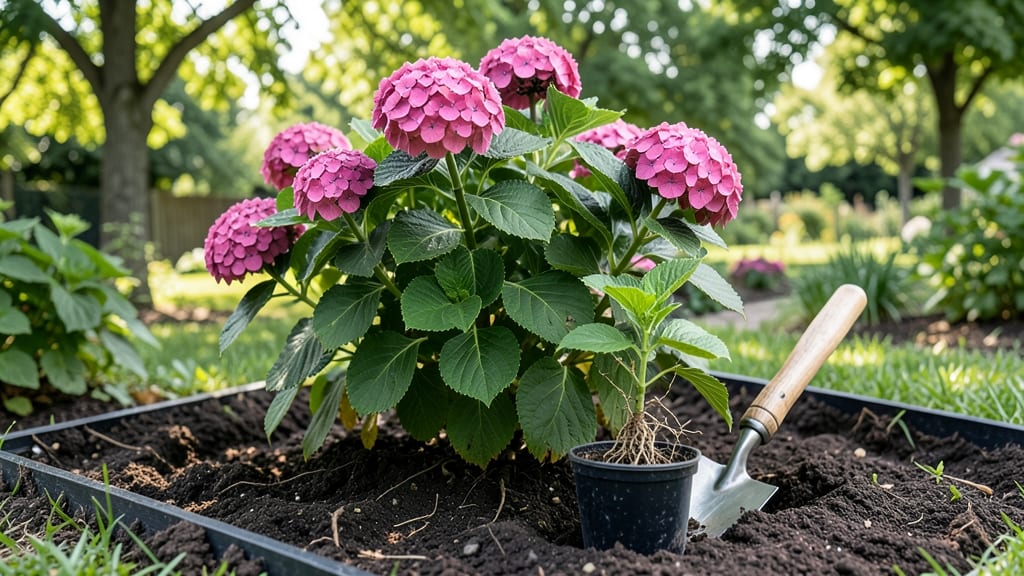
Plant hydrangeas in Georgia during late winter to early spring or fall to give them the best shot at thriving 🌸 — timing matters more than you might think.
Georgia’s humid summers and mild winters create the perfect climate for hydrangeas, but planting at the wrong time can mean wilting blooms or stunted growth. The key is to avoid the state’s brutal July heat and frost-prone months, especially in zones like 7b where temperatures can drop unexpectedly.
Whether you’re planting oakleaf, bigleaf, or panicle varieties, soil preparation is just as critical as timing. Georgia’s clay-heavy soils in the Piedmont region need extra attention to drainage, while acidic pH levels are essential for those coveted blue blooms.
In this guide, you’ll learn the exact months to plant based on your heat zone, how to prep your soil for Georgia’s unique conditions, and the three mistakes that could ruin your hydrangeas before they even take root.
Best planting months for Georgia hydrangeas by heat zone
Georgia’s diverse climate—from the Blue Ridge Mountains to Atlanta’s urban heat islands—means your hydrangea’s planting window depends on your USDA heat zone. In Zone 5A (northwest Georgia), early spring planting avoids late frosts, while Zone 8B (south Georgia) gardeners can plant well into fall.
The key is balancing soil warmth, moisture, and avoiding Georgia’s oppressive summer heat.
Most gardeners plant hydrangeas in early spring (March-April) or fall (September-October), but your exact timing should align with your heat zone. For example, Zone 6A (like Atlanta) needs to plant 2-3 weeks earlier than Zone 7B (Savannah) to account for later frost dates.
Let’s break down the best months for each zone, including microclimate adjustments.
Here’s a quick comparison of planting windows by heat zone, including soil temperature cues and frost risks:
| Heat Zone | Best Planting Months | Soil Temp Cue | Frost Risk | Microclimate Notes |
|---|---|---|---|---|
| 5A (Blue Ridge) | April-May or Sept | 50°F+ | High (last frost: April 15) | Plant after mountain frost risk passes; use mulch for winter protection. |
| 6A (North GA) | March-April or Sept-Oct | 55°F+ | Moderate (last frost: March 31) | Avoid urban heat pockets (e.g., Atlanta sidewalks); opt for morning sun. |
| 7A (Central GA) | Feb-March or Oct-Nov | 60°F+ | Low (last frost: March 15) | Ideal for bigleaf hydrangeas; plant after Easter for best root establishment. |
| 7B (South GA) | Jan-Feb or Sept-Oct | 65°F+ | Minimal (last frost: Feb 28) | Perfect for panicle hydrangeas; avoid summer planting due to heat stress. |
| 8A (Coastal) | Dec-Jan or Oct-Nov | 70°F+ | None | Best for oakleaf hydrangeas; plant in cooler winter months to avoid humidity stress. |