
Blooming
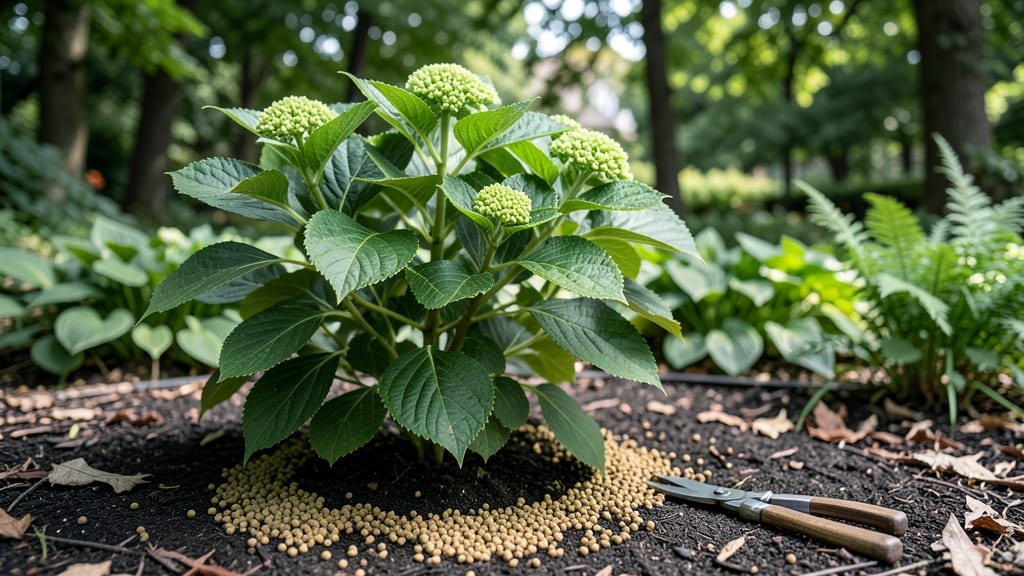
Why didn’t my hydrangea bloom this year, leaving you staring at lush green leaves and wondering where the showy blooms went? 💚 I’ve seen this happen more than I’d like—especially after a winter that felt too harsh or a summer. that stretched too long.
The good news? Most blooming failures come down to just four key factors you can fix before next season starts.
Here's the thing—hydrangeas need the right balance of sunlight, pruning timing, nutrients, and water. Too much shade and they focus on leaves; prune at the wrong time and you cut off next year's flowers.
Over-fertilizing with nitrogen makes them grow big and leafy but skimp on blooms. And don't even get me started on underwatering during bud formation—that's a sure way to see empty stems.
By next spring, you'll see buds forming earlier and more plentifully if you adjust sunlight exposure to at least 6 hours of morning sun, prune right after blooming, and feed with a balanced fertilizer low in nitrogen.
The transformation from "why didn't it bloom?" to "look at all these flowers!" is worth the effort.
Works for bigleaf, panicle, and oakleaf varieties alike. The same principles apply whether your hydrangeas live in containers or in the ground. Let's get those blooms back next season—your neighbors will notice!
The Hidden Reasons Behind No Blooms
Hydrangeas are known for their stunning, show-stopping flowers—but when they fail to bloom, it’s often due to factors you might not expect. 🌸 Let’s break down the most common (and fixable) causes behind your hydrangea’s lack of flowers this year, backed by science and actionable insights.
Hydrangeas (Hydrangea macrophylla, Hydrangea paniculata, and Hydrangea arborescens) thrive in partial shade to full sun, but their light needs vary by variety. If your plant isn’t getting enough (or too much) sunlight, it may redirect energy toward leaf growth instead of blooms.
- Too little light: Most hydrangeas need at least 4–6 hours of direct sunlight daily (more for paniculata types like ‘Limelight’).
Without enough light, the plant struggles to produce the photosynthates (sugars) needed for flower buds. - Too much harsh sun: In hot climates, intense afternoon sun can scorch leaves, stressing the plant and preventing blooming.
This is especially true for macrophylla types (like Bigleaf hydrangeas) in Zone 7+. - Solution: Move your hydrangea to a spot with morning sun + afternoon shade (e.g., east-facing or lightly shaded west-facing). If it’s in a container, ensure it’s in a location with consistent, gentle light.
Hydrangeas are not heavy feeders, and too much fertilizer—especially high-nitrogen types—can backfire. Here’s why: - Nitrogen overload: Fertilizers like 10-10-10 or lawn-grade feeds push leafy growth at the expense of flowers.
Hydrangeas need a balanced or low-nitrogen ratio (e.g., 5-10-5 or 3-4-6) to encourage blooming. - Lack of phosphorus: Phosphorus (P) is critical for flower bud formation.
If your soil is deficient, your hydrangea may produce leaves but skip the blooms. - Solution: Use a slow-release, bloom-boosting fertilizer (like 5-10-5 or a hydrangea-specific formula) in early spring (before new growth) and mid-summer (to support bud development). Avoid high-nitrogen feeds after June—they’ll just make more leaves!
Timing and technique matter when pruning hydrangeas. One wrong cut can mean no flowers next season!
| Hydrangea Type | Bloom Time | Pruning Mistake | Why It Causes No Blooms |
|---|---|---|---|
| Bigleaf (macrophylla) | Late spring/early summer | Pruning in late winter/early spring (before buds form) | These hydrangeas set buds on old wood (last year’s growth). Cutting too early removes next year’s flowers! |
| Panicle (paniculata) | Mid-to-late summer | Pruning in fall or winter | These bloom on new wood (current year’s growth), but late pruning removes potential flower buds. |
| Smooth (arborescens) | Early summer | Over-pruning any time | While they bloom on new wood, aggressive cuts (beyond 1/3 of the plant) can stress the plant and reduce blooms. |
- Solution:
- Panicle & Smooth hydrangeas: Prune in late winter/early spring (before new growth starts) to shape the plant without sacrificing blooms.
Hydrangeas are sensitive to soil moisture and pH, and stress from these factors can halt blooming.
- Too much water: Soggy soil (especially in winter) can lead to root rot, weakening the plant. Overwatering also dilutes nutrients, making it hard for the plant to produce flowers. - Too little water: Drought stress causes the plant to conserve energy for survival, not blooms.
Hydrangeas need consistent moisture, especially during bud formation (spring to early summer). - Poor soil drainage: If water pools around the roots, oxygen can’t reach them, leading to nutrient uptake issues and stunted growth. - pH imbalances: - Bigleaf hydrangeas love acidic soil (pH 5.2–6.0).
If your soil is too alkaline (pH 7+), the plant may not bloom well. - Panicle & Smooth hydrangeas are more adaptable but still prefer slightly acidic to neutral soil (pH 6.0–7.0).
- Solution:
- Improve drainage by amending soil with compost or perlite if it’s clay-heavy.
- Test soil pH (use a kit or digital meter) and adjust with elemental sulfur (to lower pH) or lime (to raise pH) as needed.
Rejuvenating pruning (cutting back 1/3 of the oldest stems) can encourage new growth and flowers. - Dormancy stress: If your hydrangea experienced severe winter dieback (e.g., from frost, wind, or poor mulching), it may have redirected energy to recovery instead of blooms.
- Solution:
- For young plants,
- For mature plants, refresh them with rejuvenation pruning in late winter and add compost to boost nutrients.
- Protect from late frosts: Use frost cloth if your area gets unexpected cold snaps, which can damage emerging buds.
Revive Your Hydrangeas Now
It’s time to roll up your sleeves and give your hydrangeas the care they deserve! The good news? Most blooming issues can be fixed with simple adjustments. Below, we’ve mapped out the cause → solution for each reason your hydrangeas skipped their floral show this year—and how to prevent it from happening again.
If you trimmed your hydrangeas too late in the season (after July) or cut back old wood aggressively, you may have removed next year’s flower buds.
🔪 How to Fix It:
- For mophead and lacecap hydrangeas (deciduous types):
- Trim only dead or weak stems in early spring (before new growth appears).
- Avoid heavy pruning—just shape lightly to encourage new blooms.
- For oakleaf or panicle hydrangeas (reblooming types):
- Prune after blooming in late summer/early fall to promote next year’s flowers.
- Cut back one-third of the oldest stems to the ground to rejuvenate growth.
💡 Prevention Tips:
- Mark stems with flags or twine in late summer to identify which ones bloomed (and should be kept).
- Use sharp, clean pruners to avoid disease spread.
Hydrangeas thrive in partial shade (4–6 hours of sun) and consistent moisture. Too much sun or drought stress can stunt blooms.
🌡️ How to Fix It:
- Move or shade: Relocate pots to a spot with dappled sunlight or add a shade cloth (30–50% coverage) if in full sun.
- Water deeply: Soak the soil 1–2 inches per week (more in extreme heat).
Use mulch (2–3 inches) to retain moisture. - Check soil: Amend heavy clay with compost; sandy soil may need a water-retention crystal.
🎯 Prevention Tips:
- Group hydrangeas with other thirsty plants to simplify watering.
- Use self-watering pots if growing in containers.
Too little (or too much!) fertilizer can throw off blooming. Hydrangeas need balanced nutrition but hate salt buildup from synthetic fertilizers.
📊 How to Fix It:
- Test your soil: A simple home kit (or lab test) will show pH and nutrient levels.
- Feed right:
- For acid-loving varieties (blue/pink hydrangeas): Use hydrangea-specific fertilizer (high in phosphorus) or coffee grounds (spread ½ cup per plant every 2 months).
- For panicle/oakleaf types: A balanced 10-10-10 fertilizer in early spring suffices.
- Flush the soil: If using synthetic fertilizer, rinse the root zone with water to prevent salt burn.
💪 Prevention Tips:
- Avoid "bloom boosters" with high nitrogen—they encourage leaves over flowers.
- Top-dress with compost annually for slow-release nutrients.
Spider mites, aphids, or fungal issues (like powdery mildew) can sap energy meant for blooms.
👨🍳 How to Fix It:
- Inspect leaves: Look for yellowing, spots, or webbing. Spray with neem oil (1 tsp + 1 quart water) for pests.
- Prune infected parts: Remove and destroy diseased stems immediately.
- Improve airflow: Thin out crowded branches to reduce humidity (which fuels fungi).
✨ Prevention Tips:
- Prevent mites: Mist plants on hot days to deter spider mites.
- Rotate sprays: Alternate neem oil with insecticidal soap if pests persist.
Late frosts, sudden heatwaves, or recent transplanting can shock hydrangeas into skipping blooms.
🌡️ How to Fix It:
- Protect from frost: Cover young plants with frost cloth if late frosts are forecast.
- Acclimate transplants: Water deeply for 2 weeks after moving to reduce shock.
- Mulch heavily: Add 4–6 inches of mulch in winter to insulate roots.
🔥 Prevention Tips:
- Plant hydrangeas in spring or fall (avoid summer heat stress).
- Choose a microclimate (e.g., near a north-facing wall) for extra protection.
With these fixes, your hydrangeas should bounce back stronger next season! Track your progress with a simple bloom journal—note pruning dates, watering habits, and fertilizer types to refine your routine. 🌸
Frequently asked questions
Can I still save my hydrangea if it didn't bloom this year?
Even if your hydrangea skipped blooms, it's not too late to help it recover. Focus on adjusting sunlight to 4-6 hours daily, improving soil drainage, and avoiding high-nitrogen fertilizers. With proper care, most hydrangeas will bounce back with beautiful blooms next season.
Why are my hydrangea leaves huge but no flowers?
This classic sign means your plant is getting too much nitrogen! High-nitrogen fertilizers (like lawn food) promote leafy growth at the expense of blooms. Switch to a balanced or phosphorus-rich fertilizer (like 5-10-5) and reduce feeding after June to encourage flowering instead.
Is it normal for young hydrangeas not to bloom?
Yes! Most hydrangeas take 2-3 years to mature enough for their first full bloom. Focus on establishing a strong root system by providing consistent moisture, partial shade, and well-draining soil. Patience pays off—your plant will reward you with flowers once it's established.
Can I prune my hydrangea now if it didn't bloom?
Timing matters! For Bigleaf varieties, wait until late winter/early spring (just before buds swell) to prune. For Panicle types, you can prune now (late fall/winter) since they bloom on new growth. Never prune after July—this removes next year's flower buds!
How do I know if my hydrangea needs more sun or shade?
Check the leaf color: Pale or yellowing leaves mean it needs more sun (aim for morning sun + afternoon shade), while brown leaf tips suggest too much sun. For containers, rotate pots occasionally so all sides get even light exposure. A happy medium keeps both leaves AND flowers thriving!