
Watering
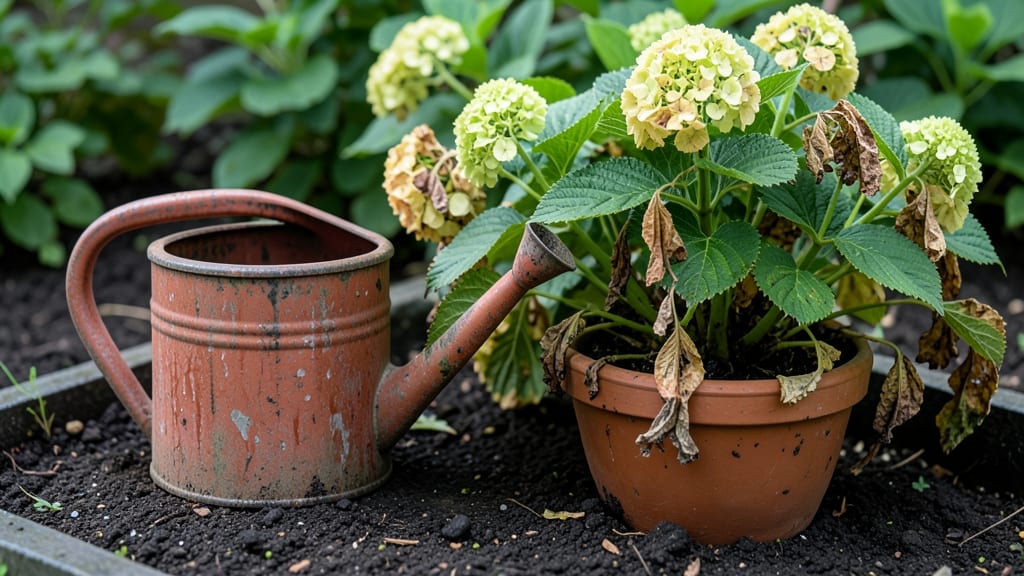
That wilted, overwatered hydrangea in your garden isn’t beyond saving—it just needs less water and a closer look at its roots. 🌿 The key is balance: hydrangeas hate soggy feet but also need consistent moisture, so we’re going to reset their routine without shocking the plant.
First, stop watering immediately—yes, even if the soil feels dry. Overwatered hydrangeas can’t breathe, and their roots start to rot within days. Instead, let the top 2-3 inches of soil dry out completely before watering again.
You’ll know it’s time when the soil pulls away from the pot edges (or feels lighter in the ground). While you wait, trim any mushy brown roots and wilted stems—it’s like giving the plant a fresh start.
Within 3 days, you’ll see a dramatic turnaround: leaves perk up, stems firm up, and new growth starts pushing out. The secret isn’t just less water—it’s better drainage. If your hydrangea’s pot has no drainage holes, it’s time to upgrade.
For in-ground plants, mix in compost or sand to improve soil structure. Think of it as giving your plant a breath of fresh air after weeks of suffocation.
Once your hydrangea’s back on track, adjust your watering schedule to match your climate. In hot summers, water deeply 2-3 times a week; in cooler months, once a week is plenty.
Mulch around the base to lock in moisture without smothering the roots. With these tweaks, your hydrangeas will bounce back—and next season, they’ll thrive without a single droopy leaf in sight.
Root Causes Of Drooping Hydrangeas
When your hydrangeas start wilting despite what seems like too much water, it’s often a sign that their roots are struggling—not thriving. Overwatering disrupts the delicate balance of oxygen, nutrients, and moisture in the soil, leading to stress that manifests as limp, sad-looking blooms.
Let’s break down the key reasons this happens and why a simple "more water" fix won’t cut it.
Hydrangeas hate soggy feet, and if your soil or container lacks proper drainage, excess water pools around the roots instead of draining away. Without oxygen, roots suffocate—leading to anaerobic conditions, where harmful bacteria and fungi thrive.
These pathogens attack root cells, blocking water and nutrient uptake, which causes wilting even when the soil feels damp.
Why it’s sneaky: Clay-heavy or compacted soil acts like a sealed jar, trapping moisture. Even if you’re watering "just right," poor drainage turns every session into an overwatering event.
Actionable fix:
- Test your soil: Stick a screwdriver in after watering—if it comes out clean after 30 minutes, drainage is poor.
- Amend soil with perlite, sand, or compost to improve aeration.
- For containers, ensure drainage holes exist and use a mix with 30% organic matter (like peat or coconut coir).
Hydrangeas need consistent moisture, but frequency ≠ depth. Light, daily watering keeps the topsoil wet while starving roots of oxygen deeper down. When roots can’t "breathe," they stop absorbing water efficiently—a condition called hydraulic lift failure.
The plant wilts because it can’t pull up enough moisture, even though the soil feels damp.
Science alert: Roots respire (breathe) through tiny pores called lenticles. If submerged in water for >24 hours, these pores clog, and roots suffocate.
Actionable fix:
- Water deeply 2–3 times per week (or when the top 2 inches of soil are dry). Aim for 1–1.5 inches of water per session.
- Use a moisture meter to avoid guesswork—hydrangeas prefer 60% soil moisture, not soggy.
- Mulch with 3–4 inches of organic mulch (like wood chips) to regulate soil temperature and reduce evaporation.
Overwatering creates the perfect petri dish for Phytophthora (a water mold) and Pythium, fungi that rot roots and block nutrient transport. Infected roots turn brown, mushy, and unable to support the plant—hence the wilt. These pathogens thrive in consistently moist, warm soil (ideal for hydrangeas in summer!).
Red flags:
- Yellowing leaves (not just wilting).
- Roots that smell foul or look slimy when pulled.
- Slow recovery after watering.
Actionable fix:
- Let soil dry slightly between waterings (stick your finger in—if cool and damp, wait).
- Apply copper fungicide or a baking soda spray (1 tsp baking soda + 1 quart water + a drop of soap) if fungal rot is suspected.
- Prune affected roots with sterilized shears and replant in fresh, well-draining soil.
Hydrangeas are sensitive to temperature extremes. Overwatering in hot weather accelerates evaporation, while cold snaps slow root activity. When roots can’t keep up with the plant’s needs, wilting occurs—even if the soil is moist. Additionally, cold water (below 50°F) shocks roots, reducing their ability to absorb water.
Pro tip: Roots need ideal temps between 60–75°F to function optimally. Below 50°F or above 85°F, they go into survival mode.
Actionable fix:
- Water in the early morning to let foliage dry before nighttime humidity spikes.
- Avoid cold water: Let hose water sit in the sun for 10 minutes before watering.
- In extreme heat, provide dappled shade (like a sheer cloth) to reduce transpiration.
Remember: Wilting from overwatering isn’t just about too much H2O—it’s about root health. The fixes above target the real culprits: poor drainage, suffocated roots, and environmental stress. Once you address these, your hydrangeas will bounce back faster than you’d expect! 🌿
Reviving Your Hydrangeas in 3 Days
If your hydrangeas look like they’ve been caught in a rainstorm for days—leaves drooping, yellowing, or even falling off—don’t panic! Overwatering can be reversed with the right steps. Below, we’ll break down the cause-specific fixes to nurse your plants back to health, plus tips to keep them thriving long-term.
Let’s get those blooms perking up again! 🌿💦
Before anything else, halt all watering for at least 24–48 hours. Soggy soil suffocates roots, so giving them a breather is critical. If the ground is still muddy, wait until it’s slightly dry to the touch before proceeding.
Overwatered hydrangeas need well-draining soil to recover. Here’s how to fix it:
👨🍳 Check the Drainage - Dig a small hole (6–8 inches deep) near the plant.
Fill it with water and time how long it takes to drain. - If it takes more than 30 minutes, your soil is too compacted or lacks organic matter. - Fix: Mix in compost, perlite, or coarse sand (1 part amendment to 3 parts soil) to improve aeration.
🥘 Reduce Soil Moisture
- If the soil is waterlogged, gently loosen the top 4–6 inches with a fork or trowel to help excess water evaporate.
- Avoid disturbing roots—just create air pockets.
- Pro Tip: 💡 If your hydrangea is in a pot, empty it and let it sit upside down for 10–15 minutes to drain excess water before replanting.
Hydrangeas hate soggy feet but also can’t handle drought stress. Here’s the golden rule:
| Sign | Action | Prevention Tip |
|---|---|---|
| Wilted leaves | Water deeply but less often (1–2 inches per week, including rain). | Use a moisture meter to check soil. |
| Yellowing leaves | Flush the soil with 1–2 inches of water, then let it dry slightly. | Mulch with wood chips (2–3 inches) to retain moisture evenly. |
| Mushy stems | Trim affected stems at the base and repot in fresh, dry soil. | Plant in raised beds if drainage is poor. |
🌡️ Pro Tip: Water in the early morning so leaves dry quickly, reducing fungal risks.
Overwatering weakens hydrangeas, making them prone to leaf spot or root rot. Trim away:
- Yellow or black leaves (disease risk).
- Mushy, brown stems (sign of rot).
- Overcrowded growth (improves airflow).
✨ Best Time to Prune: After flowering (late summer/early fall) or in early spring before new growth.
Weak roots need a nutrient kickstart to bounce back. Use:
- Balanced fertilizer (10-10-10) lightly after pruning.
- Compost tea (homemade or store-bought) for a gentle organic boost.
- Avoid high-nitrogen feeds—they encourage leafy growth over blooms.
💡 Pro Tip: Mix 1 tbsp of Epsom salt (magnesium sulfate) into the soil to strengthen roots and prevent wilting.
Keep your hydrangeas happy with these easy maintenance habits:
- ✅ Test your soil every 2 years—aim for pH 5.2–6.0 (hydrangeas love acidity!).
- ✅ Mulch annually (spring) with pine bark or shredded leaves to regulate moisture.
- ✅ Choose the right pot—if container-grown, ensure it has drainage holes and use a well-draining mix.
- ✅ Monitor weather—adjust watering during heavy rain or humidity (hydrangeas need less water in wet climates).
- ✅ Rotate pots (for container plants) to ensure even sunlight exposure.
With these steps, your hydrangeas should perk up within 3 days—and with consistent care, they’ll reward you with vibrant blooms all season! 🌸💧
Frequently asked questions
How can I tell if my hydrangea is overwatered vs. underwatered?
Check the soil first—if it's cool, damp, and smells musty, it's overwatered. Overwatered hydrangeas have yellowing leaves, mushy stems, and drooping blooms, while underwatered ones have crispy brown edges and dry, pulling soil. Tap the pot—if it feels light, it needs water.
Will my hydrangea recover if I stop watering immediately?
Yes, but it takes 3-7 days to see improvement. First, let the top 2-3 inches of soil dry out completely before watering again. Trim any blackened stems and add perlite to the soil to improve drainage. Most hydrangeas bounce back within a week if roots aren't severely rotted.
Can I use coffee grounds to fix overwatered hydrangeas?
Coffee grounds help with acidity (pH 5.2-6.0), but they won't solve drainage issues. Mix 1 cup of used grounds per plant into the topsoil to improve texture, but focus first on fixing soggy soil. The real fix is amending soil with perlite or sand to prevent future overwatering.
How often should I water hydrangeas after they recover?
Once revived, water deeply 2-3 times per week (or when the top 2 inches of soil feel dry). In summer heat, water early morning to reduce evaporation. Always check for drainage holes in pots—hydrangeas hate soggy roots even after recovery.
What if my hydrangea's leaves turn black after stopping water?
Black leaves signal fungal infection from prolonged sogginess. Prune affected leaves immediately with sterilized shears and spray with a 1% hydrogen peroxide solution (1 part peroxide to 9 parts water). Improve airflow by spacing plants 3-4 feet apart and avoid overhead watering.