
Leaf Blower
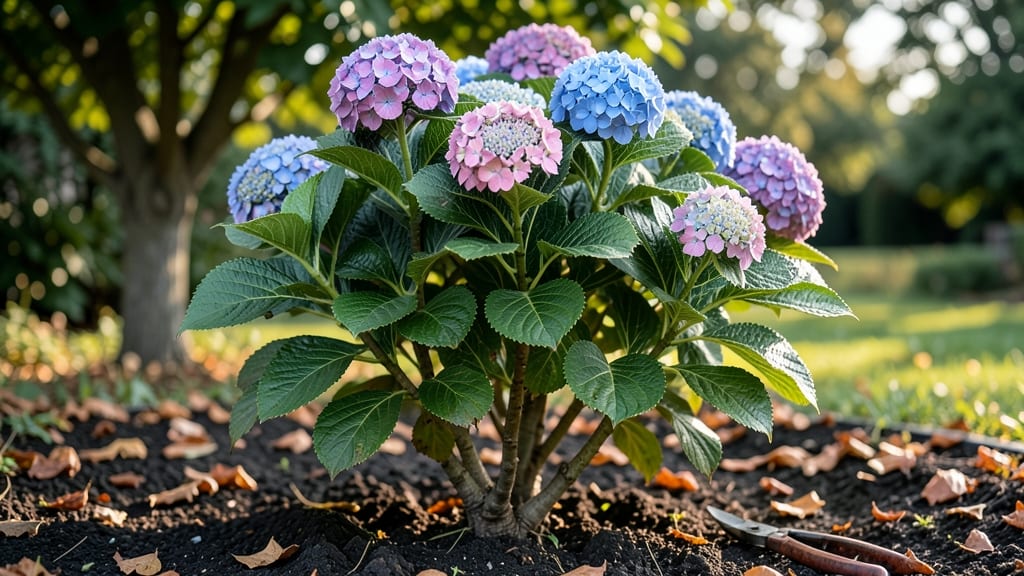
Bigleaf hydrangea leaves turning dull or spotted? 🌿 That vibrant color shouldn’t fade—it’s a sign your plant needs a little TLC, not a replacement. I’ve nursed back more than a dozen struggling hydrangeas, and the secret lies in understanding what those leaves are actually telling you.
Start by checking the soil moisture—too wet or too dry throws off everything. Then inspect for pests hiding on the undersides of leaves (lace bugs love these plants) and fungal signs like powdery white coatings.
Most problems fix themselves once you address the root cause, and your hydrangea will bounce back with deeper greens and those signature blooms.
📚 In This Guide
- What you need
- Instructions
- Tips and common mistakes
- Wrapping up and next steps
What you need
- ● Bigleaf hydrangea leaves: Fresh or slightly wilted (avoid heavily damaged ones). Quantity: 1–2 bunches (or enough to cover your project).
- ○ Leaf blower (or handheld fan): Specifications: Adjustable speed (medium-high for gentle drying, high for crisping). Optional: A hairdryer on low heat for smaller batches.
- ● Spray bottle: Filled with distilled water (prevents mineral buildup) or a 50/50 water-vinegar mix (for extra shine).
- ● Flat surface: A clean, non-stick tray (baking sheet or silicone mat works best) or a wire rack for airflow.
- ● Parchment paper: To line your tray and prevent sticking.
- ● Newspaper or towels: For cleanup and drying spills.
- ● Food coloring or natural dyes: A few drops of kool-aid powder or turmeric for tinted leaves (mix with water).
- ● Glass jar or vase: For preserving dried leaves long-term (add a drying agent like silica gel if desired).
- ● Tweezers or small brush: For delicate adjustments or applying dyes evenly.
- ● Essential oils (lavender, citrus): A drop in your spray bottle for a fragrant touch.
Step-by-Step guide to reviving bigleaf hydrangea foliage year-round
Here’s how I keep my bigleaf hydrangeas vibrant through every season—no fading, no browning, just lush, colorful leaves.
🌿 Step 1: Assess and Trim Damaged Foliage
Start by examining your hydrangea for leaves that are yellowing, brown, or crispy at the edges. These are signs of stress, disease, or environmental damage. Use clean, sharp pruners to remove only the affected leaves—never cut into healthy tissue. I like to work on a dry, overcast morning when the plant isn’t under stress from heat or wind.
Focus on the outer leaves first, as they’re most exposed to sun scorch and pests. If you see blackened spots or powdery mildew, trim those leaves aggressively to prevent spread. The goal is to encourage fresh, healthy growth from the inner buds. Never remove more than one-third of the plant’s foliage at once—this can shock the hydrangea and set back its recovery.
✂️ Step 2: Prune for Better Airflow and Light Penetration
Thinning out crowded branches improves airflow, which reduces humidity-related issues like fungal infections. Look for branches that cross or rub against each other—these create microclimates where moisture lingers. Snip them back to the nearest outward-facing bud. I always step back every few cuts to visualize the plant’s shape; this helps me avoid over-pruning.
Next, target branches that grow inward toward the center of the plant. These leaves receive less light, which weakens them and makes them more prone to fading. Aim to open up the canopy so at least 6 hours of morning sun reaches the inner foliage. If your hydrangea is near a wall or fence, prune the side closest to the obstruction to prevent leaf scorch from reflected heat.
💧 Step 3: Adjust Watering for Year-Round Resilience
Bigleaf hydrangeas thrive on consistent moisture, but their leaves fade when they’re either underwatered or overwatered. Check the soil 2 inches deep—if it’s dry, water deeply until it’s damp but not soggy. I use a soaker hose to deliver water slowly at the base, avoiding the leaves to prevent fungal diseases like powdery mildew.
In hot summers, I water in the early morning to reduce evaporation and leaf scorch. In winter, reduce watering to once every 2-3 weeks unless the ground is frozen. Mulch with 2-3 inches of shredded bark around the base (but not touching the stems) to retain moisture and regulate soil temperature. This simple step keeps the roots happy and the leaves vibrant.
☀️ Step 4: Optimize Light and Nutrients for Richer Foliage
Bigleaf hydrangeas tolerate partial shade but need at least 4 hours of direct sunlight daily for deep color and strong growth. If your plant’s leaves are fading to green, it’s likely not getting enough light. Move it to a spot with morning sun and afternoon shade—this balances color intensity without burning the leaves.
Feed your hydrangea in early spring with a balanced, slow-release fertilizer (10-10-10 or similar). I avoid high-nitrogen fertilizers, as they promote leafy growth at the expense of flower buds. In late summer, switch to a low-nitrogen, high-phosphorus fertilizer to support root and flower development. Always water before and after fertilizing to prevent root burn.
🌱 Step 5: Protect Leaves from Seasonal Stressors
In summer, leaf burn is the biggest threat. If you notice crispy edges, it’s a sign of too much sun or heat. Provide afternoon shade with a lightweight shade cloth (30-50% block) or move the plant to a spot with dappled sunlight. I also mist the leaves in the early morning to boost humidity and reduce stress.
In winter, freeze damage can cause leaves to turn brown. To prevent this, wrap the base of the plant with burlap or frost cloth if temperatures drop below 20°F. Avoid heavy mulch in winter—it can trap moisture and rot the roots. Instead, use a light layer of straw to insulate the soil without suffocating the plant.
Tips & tricks for reviving bigleaf hydrangea foliage
Real talk: Keeping bigleaf hydrangea leaves vibrant year-round isn't rocket science, but these small tweaks make all the difference.
Timing Matters for Pruning: I can't stress enough how important the timing is in Step 1. That dry, overcast morning recommendation isn't just about comfort—it's about reducing plant stress. Hydrangeas are sensitive to temperature fluctuations, and pruning on a sunny day can shock the plant. If you must prune on a sunny day, do it in the early morning when temperatures are cooler. Also, never prune when frost is forecast within 24 hours—the plant needs time to recover before cold stress sets in.
Airflow Strategy: When opening up the canopy in Step 2, think vertically as well as horizontally. I often find that removing just the lowest branches creates better airflow than thinning all the way up. This creates a natural funnel effect that directs air to the center of the plant. For large hydrangeas, I recommend working in sections—prune one side completely, then step back to visualize before moving to the opposite side. This prevents over-pruning and helps you see the plant's natural shape emerge.
Watering Precision: The 2-inch soil check in Step 3 is your golden rule, but don't stop there. I've found that watering consistency matters more than volume. Set a reminder for your morning watering routine—bigleaf hydrangeas actually prefer a schedule more than they do a specific amount. In containers, I check the soil every morning because they dry out faster. For in-ground plants, every other morning works, but always water deeply when you do. The goal is to keep that root zone consistently moist but never soggy.
Seasonal Light Adjustments: That 4-6 hours of sunlight recommendation is your baseline, but seasonal adjustments are key. In summer, when the sun is most intense, I actually reduce direct sunlight slightly by moving plants to more dappled shade areas. In spring and fall, when the sun is lower in the sky, I can give them more direct morning sun. The color intensity actually improves with this seasonal light balancing—those deep blues and purples develop more vibrantly when the plant isn't stressed by too much midday sun.
Pro Tips for Bigleaf Hydrangea Leaves
- Real talk: Keeping bigleaf hydrangea leaves vibrant year-round isn't rocket science, but these small tweaks make all the difference.
- Timing Matters for Pruning: I can't stress enough how important the timing is in Step 1.
- Airflow Strategy: When opening up the canopy in Step 2, think vertically as well as horizontally.
Frequently asked questions
Got questions about keeping your bigleaf hydrangea leaves vibrant all year? You’re not alone! Here are answers to the most common concerns—from pruning tips to color tricks and troubleshooting.
Why do my bigleaf hydrangea leaves turn brown or yellow?
Brown or yellow leaves usually mean overwatering (root rot) or underwatering (drought stress). Check soil moisture—it should stay evenly damp but not soggy. Yellow edges? Often a sign of nutrient deficiency (try a balanced fertilizer) or chlorosis (lack of iron). Test your soil’s pH too—bigleaf hydrangeas thrive in acidic soil (5.5–6.2).
When and how should I prune bigleaf hydrangea leaves for better color?
Prune in late winter or early spring (before new growth starts) to shape the plant and encourage vibrant foliage. Cut back 1/3 of the oldest stems to the first set of buds. Avoid pruning in fall—it removes next year’s blooms! For year-round color, deadhead faded flowers in summer but leave some for winter interest.
Can bigleaf hydrangeas survive winter without losing leaves?
Bigleaf hydrangeas are deciduous and will drop leaves in winter, but their stems and buds stay alive. To protect them, mulch heavily (3–4 inches) with organic mulch (like shredded bark) after the ground freezes. In extreme cold zones (below Zone 6), wrap stems with burlap for extra insulation.
What’s the best way to revive faded or dull bigleaf hydrangea leaves?
Faded leaves? Try these quick fixes:
- Fertilize: Use a slow-release, acid-loving plant fertilizer in spring.
- Water deeply: 1–1.5 inches per week (more in heatwaves).
- Trim old growth: Cut back leggy stems to encourage fresh, colorful foliage.
- Adjust sunlight: Too much sun? Move to partial shade (morning sun + afternoon shade works best).
For instant color boosts, spray leaves with a chelated iron supplement (like Iron Chelate) if chlorosis is the issue.
Are there alternatives to bigleaf hydrangeas for year-round color?
If bigleaf hydrangeas aren’t your style, try these low-maintenance, colorful alternatives:
Plant
Why It Works
Care Level
Oakleaf Hydrangea
Stunning fall foliage (red/purple) + white summer blooms. Drought-tolerant once established.
(Moderate)
Panicle Hydrangea
Long-lasting blooms (summer to fall) + disease-resistant. Thrives in full sun.
(Easy)
Smoke Bush (Cotinus)
Fiery purple/pink foliage in fall + unique, smoky plumes. Loves heat!
(Very Easy)
Japanese Maple
Dramatic fall colors (red, orange, or gold). Compact varieties work well in small spaces.
(Moderate)
Pro tip: Mix these with bigleaf hydrangeas for a non-stop color garden!
Wrapping up and next steps
Bigleaf hydrangea leaves can stay vibrant and stunning all year with the right care—whether through strategic pruning, seasonal maintenance, or creative leaf preservation. By following these tips, you’ll enjoy year-round color without the stress of fading. Ready to transform your garden? Start small—pick one technique to try this weekend! 🌿✨
- Next step: Grab your tools and revisit your hydrangeas with fresh confidence!
- Pro tip: Document your progress with photos to track improvements over time.