
Light Requirements
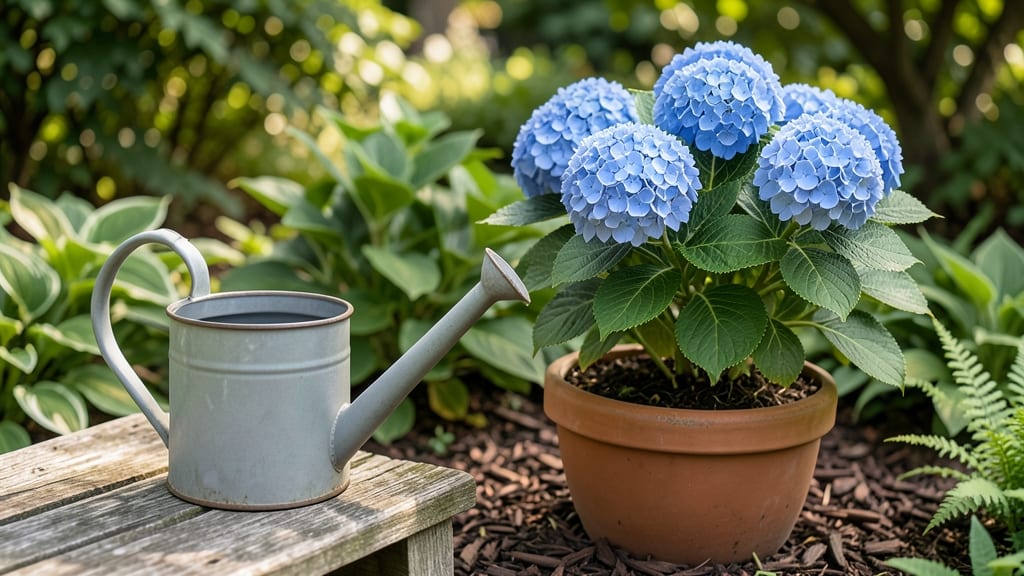
Mastering the blue hydrangea water requirements 💙 is the key to those show-stopping cobalt blooms you’ve been dreaming of.
Struggling to keep your blue hydrangeas blooming in that stunning cobalt shade? The secret isn’t just in the soil pH—it’s in mastering the delicate balance of water that transforms ordinary hydrangeas into vibrant blue masterpieces.
Too little water, and your hydrangeas will wilt and drop buds before they bloom. Too much, and you risk root rot or faded flowers that never reach their full vibrant blue potential.
The solution lies in consistent moisture—never soggy, never dry—paired with smart watering habits that adapt to the season.
In this guide, I’ll break down exactly how much water your blue hydrangeas need, when to water for peak blooms, and how to spot the subtle signs of thirst or overwatering. You’ll also discover how mulch and soil type can make or break your watering routine.
How much water do blue hydrangeas need daily for optimal blooms?
Blue hydrangeas (Hydrangea macrophylla) thrive on a consistent moisture balance—too little causes wilting, while too much leads to root rot. The key is providing 1-1.5 inches of water weekly, adjusted by season and climate.
I’ve learned through trial and error that morning watering prevents fungal issues while allowing foliage to dry before evening humidity sets in.
Your blue hydrangea’s water needs change dramatically from spring to winter. During active growth (April–September), aim for deep watering 2-3 times per week, ensuring moisture reaches the 12-inch soil depth.
In dormancy (October–March), reduce to monthly watering unless your region experiences drought conditions. Overwatering in winter can suffocate roots, while underwatering stresses the plant during bud formation.
Here’s the watering frequency breakdown I’ve perfected over years of growing blue hydrangeas:
| Season | Watering Frequency | Depth | Best Time |
|---|---|---|---|
| Spring (April-June) | 2-3 times/week | 12 inches | Morning (6-9 AM) |
| Summer (July-August) | Every 5-7 days | 12-18 inches | Early morning |
| Fall (September-October) | Every 10-14 days | 10 inches | Morning |
| Winter (November-March) | Monthly (unless dry) | 6 inches | Thawing periods |
I’ve noticed that morning watering (before 10 AM) is critical for blue hydrangeas. Watering in the evening can lead to fungal diseases like powdery mildew, which thrives in damp foliage overnight.
Always water at the base of the plant, not overhead, to protect those delicate blooms and prevent leaf spot diseases. A soaker hose or drip irrigation system is my go-to for efficient, targeted watering.
One of the most common mistakes I see is overwatering young plants. Newly planted blue hydrangeas need consistent moisture but can’t handle soggy soil. Use your finger to check soil moisture—if the top 2 inches feel dry, it’s time to water.
For established shrubs, the soil should stay evenly moist but never waterlogged. A simple test is to dig down 4 inches; if it’s damp, hold off on watering.
Mulch plays a huge role in moisture retention. Apply a 3-inch layer of organic mulch (like shredded bark or pine needles) around the base of your hydrangea, keeping it 6 inches away from the stem.
This helps maintain even soil temperatures and reduces evaporation, cutting your watering needs by 30-40%. I’ve seen mulched plants maintain vibrant blue blooms even during hot, dry summers.
Watch for these signs of overwatering: yellowing leaves, wilting despite moist soil, or mushy stems. Underwatering shows as crispy leaf edges, drooping blooms, or soil pulling away from the pot. If you notice these, adjust immediately—hydrangeas are forgiving but not drought-proof.
I once lost a prized blue hydrangea to root rot because I ignored the soggy soil signs for weeks—don’t make that mistake!
For container-grown blue hydrangeas, the rules change slightly. Potted plants dry out faster, so check soil moisture every 2-3 days in summer. Use a well-draining potting mix with perlite or orchid bark, and ensure the pot has drainage holes.
I’ve found that terracotta pots help regulate moisture better than plastic, but they require more frequent watering in heatwaves.
Pro tip: Group blue hydrangeas with thirsty companions like hostas or astilbes to create a microclimate that retains moisture. This natural water-sharing can reduce your overall watering effort by 20% or more.
Just avoid pairing them with succulents, which need far less water. The right neighbors make all the difference in maintaining that show-stopping blue color.
Remember, blue hydrangea color intensity
Soil moisture secrets: the hidden factors affecting blue hydrangea color
Your blue hydrangeas might be struggling to maintain that vibrant cobalt hue because soil moisture isn't just about watering frequency—it's a complex dance between soil type, drainage, and humidity levels.
While acidic soil (pH 5.0-6.0) is essential for blue blooms, even the right pH won't help if your plant's roots are drowning or dehydrated. The hidden factors in soil moisture create the perfect conditions for those stunning flowers.
I've learned through years of trial and error that clay-heavy soils hold too much moisture, while sandy soils drain too quickly—both extremes can stress hydrangeas and dull their color. Even in ideal soil, humidity fluctuations and seasonal temperature shifts dramatically affect how much water your plants actually need.
Understanding these interactions is the key to unlocking that deep blue potential in your hydrangeas.
Blue hydrangeas cannot tolerate soggy roots. Even with perfect acidity, waterlogged soil causes root rot in just 3-5 days, turning leaves yellow and flowers pale. Test drainage by pouring 1 gallon of water on soil—if it doesn't drain within 2 hours, amend with compost or perlite immediately.
To properly assess your soil's moisture dynamics, I recommend creating a simple DIY moisture test using common household items. Grab a wooden skewer or metal rod, insert it 6 inches deep near your hydrangea, and check the soil's texture.
If it clumps together when squeezed (clay soil), water less frequently but more deeply. If it crumbles easily (sandy soil), water more often but with less volume to prevent runoff.
The humidity factor is often overlooked but plays a crucial role. In dry climates, hydrangeas may need 20-30% more water than in humid regions because moisture evaporates faster.
I've noticed my Pacific Northwest hydrangeas thrive with morning watering because cooler nights reduce evaporation, while my Arizona plants require evening watering to combat daytime heat. Always adjust based on your local relative humidity levels.
Another surprising factor is the mulch layer around your hydrangeas. A 3-4 inch mulch of pine bark or shredded leaves can reduce water needs by up to 40% by slowing evaporation. However, avoid piling mulch directly against the stem as this can create moisture pockets that promote rot.
Instead, create a donut-shaped ring around the base, keeping it 2-3 inches away from the trunk.
For those living in containers, soil moisture management becomes even more critical. Potted hydrangeas dry out 3-5 times faster than in-ground plants. I've found that using terracotta pots (which wick moisture) with self-watering trays helps maintain consistent moisture.
Always check soil moisture by inserting your finger 2 inches deep—if it feels dry, water thoroughly until it runs from the drainage holes.
Remember, the goal is consistent moisture, not soggy soil. Your blue hydrangeas will reward you with vibrant cobalt blooms when you master these hidden soil moisture secrets.
Start with a simple soil test, adjust your watering based on local conditions, and watch your hydrangeas transform from pale pink to deep blue magic. 💙