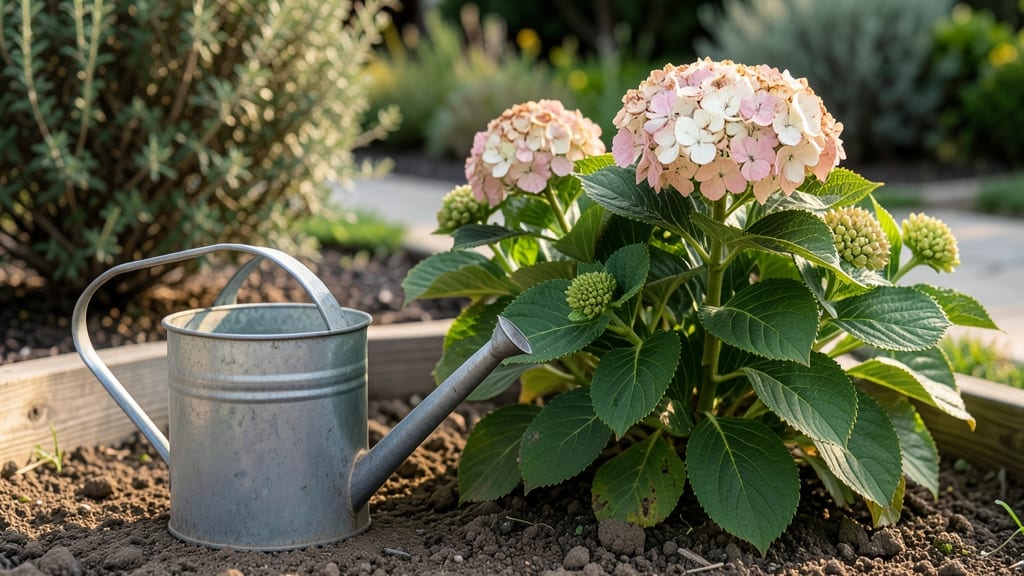
Brown spots on hydrangea flowers usually mean your soil pH is off or a fungal infection is setting in. 🌿 I’ve spent years watching these stunning blooms fade from vibrant blue to sad, spotted messes—and I’ve cracked the code to bring them back to life.
The fix isn’t complicated, but it does take a little detective work to pinpoint the exact problem.
Most gardeners assume it’s a disease, but 90% of the time, it’s either too much sun, inconsistent watering, or soil that’s too alkaline. My hydrangeas used to look like they’d been dipped in tea, until I tested the soil and adjusted the care routine.
The key is checking for powdery mildew, leaf spot, or even sunburn—each needs a slightly different fix.
Once you identify the issue, the solution is straightforward: prune the damaged blooms, balance your watering, and tweak the soil pH if needed. Within 4-6 weeks, you’ll see fresh, vibrant blooms pushing through—no more sad, spotted flowers. The best part? This method works for both container and in-ground plants.
If you’re tired of seeing your hydrangeas look more like a science experiment gone wrong, this is the guide that’ll turn things around. Let’s get those blooms back to their showstopping best—no more guessing, just results.
Root Causes Of Hydrangea Discoloration
When your hydrangea blooms start showing unsightly brown spots, it’s usually a sign that something’s off—whether it’s environmental stress, fungal infections, or even nutrient imbalances. Understanding the why behind these spots is the first step to restoring your plant’s glory.
Below, we break down the most common culprits, backed by science, so you can diagnose and fix the issue with confidence.
Hydrangeas thrive in partial shade, and when exposed to intense midday sun, their delicate petals can suffer from photooxidative damage. This happens when UV rays break down pigments in the flowers, causing them to brown and crisp—especially in hot, dry climates.
How to spot it: Spots appear dry and papery, often on the outer edges of flowers facing the sun. Affected areas may feel rough to the touch.
Why it happens:
Hydrangeas evolved in woodland understories, where dappled sunlight is the norm. Direct sun overwhelms their protective pigments (like anthocyanins).
Transpiration stress (water loss) accelerates when roots can’t keep up with evaporation, leading to oxidative cell death in petals.
High temperatures (90°F/32°C+) denature enzymes responsible for flower maintenance, speeding up decay.
💡 Pro Tip: If your hydrangea is in a south-facing spot, provide afternoon shade with a sheer curtain or nearby trees. Mulch heavily to retain soil moisture and reduce heat stress.
Fungi like Botrytis blight and powdery mildew love damp, stagnant conditions—and hydrangeas, with their thick, moisture-retaining blooms, are prime targets. These pathogens spore and spread when humidity is high (above 75%) and airflow is poor, leading to brown, mushy, or powdery spots.
Fungal Type
Visual Clues
Scientific Cause
Botrytis blight
Spots start grayish-brown, then turn leathery and sunken.
White fuzzy mold may appear on undersides.
Affects lower blooms first (where water pools).
The fungus Botrytis cinerea releases cellulolytic enzymes that break down plant cell walls, causing necrosis. It thrives in wet conditions and weakened tissue (e.g., from poor circulation).
Powdery Mildew
White powdery coating on spots.
Spots yellow first, then brown and crispy.
Common on young, crowded blooms.
The pathogen Podosphaera spp.suffocates stomata (leaf pores), blocking gas exchange and causing chlorosis (yellowing) before necrosis. High humidity (>60%) encourages spore germination.
🔥 Prevention: Space plants for airflow (2–3 ft apart), water at the base (avoid overhead), and prune for sunlight penetration. For treatment, apply neem oil or baking soda spray (1 tsp baking soda + 1 quart water + a drop of soap) every 7–10 days.
While hydrangeas love moisture, waterlogged roots create a double whammy: root rot (from Phytophthora fungi) and oxygen deprivation in the soil. When roots can’t absorb nutrients efficiently, flowers starve and brown from the inside out.
How to spot it:
Spots are water-soaked and soft (not dry).
Leaves may yellow and wilt despite wet soil.
Foul musty smell near the base.
Why it happens:
Anaerobic conditions (low oxygen) trigger ethylene production, a plant stress hormone that accelerates senescence (aging) in flowers.
Phytophthora fungi infect roots, blocking water/nutrient uptake. The plant translocates resources to surviving roots, leaving blooms dehydrated and brown.
Compacted or clay-heavy soiltraps excess water, worsening the problem.
🌡️ Fix It:
Improve drainage by amending soil with perlite or compost.
Water deeply but infrequently—aim for 1–1.5 inches per week (check with a trowel: soil should be damp but not soggy 2 inches down).
Consider raising beds or planting in containers with drainage holes.
Hydrangeas are heavy feeders, and when key nutrients are lacking, their flowers fail to develop properly or turn brown prematurely. The most critical offenders?
Nutrient
Deficiency Signs
Why It Causes Spots
Magnesium (Mg)
Brown interveinal spots (between veins) on petals.
Older blooms yellow first, then brown.
Mg is a central atom in chlorophyll. Without it, photosynthesis falters, leading to oxidative stress in petals. Hydrangeas also need Mg for energy transfer—without it, flowers can’t maintain cell integrity.
Revive Your Hydrangeas Naturally
Brown spots on hydrangea blooms can be disheartening, but with the right fixes, your plants can bounce back to their stunning, vibrant selves. The key is identifying the root cause—whether it’s pH imbalance, fungal infections, environmental stress, or nutrient deficiencies—and taking targeted action.
Below, we’ll walk you through practical solutions tailored to each issue, plus tips to keep your hydrangeas thriving long-term. Let’s get those flowers back to their show-stopping blue! 🌸✨
If your hydrangeas are producing pink or dull flowers instead of blue, the soil pH is likely too alkaline. Blue hydrangeas thrive in acidic soil (pH 5.0–5.5). Here’s how to adjust it:
🔍 Test Your Soil
Grab a soil pH test kit (available at garden centers) or send a sample to a local extension office for accurate results. Aim for a reading between 5.0 and 5.5 for blue blooms.
🍋 Add Organic Acidifiers
Mix sulfur, peat moss, or pine needles into the soil around the base of the plant. Aluminum sulfate (1 tbsp per gallon of water) can also lower pH quickly, but use sparingly—it’s potent!
Pro Tip: 💡 Sprinkle coffee grounds (used, not fresh) around the plant—they’re a natural acidifier and add nutrients.
💧 Water with Vinegar or Lemon Juice (Mild Fix)
For a gentle tweak, mix 1 cup of white vinegar per gallon of water and water the base of the plant. Repeat every 2–3 weeks. Lemon juice (1 tbsp per gallon) works too, but don’t overdo it—it can harm roots.
🌱 Mulch with Acid-Loving Materials
Cover the soil with pine bark mulch, oak leaves, or composted pine needles. This slowly acidifies the soil while retaining moisture.
⏰ Be Patient
Soil pH changes take time—re-test after 4–6 weeks and adjust as needed.
Brown spots caused by powdery mildew, leaf spot, or botrytis require a mix of fungicides, pruning, and preventive care. Here’s how to tackle it:
👨🍳 Prune Infected Areas
Use sterilized pruners to snip off spotted leaves and stems. Dispose of them in the trash (not compost)—fungal spores can spread.
💊 Apply Fungicidal SpraysNeem oil (1 tsp per quart of water + a drop of dish soap as a spreader) is a natural, effective fungicide. For severe cases, use a copper fungicide (follow label instructions).
Pro Tip: 🌡️ Spray in the early morning or evening to avoid burning leaves in direct sunlight.
🌬️ Improve Air Circulation
Space plants 3–4 feet apart and avoid overcrowding. If growing in containers, ensure pots have drainage holes.
💧 Water WiselyWater at the base (not overhead) to keep leaves dry. Early morning watering gives foliage time to dry before nightfall.
🛡️ Prevent Recurrence
Apply a preventative fungicide spray every 2–3 weeks during humid months. Baking soda spray (1 tsp baking soda + 1 quart water + a drop of soap) can also help.
Too much direct sun or heat can cause brown, crispy edges on hydrangea blooms. These plants prefer partial shade (morning sun + afternoon shade). Here’s how to protect them:
🌿 Provide Shade Cloth
If your hydrangeas are in a sunny spot, drape 30–50% shade cloth over them during peak afternoon heat (1–4 PM).
💦 Increase Watering Frequency
Water deeply 2–3 times per week (more in extreme heat). Use mulch to retain moisture and cool roots.
🌱 Choose the Right Variety
Some hydrangeas (like Endless Summer) tolerate more sun than others. If your current plant struggles, consider a shade-loving variety like Annabelle or Nikko Blue.
🌧️ Mist Leaves on Hot Days
Lightly misting leaves with water on scorching afternoons can provide temporary relief (but avoid doing this at night to prevent fungal growth).
Brown spots can also signal nutrient deficiencies, especially iron, magnesium, or nitrogen shortages. Feed your hydrangeas with these simple fixes:
📊 Use a Balanced Fertilizer
Apply a slow-release, acidic fertilizer (like 10-10-10 or one formulated for hydrangeas) in early spring and again after flowering.
💪 Add Iron or Magnesium
For yellowing between veins (iron deficiency), use an iron chelate or sprinkle Epsom salt (magnesium sulfate) around the base (1 tbsp per foot of plant height).
Pro Tip: ✨ Mix 1 tbsp Epsom salt into a gallon of water and water the plant monthly during growing season.
🍎 Compost or Manure Tea
Boost soil health with well-aged compost or fish emulsion (diluted per label) to provide a nutrient-rich feed.
🌱 Avoid Over-Fertilizing
Too much fertilizer can burn roots and stress the plant. Follow package instructions and water thoroughly after applying.
Keep your hydrangeas spot-free and stunning with these easy maintenance habits:
💧 Consistent Watering: Hydrangeas hate drought—keep soil evenly moist (but not soggy).
🌿 Regular Pruning: Deadhead spent blooms in early summer to encourage new growth.
🍂 Fall Cleanup: Remove old leaves and debris to reduce fungal overwintering.
🌱 Mulch Annually: Top-dress with 2–3 inches of mulch in spring to protect roots and retain moisture.
🔄 Rotate Fertilizers: Alternate between organic and synthetic fertilizers for balanced nutrition.
With these solutions, your hydrangeas should be back to their vibrant best in no time. Whether it’s tweaking the soil pH, battling fungi, or shielding them from the sun, a little care goes a long way! 🌸💙
Frequently asked questions
1
Why do my hydrangea flowers turn brown only on the edges?
This is usually sunburn from too much direct afternoon sun. Hydrangeas prefer partial shade, and their delicate petals can crisp up when exposed to hot rays (especially between 1-4 PM). Try providing afternoon shade with a sheer curtain or nearby trees. Mulching heavily also helps retain moisture and protect roots from heat stress.
2
Can I still save my hydrangeas if the brown spots are mushy and smell bad?
Yes, but you're likely dealing with root rot or botrytis blight. Prune off all infected blooms and stems immediately, then improve drainage by amending soil with perlite or compost. Water only at the base (never overhead) and space plants for better airflow. For severe cases, apply a copper fungicide every 7-10 days until new growth appears.
3
How often should I check my hydrangeas for early signs of brown spots?
Inspect your plants every 7-10 days during growing season (spring-fall). Look for early signs like yellowing between veins (magnesium deficiency), white powdery coatings (mildew), or dry edges (sunburn). Catching problems early makes treatment much easier. Morning inspections work best when leaves are dry.
4
Will pruning help if my hydrangeas already have brown spots?
Prune only the damaged blooms and stems using sterilized tools to prevent spreading spores. Remove at least 2 inches below the brown spot to ensure you get all infected tissue. For severe cases, prune 1/3 of the oldest stems to encourage new growth. Always dispose of pruned material in the trash, not compost.
5
Can I use household items to treat brown spots instead of store-bought products?
Yes! For fungal issues, mix 1 tsp baking soda + 1 quart water + a drop of dish soap and spray on leaves every 7-10 days. For nutrient deficiencies, use Epsom salt (1 tbsp per gallon of water) monthly for magnesium. Coffee grounds (used, not fresh) around the base help acidify soil naturally. Just remember: household remedies work best for prevention, not severe infections.