
Light Requirements
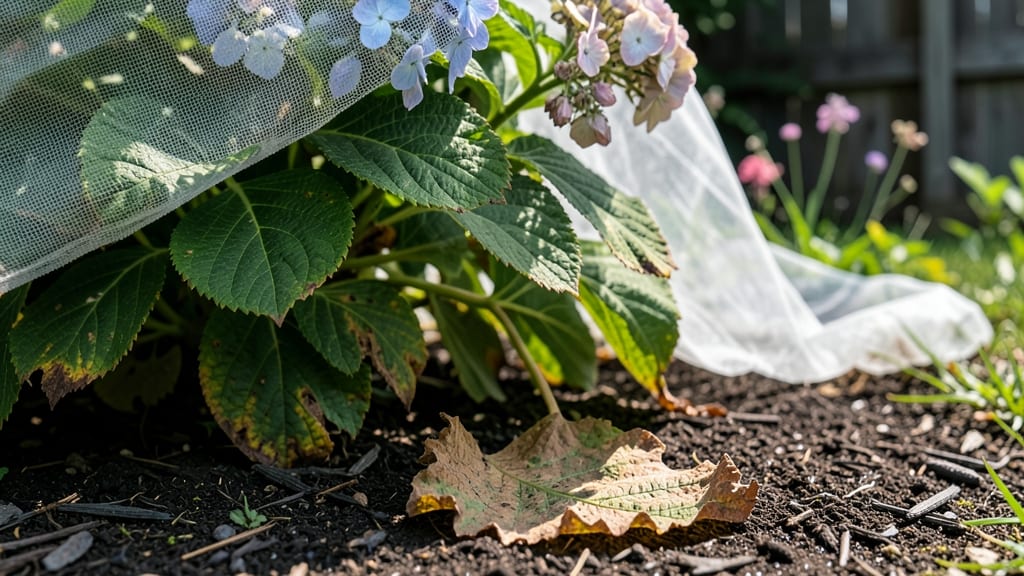
Hydrangeas too much sun turns their leaves crispy and their blooms sad—like a plant sunburn. 🌿 I’ve seen this happen more times than I’d like, and the good news is it’s almost always fixable with a few simple adjustments.
The key is understanding how much sun hydrangeas really need and how to protect them from afternoon intensity.
Most hydrangeas thrive in morning sun and afternoon shade, especially in hotter climates. When they get blasted by full sun, leaves scorch, stems weaken, and blooms dry out before they even open.
The fix isn’t complicated: move them to a spot with 3-4 hours of morning light or provide afternoon shade with a sheer curtain or taller plants nearby.
Once you adjust their light, deep watering and mulching become your new best friends. Keep the soil consistently moist but not soggy, and spread a 2-3 inch layer of mulch to protect roots.
Within a few weeks, you’ll see fresh, vibrant leaves and blooms that last all summer. It’s like giving your hydrangeas a second chance.
For hotter zones, consider shade-tolerant varieties like Oakleaf or Limelight—they handle a bit more sun than others. And if you’re growing in containers, move them to a shadier spot during peak afternoon heat. Trust me, your hydrangeas will thank you with lush, healthy growth.
How Sun Stress Damages Hydrangeas
When your hydrangeas start wilting under the sun, it’s not just a matter of them being "too hot"—it’s a complex reaction tied to their biology, environment, and even the type of plant you’re growing.
Let’s break down the science behind why excessive sunlight can turn your lush blooms into crispy, sad remnants.
Hydrangeas (Hydrangea macrophylla, H. paniculata, and others) thrive in partial shade because their large, delicate leaves are prone to transpiration overload.
When exposed to direct sunlight for more than 4–6 hours daily, especially in hot climates, their leaves lose moisture faster than their roots can absorb it.
- Why it happens: The sun’s UV radiation increases leaf temperature, while high winds (common in sunny areas) accelerate evaporation.
This creates a water deficit, causing: - Leaf scorch (brown, crispy edges) - Wilting (flaccid stems and drooping blooms) - Premature leaf drop (the plant sheds foliage to conserve water)
💡 Pro Tip: If your hydrangeas are in a south-facing spot, their leaves may feel hot to the touch—this is a red flag. Test by running your finger over them midday; if they’re uncomfortably warm, they’re in distress.
Unlike tough shrubs, hydrangeas lack protective cuticles or deep root systems to shield them from intense sunlight. When exposed to full sun, their chlorophyll (the green pigment responsible for photosynthesis) breaks down due to:
- Photoinhibition: Excess light overwhelms the plant’s ability to process sunlight, leading to oxidative stress.
This triggers the production of reactive oxygen species (ROS), which damage cell membranes. - Anthocyanin Overproduction: In response to stress, hydrangeas may produce red or purple pigments (anthocyanins) to protect leaves—but this is a last-resort defense, not a healthy state. Over time, this weakens the plant.
🔥 Result: Leaves turn bleached white, yellow, or bronze—a clear sign of sunburn. If ignored, this leads to necrosis (dead tissue) and stunted growth.
Hydrangeas prefer moist, well-draining soil with organic matter to support their shallow roots. Too much sun dries out the soil faster, forcing roots to work harder to absorb water. Here’s how this backfires:
- Root Desiccation: Shallow roots shrink and recede when soil moisture drops, reducing the plant’s ability to uptake nutrients and water.
- Heat Stress on Microbes: Beneficial mycorrhizal fungi (which help roots absorb water) die off in overheated soil, weakening the plant’s resilience.
- Nutrient Imbalance: Excessive sun speeds up nitrogen breakdown in the soil, leading to deficiencies—especially magnesium and potassium, which hydrangeas need for vibrant blooms.
✨ Fun Fact: Hydrangeas in full sun may also suffer from "hydrangea wilt"—a condition where stems plaster themselves to the ground in an attempt to stay cool.
Not all hydrangeas react the same way to sun. Some types are hardier than others:
| Hydrangea Type | Sun Tolerance | Why It Struggles |
|---|---|---|
| Bigleaf Hydrangea (H. macrophylla) | Low | Thin leaves, shallow roots—easily scorched. |
| Panicle Hydrangea (H. paniculata) | Moderate | More drought-tolerant but still wilts in extreme heat. |
| Oakleaf Hydrangea (H. quercifolia) | Moderate-High | Handles morning sun better but afternoon sun causes leaf burn. |
| Smooth Hydrangea (H. arborescens) | Moderate | Can tolerate some sun but blooms may fade without shade. |
🎯 Key Takeaway: If you have Bigleaf hydrangeas (the most popular type), they’re the most sun-sensitive—they’ll show damage first and fastest.
Even if your hydrangeas usually handle some sun, a sudden heatwave (like a 90°F+ day) can be catastrophic. Here’s why:
- Rapid Temperature Swings: If your hydrangea is used to mild sun but then hit with intense afternoon heat, its stomata (pores) close to prevent water loss—but this also blocks CO₂ intake, halting photosynthesis.
- Soil Moisture Mismatch: If you water deeply once a week but then get three days of 100°F weather, the topsoil dries out overnight, leaving roots high and dry.
- Pest Invitation: Stressed hydrangeas become magnets for pests like spider mites and aphids, which thrive in hot, dry conditions.
💪 Solution: If a heatwave hits, mulch heavily (3–4 inches of wood chips or straw) to lock in moisture and cool roots.
When leaves suffer, blooms take the hit. Here’s how sun stress ruins your hydrangea flowers:
- Bud Drop: Excessive heat causes flower buds to abort before opening.
- Bleached Blooms: Sun-weakened plants produce pale, washed-out flowers (instead of vibrant blues, pinks, or whites).
- Stunted Growth: The plant diverts energy from blooming to survival, leading to smaller clusters.
- Premature Death: In extreme cases, entire flower heads dry up and fall off by midsummer.
🍃 Visual Clue: If your hydrangea blooms are smaller than usual or opening late, sun stress is likely the culprit.
Revive Sun-Stressed Hydrangeas
If your hydrangeas are wilting, turning crispy, or losing their vibrant blooms under too much sun, don’t panic—there’s still hope! The good news is that hydrangeas are resilient, and with the right adjustments, you can help them bounce back.
Below, we’ll break down the most common issues caused by excessive sunlight and provide practical, step-by-step solutions to bring your plants back to life. Plus, we’ll share tips to prevent future sun damage so your hydrangeas thrive all season long.
If your hydrangea leaves are yellowing, browning, or developing crispy edges, it’s a clear sign of sunburn or dehydration. Sudden exposure to harsh sunlight can shock the plant, causing irreversible damage if left unchecked.
🔥 Step 1: Provide Immediate Relief
- Move the plant to a spot with morning sun and afternoon shade. If possible, relocate it to a location where it receives 4–6 hours of filtered sunlight per day.
- Use shade cloth (30–50% coverage) if you can’t move the plant. Secure it loosely over the hydrangea to diffuse the sunlight without blocking airflow.
- Mist the leaves with water in the early morning or late evening to help them recover from heat stress.
👨🍳 Step 2: Trim Damaged Foliage
- Snip off brown, crispy, or wilted leaves using clean pruning shears. This helps the plant redirect energy to healthy growth.
- Avoid cutting into green stems—only remove leaves that are completely damaged.
💡 Prevention Tip:
- Acclimate slowly if moving hydrangeas to a sunnier spot. Start with a few hours of sun per day and gradually increase exposure over 1–2 weeks.
If your hydrangeas are producing small, dull blooms or flowers that refuse to open, they may be struggling with a combination of too much sun and inconsistent watering. Hydrangeas need moisture-retentive soil to support large, vibrant blooms.
🥘 Step 1: Deep Watering Routine
- Water deeply 2–3 times per week (or daily in extreme heat). Aim for 1–1.5 inches of water per week, ensuring the soil stays evenly moist but not soggy.
- Use a soaker hose or drip irrigation to deliver water directly to the roots, reducing evaporation and leaf scorch.
- Mulch the base with 2–3 inches of organic mulch (like shredded bark or compost) to retain moisture and regulate soil temperature.
🌡️ Step 2: Check Soil Moisture
- Stick your finger 2 inches into the soil—if it’s dry, it’s time to water. Hydrangeas hate drying out!
- Avoid overhead watering during peak sun hours, as wet leaves can magnify sun damage.
✨ Prevention Tip:
- Group hydrangeas with other shade-loving plants (like ferns or astilbes) to create a natural microclimate that retains moisture and diffuses sunlight.
If your hydrangea has stopped growing entirely or is producing only sparse, weak stems, the issue might be nutrient deficiency or compacted soil from prolonged sun exposure. Overheated soil can prevent roots from absorbing essential nutrients.
📊 Step 1: Amend the Soil
- Test your soil’s pH (hydrangeas prefer 5.2–6.2 for blue flowers or 6.0–7.0 for pink blooms). Adjust with sulfur (for acidity) or lime (for alkalinity) as needed.
- Mix in compost or aged manure to improve soil structure and fertility. Aim for a 50/50 mix of garden soil and organic matter.
💪 Step 2: Fertilize Smartly
- Use a balanced, slow-release fertilizer (like 10-10-10) in early spring to encourage new growth.
- Avoid high-nitrogen fertilizers in summer, as they promote leafy growth at the expense of blooms.
- For extra care, apply a hydrangea-specific fertilizer with micronutrients like iron and magnesium.
🎯 Prevention Tip:
- Plant hydrangeas in a north-facing bed or under the dappled shade of trees to naturally protect them from intense afternoon sun while still getting enough light.
If your hydrangea is completely wilted, leafless, or showing signs of heat shock, act fast with these emergency steps:
- 🔪 Prune back severely damaged stems to encourage new growth from the base.
- 🌧️ Submerge the root ball in water for 30 minutes to rehydrate stressed roots.
- 🏡 Move it to a cooler, shadier spot (like a patio or garage) for a few days to recover.
- 💧 Keep the soil consistently moist and monitor for signs of recovery (new leaves or buds).
With patience, most hydrangeas can recover from sun damage—just give them the right conditions, and they’ll reward you with lush, blooming beauty!
Frequently asked questions
Why do my hydrangea leaves turn brown and crispy in full sun?
Excessive sunlight causes leaf scorch—the sun's UV rays overheat delicate leaves faster than roots can absorb water. This creates a moisture deficit, leading to brown, crispy edges. Bigleaf varieties are most sensitive, while Oakleaf hydrangeas tolerate slightly more sun.
Can I save a hydrangea that's completely wilted from too much sun?
Yes! First, move it to shade immediately and prune all damaged leaves. Soak the root ball in water for 30 minutes to revive roots, then keep soil consistently moist (not soggy). Most hydrangeas recover within 2-3 weeks with proper care.
How much shade does a hydrangea really need?
Most hydrangeas thrive with morning sun and afternoon shade—about 3-4 hours of direct light daily. For hot climates, dappled shade all day (like under tall trees) works best. Bigleaf types need the most protection, while Oakleaf varieties handle up to 6 hours of morning sun.
Will shade cloth work for hydrangeas in full sun?
Use 30-50% shade cloth to filter harsh rays while allowing airflow. Secure it 3-4 feet above the plant to avoid blocking light completely. For containers, move them to a shadier spot during peak afternoon heat (2-5 PM).
Can I grow hydrangeas in containers if they get too much sun?
Containers offer flexibility—just choose large pots (15+ gallons) for better root stability. Move them to shade during heatwaves and use self-watering systems to maintain moisture. Oakleaf varieties adapt better to containers than Bigleaf types.