
Planting
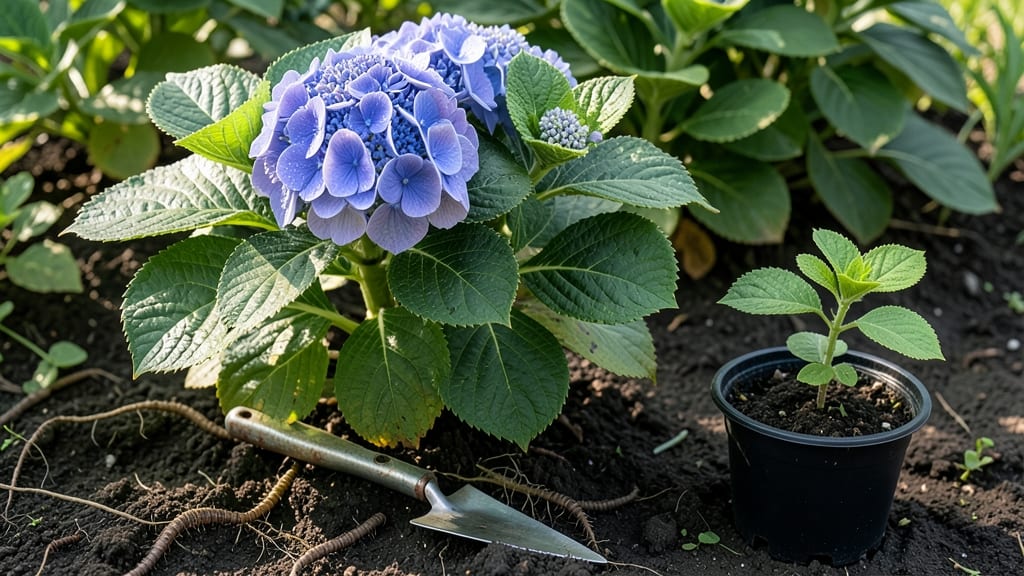
To plant hydrangea bushes properly, space them 3 to 6 feet apart, with dwarf varieties needing 3 feet and large shrubs like oakleaf or panicle types requiring 5 to 6 feet for healthy growth and airflow. Always check the mature size tag for exact spacing needs.
Proper spacing prevents root competition and ensures each plant gets enough sunlight and nutrients to thrive. 🌿 Different hydrangea types grow at varying rates—dwarf varieties like 'Little Lime' stay compact, while bigleaf hydrangeas can spread 5 feet wide over time.
I recommend planting larger varieties along fences or property lines to maximize their natural spread without overcrowding your garden.
For container planting, reduce spacing to 2-3 feet since roots are restricted, but choose smaller varieties like 'Endless Summer' to avoid overcrowding. In windy areas, slightly wider spacing helps prevent damage to delicate stems, while shaded spots may require closer planting to encourage bushier growth.
💡 In This Article
- Hydrangea Spacing by Variety: Dwarf vs. Large Shrubs
- Pro Tips for Planting Hydrangeas in Different Garden Layouts
Hydrangea spacing by variety: dwarf vs. large shrubs
The key to proper hydrangea spacing lies in understanding each variety's mature size and growth habit. Bigleaf hydrangeas (Hydrangea macrophylla), like the popular 'Endless Summer', typically reach 3-5 feet tall and spread 4-6 feet wide at maturity.
This expansive growth means they need 4-6 feet between plants to prevent root competition, which can stunt growth and reduce bloom production. The science here involves root systems spreading laterally—when crowded, roots compete for water and nutrients, leading to weaker stems and fewer flowers.
Dwarf varieties, such as 'Little Lime' or 'Mini Penny', stay compact at 2-3 feet tall and wide, making 2-3 feet of spacing ideal.
These smaller types thrive in tight spaces like containers or small gardens, but their roots still need room to expand. 🌿 Oakleaf hydrangeas (Hydrangea quercifolia) are another story—they can grow 6-10 feet tall and spread 5-8 feet wide, requiring 5-6 feet of clearance.
Their large leaves and spreading habit demand more space to avoid overcrowding and fungal diseases caused by poor airflow.
Panicle hydrangeas (Hydrangea paniculata), like 'Limelight' or 'Little Quick Fire', bridge the gap with moderate sizes of 4-6 feet tall and 3-5 feet wide. These varieties need 4-5 feet of spacing, balancing their need for sunlight with their ability to handle slightly tighter conditions.
The difference in spacing comes down to how aggressively each type spreads—bigleaf hydrangeas send out lateral roots more aggressively than panicle types, which grow more upright.
Sunlight exposure also plays a role in spacing decisions. Bigleaf hydrangeas prefer partial shade, so closer spacing (3-4 feet) may work in shaded areas, but this reduces airflow and increases disease risk.
In full sun, wider spacing (5-6 feet) is critical to prevent leaf scorch and fungal infections. 🌞 The trade-off is between maximizing blooms (which need sunlight) and maintaining plant health (which requires airflow).
Always check the plant tag for specific sunlight requirements—some varieties, like 'Nikko Blue', tolerate more sun than others.
Root competition isn't just about width—it's also about depth. Hydrangeas have fibrous root systems that spread horizontally but can extend 2-3 feet deep. When planted too closely, roots from neighboring plants intertwine, creating a competitive environment where weaker plants suffer.
This is why dwarf varieties can handle closer spacing—their root systems stay more contained. For larger shrubs, the 5-6 feet rule ensures roots have enough territory to establish without battling neighbors for resources.
One common mistake is spacing based on the plant's current size rather than its mature dimensions. A 2-foot-tall hydrangea may look small, but it could reach 6 feet wide in 5 years. Planting too close now means struggling with overcrowding later.
Always visualize the plant's full size—imagine a 6-foot-wide shrub next to your fence and adjust spacing accordingly. This foresight saves time and effort in future pruning or transplanting.