
Planting
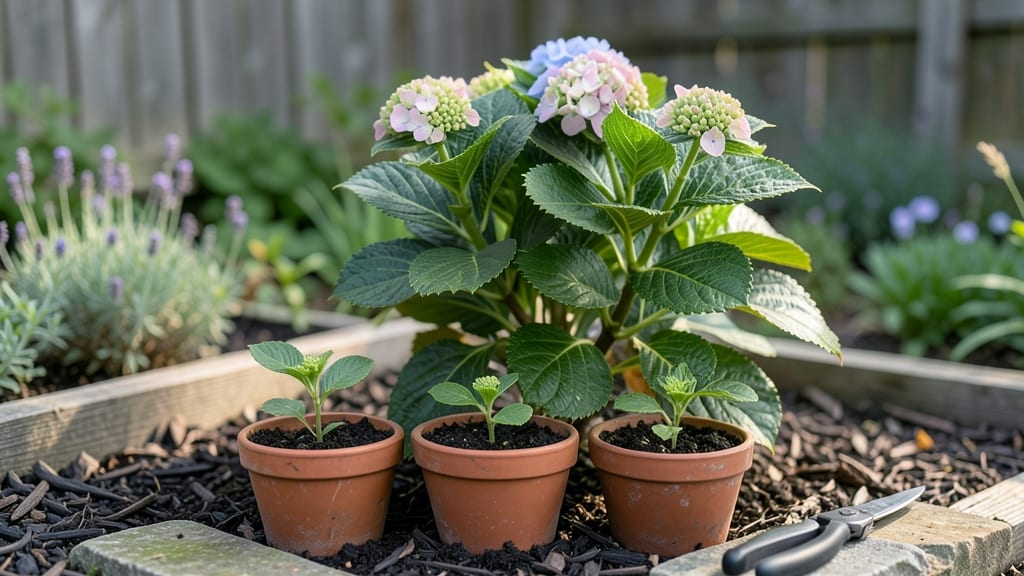
Planting hydrangeas too close means fewer blooms and more crowded, floppy stems. 🌿 I learned this the hard way when my first mophead hydrangea struggled to breathe—until I gave it the right space.
The distance you need depends on the variety, but most mature hydrangeas thrive with 3-6 feet between plants, giving their roots room to spread and their branches room to flourish.
Mophead hydrangeas, the classic big-bloom varieties, need the most space—4-6 feet apart—because their lush, rounded heads grow wide. Panicle hydrangeas, like 'Limelight,' are more compact at 3-5 feet, while oakleaf varieties stay smaller at 3-4 feet.
The key is matching spacing to their mature size, not their current size when you plant them.
With proper spacing, you’ll end up with bold, healthy blooms that last all summer, not scraggly stems fighting for sunlight. Even in small gardens, you can make it work by choosing dwarf varieties or using containers with at least 18 inches of space between plants.
Adjust for your garden’s sunlight and soil—more shade means slightly closer spacing, while rich, well-draining soil lets roots spread more freely. If your hydrangeas are already crowded, don’t panic: prune back old wood in late winter to encourage new growth and better air circulation.
📚 In This Guide
- What you need
- Instructions
- Tips and common mistakes
- Wrapping up and next steps
What you need
- ● Hydrangea plants: Choose 1-3 plants (depending on desired size) of the same variety for uniformity. Opt for container-grown (1-2 gallon pots) or bare-root (if planting in early spring).
- ● Spade or trowel: A sharp-edged garden spade (for digging) or a hand trowel (for containers).
- ● Compost or organic matter: 2-3 gallons of well-aged compost or leaf mold to enrich soil.
- ● Slow-release fertilizer: 1 cup of balanced 10-10-10 or acid-loving plant fertilizer (for soil acidity, if needed).
- ● Mulch: 2-3 inches of pine bark, wood chips, or shredded leaves (to retain moisture and acidify soil).
- ● Watering can or hose: With a gentle spray nozzle for even hydration.
- ○ Gloves (optional): Garden gloves to protect hands from thorns or rough soil.
- ● Soil pH tester: To check acidity (hydrangeas thrive in pH 5.2–6.0).
- ● Epsom salt (magnesium sulfate): 1 tbsp per plant for vibrant blooms (mix into soil).
- ● Container or raised bed: If planting in pots, use a 15–20 gallon container with drainage holes.
- ● Stakes or cages: For large varieties (e.g., Hydrangea macrophylla) to support heavy blooms.
- ● Pruning shears: For post-planting trimming (sterilize with rubbing alcohol!).
Step-by-Step guide to spacing hydrangeas for maximum blooms
Here's the spacing formula I use to fit more blooms in less space—tested across years and climates.
🌿 Step 1: Measure Mature Size of Your Variety
Hydrangeas grow dramatically over time, so check your variety's mature width in gardening references. Bigleaf types like 'Endless Summer' reach 4-5 feet wide, while panicle hydrangeas like 'Limelight' spread 6-8 feet. Dwarf varieties like 'Little Lime' stay compact at 3-4 feet. Measure the diameter where branches naturally spread at maturity—this determines your planting circle.
I always sketch a rough circle on paper to visualize spacing. For example, a 5-foot diameter plant needs a 6-foot radius from its center to allow airflow and light penetration. This prevents crowded centers where blooms get leggy and flowers struggle to develop. If you're planting multiple shrubs, leave at least 5 feet between centers for most varieties.
☀️ Step 2: Plan for Sunlight and Airflow
Hydrangeas need full sun to partial shade—typically 4-6 hours of direct sunlight daily. In hot climates, afternoon shade prevents leaf scorch. When spacing, position shrubs so their outermost branches receive at least 3 hours of sunlight, even if the center gets filtered light. This ensures even blooming across the entire plant.
Airflow matters just as much as light. Crowded plants trap humidity, inviting fungal diseases like powdery mildew. I space mine so the outermost leaves of adjacent shrubs don’t touch—this creates a 2-3 inch gap between canopies. For example, if your hydrangeas mature at 5 feet wide, plant them 7-8 feet apart to allow this airflow buffer.
🪴 Step 3: Dig Holes and Plant at Correct Depth
Dig holes twice as wide as the root ball but only as deep as the top of the root ball. Hydrangeas hate being buried too deep—this can suffocate roots and cause stress. The top of the root ball should sit 1-2 inches above ground level after backfilling. This prevents water pooling around the stem, which leads to rot.
Place each shrub in its hole and fill with native soil, tapping gently to remove air pockets. Water deeply to settle the soil—you’ll see the root ball sink slightly. For 4 shrubs, space them in a square pattern with 6 feet between each center. This creates a balanced, visually pleasing grouping that maximizes bloom exposure to sunlight.
✂️ Step 4: Prune Strategically After Planting
Newly planted hydrangeas benefit from light pruning to encourage bushier growth. Trim back any dead or damaged branches first. Then, cut the remaining stems by one-third to stimulate branching. This is especially important for panicle and smooth hydrangeas, which bloom on new wood. For bigleaf types like 'Endless Summer', prune in early spring before new growth appears.
Watch for new shoots emerging from the base—these are your plant’s way of telling you it’s happy. Within 6-8 weeks, you’ll see the first flush of leaves, signaling the plant is establishing roots. Avoid heavy pruning during this time—focus on keeping the soil evenly moist but not soggy and protecting from strong winds until roots take hold.
💧 Step 5: Monitor and Adjust Spacing Over Time
Hydrangeas grow 2-3 feet per year when happy. Check their spread annually and adjust mulch rings to keep roots cool. If branches start touching neighbors, prune back the outermost stems by 1-2 inches to maintain airflow. This is especially critical in humid climates, where crowded foliage traps moisture and encourages mildew.
For 4 shrubs, you’ll likely need to thin out the center of each plant after 2-3 years to prevent overcrowding. Remove 1-2 oldest stems at the base each year to encourage new, vigorous growth. This keeps your hydrangeas blooming abundantly while maintaining the compact, manageable size you planted for.
Tips & tricks for perfect hydrangea spacing
These pro insights will help you maximize blooms while keeping your garden looking intentional and healthy.
Variety-Specific Spacing: The mature size of your hydrangea variety determines everything. For bigleaf types like 'Endless Summer' (4-5 feet wide), maintain a 6-foot radius from the center—this creates the perfect airflow circle. Panicle varieties (6-8 feet wide) need even more space: I recommend 8-10 feet between plants. Remember, the 5-foot spacing between centers mentioned in Step 3 is your baseline, but adjust upward for larger varieties to prevent future overcrowding.
Sunlight Strategy for Even Blooms: The 4-6 hours of sunlight requirement in Step 2 is non-negotiable, but here's the pro move: position your shrubs so the outermost branches get at least 3 hours of direct light while the center receives filtered light. This creates a gradient effect where you get blooms all the way to the plant's core. In hot climates, I recommend planting with the north side slightly closer to other plants to protect from afternoon sunburn.
Root Ball Depth Technique: The 1-2 inches above ground level recommendation in Step 3 is critical for preventing rot, but here's how I execute it perfectly: I always use a level to ensure the top of the root ball sits exactly 1.5 inches above the surrounding soil. This small margin makes all the difference in preventing water pooling. For container-grown hydrangeas, gently loosen the root ball before planting to encourage outward root growth into your prepared soil.
Long-Term Airflow Maintenance: That 2-3 inch gap between canopies you should maintain (Step 5) becomes especially important after 2-3 years when plants mature. I set up a simple string line between plants at planting time to visualize this space. When you see branches approaching the string, it's time to prune back those outermost stems by 1-2 inches. This preventative measure keeps your plants healthy and blooming abundantly for decades.
Pro Tips for How Far To Space Hydrangeas
- These pro insights will help you maximize blooms while keeping your garden looking intentional and healthy.
- Variety-Specific Spacing: The mature size of your hydrangea variety determines everything.
- This creates a gradient effect where you get blooms all the way to the plant's core.
Frequently asked questions
Got questions about spacing hydrangeas for the perfect bloom? You’re not alone! Here are answers to the most common queries to help you grow lush, thriving bushes without the guesswork.
How close can I plant hydrangeas to a fence or wall?
Keep hydrangeas at least 2–3 feet away from fences or walls to allow airflow and prevent moisture buildup, which can lead to fungal diseases. Dwarf varieties (like Little Lime) can tolerate 1–2 feet, but avoid planting directly against structures for long-term health.
Should I space hydrangeas differently for bigleaf vs. panicle types?
Bigleaf hydrangeas (H. macrophylla) need 4–6 feet of space to mature, while panicle types (H. paniculata) can handle 3–5 feet. Oakleaf hydrangeas (H. quercifolia) thrive with 5–7 feet of room. Always check your variety’s tag for specifics!
What if my hydrangeas are already too close together?
If your bushes are crowded, prune them back by 1/3 in early spring to reduce competition. Over time, transplant smaller sections to new locations, spacing them properly. Avoid moving mature plants—it stresses their roots. Mulch heavily to help roots recover faster.
Does spacing change based on climate (hot vs. cold)?
In hot, dry climates, space hydrangeas wider (5–7 feet) to improve airflow and reduce stress. In cooler, humid areas, stick to the standard spacing (3–6 feet) but ensure good drainage. Southern gardeners may need shade-cloth to protect blooms from intense sun.
Can I grow hydrangeas in containers if spacing is limited?
Dwarf varieties (like Endless Summer) thrive in 15–20 gallon pots with 3–4 feet of space between containers. Use well-draining soil and fertilize regularly. Just remember: container-grown hydrangeas need more frequent watering and may bloom less prolifically than in-ground plants.
Wrapping up and next steps
Planting hydrangeas with the right spacing is your ticket to a lush, thriving garden—even in small spaces! 🌸 By following these guidelines, you’ll ensure vibrant blooms, better airflow, and easier maintenance.
Whether you’re a beginner or a seasoned gardener, every inch counts when it comes to creating that dreamy, compact hydrangea display.
Ready to transform your garden? Grab your tools, mark those spots, and get planting! For extra flair, consider adding mulch or companion plants to boost growth. Happy gardening! 🌱