
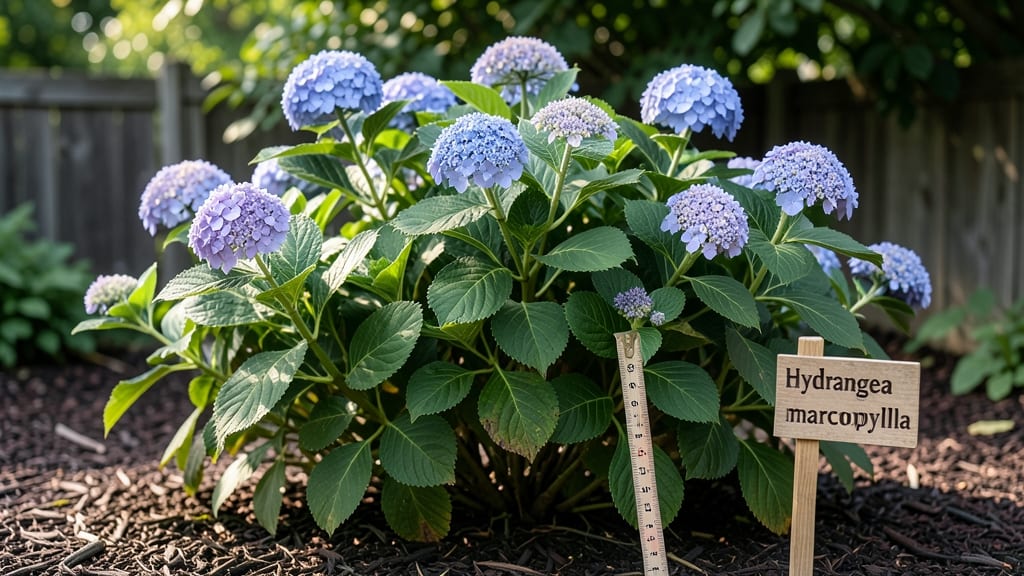
How Tall Can Hydrangeas Grow: Size Guide by Variety and Care Tips

How To

How Tall Can Hydrangeas Grow: Size Guide by Variety and Care Tips

Hydrangeas can grow anywhere from 3 feet to towering 15 feet tall, depending on the variety and how you care for them.

Wondering if your hydrangeas will soon tower over your fence or stay neatly contained in a pot? The height of these stunning flowers depends entirely on the variety—and a few key care factors you might be overlooking.

Some, like the popular 'Endless Summer', stay compact at just 3 to 5 feet, while others, such as the oakleaf hydrangea, can reach 10 to 15 feet when left unpruned.

Pruning at the right time and giving them the right soil can make all the difference in keeping them manageable or letting them grow wild.

Below, I break down the height ranges by variety, how to control their size with simple pruning, and which types are best for small spaces or large gardens. You’ll also find tips to keep your hydrangeas 🌸 thriving without them taking over your yard.

Dwarf
2-4 ft
Container friendly
Semi-Dwarf
4-6 ft
Most popular
Standard
6-15 ft
Full orchard size

Hydrangea height by variety: from compact to tree-like giants

If you've ever wondered whether your hydrangeas will grow into towering giants or stay compact enough for containers, the answer lies in the variety you choose. Some types max out at just 2 feet, while others can reach 15 feet or more with proper care.

Understanding these differences helps you plan your garden layout and avoid overcrowding or underutilized space.

Hydrangeas belong to several species, each with distinct growth habits. The mophead and lacecap varieties, like the popular 'Endless Summer', typically grow between 3-6 feet, making them perfect for foundation plantings.

Meanwhile, oakleaf and panicle hydrangeas can stretch up to 10-15 feet, ideal for privacy screens or woodland gardens.

Before selecting a variety, consider your space constraints and sunlight conditions. Dwarf varieties thrive in containers and small gardens, while larger types need room to spread their roots and branches.

Let's explore the most common hydrangea varieties and their mature heights to help you make the best choice for your garden.

Here’s a quick reference for hydrangea height ranges by variety, including their growth habits and ideal planting scenarios:

Variety Type Mature Height Spread Growth Habit Best For
'Endless Summer' Mophead 3-5 ft 3-4 ft Bushy, rounded Containers, borders
'Annabelle' Smooth 3-5 ft 4-5 ft Upright, vase-shaped Foundation plantings
'Limelight' Panicle 4-6 ft 3-4 ft Upright, arching Cut flowers, borders
'Nikko Blue' Oakleaf 6-8 ft 5-6 ft Multi-stemmed, deciduous Shade gardens, woodland
'Little Lime' Panicle 2-3 ft 2-3 ft Compact, rounded Containers, patios
'Gold Lace' Lacecap 3-5 ft 3-4 ft Bushy, flat-topped Borders, mixed beds
'Grandiflora' Bigleaf 4-6 ft 3-5 ft Upright, spreading Foundation, hedges
'Pee Wee' Smooth 2-3 ft 2-3 ft Dwarf, rounded Containers, small gardens
'Quartz Pink' Panicle 4-6 ft 3-4 ft Upright, conical Cut flowers, borders
'Vanille Fraise' Mophead 3-4 ft 3-4 ft Bushy, rounded

How pruning and care affect hydrangea height growth

Your hydrangeas might seem like they're growing on their own, but their height and shape are completely in your control. The right pruning techniques and seasonal care can transform a wild, unruly bush into a perfectly sized focal point.

I’ve learned that even mature hydrangeas can be trained to stay within bounds—or encouraged to reach their full potential—with just a few strategic cuts and adjustments.

First, let’s address the biggest misconception: not all hydrangeas grow tall naturally. Some varieties, like 'Little Lime', stay under 3 feet, while others, like 'Grandiflora', can soar to 12 feet or more. Your pruning approach should match your plant’s genetic growth habit and your garden’s needs.

For example, if you’re growing hydrangeas near a patio or walkway, you’ll want to prune for compact growth, while those planted for privacy screens should be pruned to encourage height.

⚠️ WARNING: Pruning at the Wrong Time Can Stunt Growth or Kill Blooms Pruning hydrangeas incorrectly isn’t just a mistake—it can permanently damage your plant’s ability to flower.

Here’s what you must avoid: - Pruning old wood (last year’s growth) on mophead or lacecap varieties—this removes next year’s blooms. - Cutting back too late in the season, which can leave stems vulnerable to winter dieback. - Using dull or dirty shears, which can introduce diseases like powdery mildew or bacterial wilt.

Always sterilize your tools with rubbing alcohol before and after pruning to keep your hydrangeas healthy.

To control height, focus on three key pruning strategies. For taller varieties, prune in early spring (just as new growth begins) to remove 1/3 of the oldest stems at the base. This encourages vertical growth while keeping the plant balanced.

For shorter varieties, a light summer pruning after flowering helps maintain a neat, bushy shape. Pro tip: Use hand pruners for small stems and loppers for thicker branches to avoid tearing the bark.

Soil and nutrients play a surprisingly large role in hydrangea height. If your plant isn’t growing as tall as expected, check your soil pH—hydrangeas thrive in slightly acidic soil (pH 5.2–6.0).

Amend your soil with peat moss or sulfur if needed, and feed with a balanced fertilizer (10-10-10) in early spring and mid-summer to fuel vertical growth. Over-fertilizing with high-nitrogen products can lead to leafy but leggy growth with fewer blooms, so always follow the 1 tbsp per plant guideline.

Seasonal care adjustments can make a world of difference in managing height. In winter, protect young or newly planted hydrangeas with a thick layer of mulch (3–4 inches) to insulate roots and encourage robust spring growth.

In summer, water deeply once a week (more in extreme heat) to prevent stunted growth caused by drought stress. And if your hydrangeas are potted, root-bound plants will grow slower—repot every 2–3 years in spring to give roots room to expand.

Remember, hydrangeas reward patience. If you’re aiming for taller growth, give your plant 3–5 years to establish its structure before expecting dramatic height increases. And if you’ve pruned too aggressively in the past, don’t panic—hydrangeas are resilient!

With the right care, even over-pruned bushes can bounce back in 1–2 seasons. The key is consistency: prune at the right time, feed the soil, and watch for seasonal cues—your hydrangeas will thank you with lush, vibrant blooms at exactly the height you want.

★★★★★4.5(6 reviews)
Categories How To