
Trees
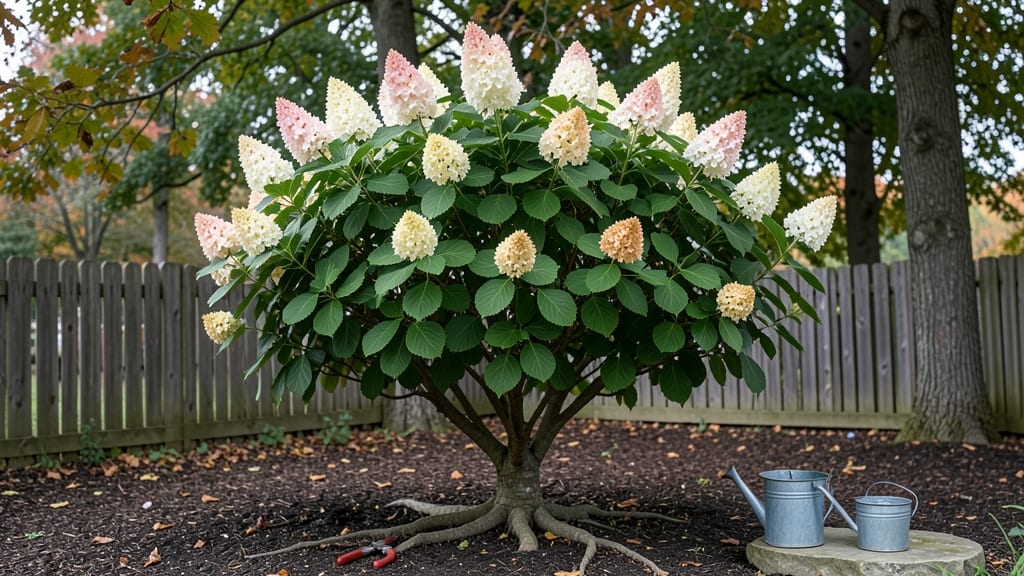
Before planting, you’ll want to know how tall do hydrangea trees grow—because their height can swing from cozy 3 feet to a bold 20-foot statement, depending on the type and your green thumb 🌸.
Picture this: a dwarf oakleaf hydrangea hugging your patio like a living wall, or a panicle hydrangea soaring above your deck like a small tree. The same plant family can play two completely different roles in your landscape, which is why variety matters more than you might think.
In this guide, we’ll break down the height ranges for the most popular types, from the compact smooth hydrangea (perfect for small spaces) to the giant panicle hydrangea (ideal for bold statements). You’ll also learn how sunlight, soil, and pruning can steer your plant toward your desired size.
Whether you’re working with a 6-foot urban yard or a sprawling rural plot, you’ll leave here knowing exactly which hydrangea will thrive—and how to keep it from outgrowing its welcome.


Hydrangea tree height guide: smallest to tallest varieties compared
Choosing a hydrangea tree means balancing your space with its mature height. Some varieties stay below 6 feet, perfect for containers, while others reach 20 feet, making them small trees for landscape focal points. The key is matching the variety to your yard’s layout and sunlight conditions.
I’ve grown both dwarf and towering hydrangeas, and the difference in their growth habits is stunning. For example, the Little Lime® oakleaf hydrangea stays under 5 feet while the Grandiflora smooth hydrangea can easily top 15 feet.
Let’s break down the top varieties by height so you can pick the perfect fit.
Here’s a quick comparison of the top 5 hydrangea varieties by mature height, including their growth rates and ideal planting spots. This will help you visualize which will thrive in your space.
Now that you’ve seen the height spectrum, let’s dive deeper into how these varieties grow over time. The Little Lime® oakleaf hydrangea, for instance, grows just 6-12 inches per year, making it ideal for small spaces.
In contrast, the Grandiflora can shoot up 2-3 feet annually if given ideal conditions.
If you’re working with limited space, focus on dwarf varieties like the Mini Penny® (3 feet) or Dwarf Albertini (4 feet). These thrive in containers or window boxes and still produce stunning blooms. For larger properties, the panicle hydrangeas like Bobozambia® (10-12 feet) create dramatic vertical interest.
One mistake I see often is planting tall varieties too close to structures. The Grandiflora, for example, can outgrow its welcome and block windows or driveways. Always leave at least 6 feet of clearance behind tall hydrangeas to avoid future headaches. Measure your space carefully before selecting a variety!
Sunlight also plays a crucial role in height control. Most hydrangeas grow taller in full sun but stay more compact in partial shade. The Endless Summer® series, for example, can reach 6 feet in sun but only 4 feet in shade.
Adjust your expectations based on your yard’s light conditions.
For those who love year-round interest, the oakleaf hydrangeas are unbeatable. Their exfoliating bark and fall foliage add winter charm, but their heights vary widely. The Snow Queen® stays under 5 feet, while the Pee Wee® maxes out at 4 feet—perfect for foundation plantings.
Pro tip: If you’re unsure about a variety’s final height, check the nursery tag or ask the grower. Many hydrangeas are sold as small trees but can be pruned to control their size.
I’ve kept a 12-foot Annabelle® hydrangea at 8 feet for years by pruning back 1/3 of its height every spring.
Remember, hydrangeas are flexible plants. With the right variety and care, you can enjoy their beauty at any scale—whether that’s a 3-foot container specimen or a 20-foot woodland giant.
Start with the table above, then match your space and sunlight to the perfect hydrangea for your dream garden! 🌿
How to control hydrangea tree height: pruning and care tips
Keeping your hydrangea tree at your desired height requires a mix of smart pruning techniques and soil management. Unlike shrubs, tree-form hydrangeas grow taller over time, so regular maintenance is key.
The good news? With the right approach, you can limit their height without sacrificing stunning blooms or lush foliage.
First, understand that hydrangea types respond differently to pruning. Panicle hydrangeas (like 'Limelight') grow aggressively and need bold cuts, while oakleaf varieties (such as 'Snow Queen') tolerate lighter trims. Always prune after flowering to avoid cutting off next year’s blooms—except for panicle types, which bloom on new wood.
⚠️ Hydrangea Height Reality Check
Unpruned hydrangea trees can reach 10-20 feet in 5-10 years! Even dwarf varieties (3-6 ft) may exceed expectations if neglected. Panicle types grow fastest (up to 3 ft/year), while oakleaf hydrangeas mature slower (1-2 ft/year). Prune annually to maintain your desired height—cutting 1/3 of new growth in late winter keeps most varieties manageable.
Start by removing dead or crossing branches first—this improves airflow and reduces disease risk. For height control, focus on the uppermost stems. Use clean, sharp pruning shears and make cuts just above a bud or leaf node. Avoid leaving stubs, which can rot and invite pests.
Soil plays a surprising role in height control. Acidic soil (pH 4.5-5.5) promotes compact growth, while alkaline conditions can lead to leggy, taller plants. Test your soil and amend with peat moss or sulfur if needed. Over-fertilizing with nitrogen also encourages rapid vertical growth—opt for a balanced 10-10-10 fertilizer instead.
Seasonal care matters too. Winter pruning (late February) is ideal for most types, while summer trimming (June-July) can promote bushier growth. After pruning, apply a 2-3 inch layer of mulch around the base to retain moisture and suppress weeds.
Water deeply once a week during dry spells to support healthy, controlled growth.
For panicle hydrangeas, you can prune more aggressively—cutting back half the plant in early spring encourages dense, shorter growth. Oakleaf varieties, however, bloom on old wood, so limit pruning to light shaping after flowering. Always wear gloves when handling hydrangeas—their leaves can cause skin irritation.