
How To
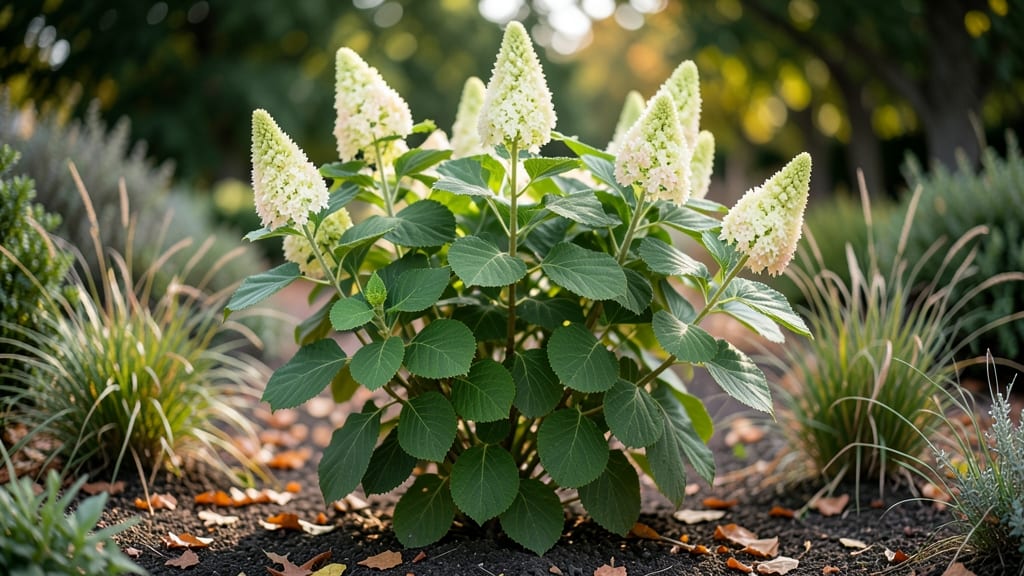
Wondering how tall does a hydrangea tree grow? This lush beauty reaches anywhere from 3 feet to a striking 15 feet—it all depends on the variety you pick.
If you're dreaming of adding a hydrangea tree 🌸 to your landscape but wondering whether it will tower over your house or stay neatly contained in your yard, the answer depends entirely on the variety—some grow as small as shrubs while others reach small tree heights.
For example, the compact Hydrangea arborescens 'Annabelle' stays under 5 feet, perfect for small gardens, while the Hydrangea paniculata 'Limelight' can soar to 12 feet or more, making it a statement piece for larger spaces.
Below, I’ll break down the height ranges for popular varieties, share pruning tips to control growth, and help you pick the perfect hydrangea tree for your space—whether you want a low-maintenance shrub or a dramatic focal point.


Hydrangea tree height by popular variety: small to large growth habits
Choosing the right hydrangea tree for your space means understanding their mature height ranges. Some varieties stay compact at 3-5 feet, perfect for small gardens, while others grow into 15-foot-tall specimens that make bold landscape statements.
The key is selecting a variety that matches your yard's scale and your pruning preferences.
Hydrangea trees belong to different species, each with distinct growth habits. For example, Hydrangea paniculata varieties like 'Limelight' can reach 8-12 feet, while Hydrangea arborescens types like 'Annabelle' typically max out at 3-5 feet.
Even within species, cultivars vary—some grow upright, others spread wide, and a few even have weeping habits.
Before planting, consider your yard layout and pruning goals. Aggressive growers like 'Grandiflora' need regular pruning to control height, while dwarf varieties like 'Little Lime' thrive with minimal maintenance. Let’s explore the most popular hydrangea trees and their height expectations to help you plan your garden design.
🌿
| Variety | Species | Mature Height | Spread | Growth Rate | Best For |
|---|---|---|---|---|---|
| Limelight | Hydrangea paniculata | 8-12 ft | 6-8 ft | Fast | Bold statement plants |
| Annabelle | Hydrangea arborescens | 3-5 ft | 3-5 ft | Moderate | Small yards, containers |
| Snow Queen | Hydrangea quercifolia | 10-15 ft | 8-10 ft | Moderate | Woodland gardens, shade |
| Little Lime | Hydrangea paniculata | 3-5 ft | 3-4 ft | Slow | Containers, borders |
| Grandiflora | Hydrangea paniculata | 6-8 ft | 6-8 ft | Fast | Privacy screens |
| Endless Summer | Hydrangea macrophylla | 4-6 ft | 4-5 ft | Moderate | Reblooming varieties |
| PeeGee | Hydrangea paniculata | 8-12 ft | 6-8 ft | Fast | Vertical accents |
| Alice | Hydrangea arborescens | 4-6 ft | 4-5 ft | Moderate | Dwarf options |
| Oakleaf | Hydrangea quercifolia | 10-12 ft | 8-10 ft | Moderate | Shade tolerance |
| Vanille Fraise | Hydrangea macrophylla | 3-5 ft | 3-4 ft | Slow | Fragrant blooms |
If you're working with limited space, dwarf varieties like 'Little Lime' or 'Vanille Fraise' are ideal—they stay under 5 feet tall and fit perfectly in containers or small garden beds. For larger properties, tall growers like 'Snow Queen' or 'PeeGee' create dramatic focal points with their 10-12 foot heights.
Growth rates also vary: Fast growers like 'Limelight' can add 2-3 feet per year, while slower varieties like 'Little Lime' mature more gradually. Plan your planting distance accordingly—aggressive growers need 8-10 feet of clearance, while compact types can thrive in 3-4 feet of space.
Pruning plays a huge role in managing height. For example, Hydrangea paniculata varieties bloom on new wood, so you can prune them in late winter to control size. In contrast, Hydrangea macrophylla types bloom on old wood, so prune only to shape after flowering.
Always research your specific variety’s pruning needs to avoid cutting off next year’s blooms.
Soil and sunlight also influence height. Well-draining, acidic soil (pH 5.5-6.2) encourages healthy growth, while partial shade helps prevent leggy growth in taller varieties. If your hydrangea stretches too tall or thin, it may need more shade or a balanced fertilizer to promote bushier habits.
For a low-maintenance option, consider Hydrangea arborescens varieties like 'Annabelle'—they’re drought-tolerant once established and rarely need pruning beyond removing dead stems. Meanwhile, Hydrangea quercifolia types like 'Snow Queen' offer stunning fall foliage but require more space due to their 10-15 foot mature height.
🌳
How to control hydrangea tree height: pruning tips for compact growth
If your hydrangea tree is reaching for the sky faster than you'd like, don't worry—you're not alone. Many gardeners face this challenge, especially with varieties like Hydrangea arborescens 'Annabelle', which can grow aggressively if left unchecked.
The good news? With the right pruning techniques, you can maintain your desired height while still enjoying stunning blooms.
Pruning isn't just about cutting back overgrowth—it's about understanding your specific hydrangea type. Some varieties bloom on old wood (last year's growth), while others bloom on new wood (current season's growth).
Knowing this difference will determine when and how you prune to keep your hydrangea tree at your preferred height without sacrificing flowers.
For compact growth, timing is everything. Spring and summer pruning serve different purposes, and using the wrong approach can mean fewer blooms or leggy, unruly growth. Let's break down the steps to keep your hydrangea tree at the perfect height while maximizing those show-stopping flowers.
Step-by-Step Pruning Guide for Compact Hydrangeas
-
Step 1: Identify Your Hydrangea Type
Determine if your hydrangea blooms on old wood (e.g., H. macrophylla) or new wood (e.g., H. paniculata). Old-wood bloomers should never be pruned in late winter or early spring.
-
Step 2: Prune New-Wood Bloomers in Late Winter/Early Spring
For varieties like H. paniculata 'Limelight', cut back 1/3 of the plant's height in February or March before new growth begins. This encourages compact, bushier growth and larger blooms.
-
Step 3: Deadhead Old-Wood Bloomers in Summer
For H. macrophylla or H. arborescens, wait until after flowering (summer) to prune. Remove spent blooms and up to 1/4 of the plant's height to maintain shape without sacrificing next year's flowers.
-
Step 4: Thin Out Crowded Branches
Use sharp pruners to remove crossing or inward-growing branches at the base. This improves airflow and prevents disease while keeping the tree's structure balanced.
-
Step 5: Shape Gradually Over Time
Avoid drastic cuts—reduce height by no more than 1/3 annually. For aggressive growers like 'Annabelle', prune twice a year: once in late winter and again in early summer to control height.
-
Step 6: Clean Up and Fertilize
Remove all pruned debris to prevent pests. Apply a balanced fertilizer (10-10-10) in early spring to encourage healthy regrowth and compact growth habits.
Remember, hydrangea pruning is a skill that improves with practice. Start with small adjustments and observe how your plant responds. Over time, you'll develop a rhythm that keeps your hydrangea tree at the perfect height while ensuring it remains a bloom powerhouse in your garden.
For varieties like Hydrangea arborescens 'Annabelle', which can reach 6-8 feet tall without pruning, regular maintenance is key. By following these steps, you'll enjoy manageable height and abundant flowers year after year. Happy pruning!