
Aphids
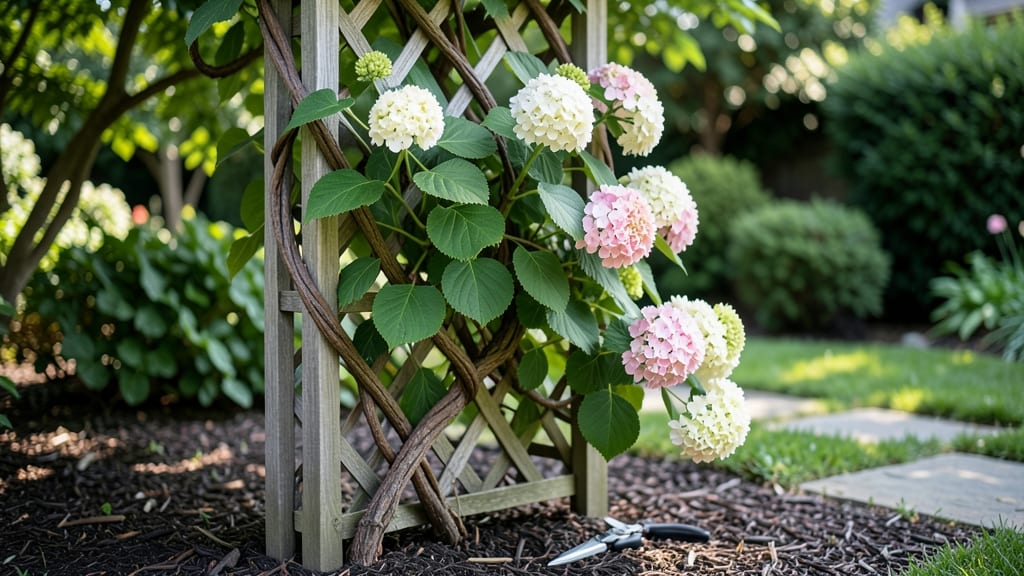
Climbing hydrangeas turn blank walls into lush green canopies. 🌿 This Hydrangea petiolaris isn't your average shrub—it's a self-clinging vine that wraps itself around trellises, arbors, or even brick walls, creating a romantic, year-round vertical garden.
Unlike other hydrangeas, it doesn’t need pruning to bloom, and its glossy leaves stay vibrant even in winter. The secret to its success lies in the right conditions: partial shade, well-draining soil rich in organic matter, and consistent moisture.
Plant it in zones 4-9, where it thrives in both city gardens and rural landscapes. A sturdy trellis or fence is key—this vine can climb 20-30 feet over time, so choose a support that matches its ambition. Once established, it’s low-maintenance but not low-effort at first.
Water deeply twice a week in dry spells, and feed with a balanced fertilizer in spring. The payoff? A cascading display of lacecap flowers from late spring through summer, with foliage that stays attractive all year.
For beginners, the biggest challenge is patience—it takes 2-3 years to fully cover a trellis. But once it does, you’ll have a living tapestry that outshines any store-bought decoration. Ready to grow your own green curtain?
📚 In This Guide
- What you need
- Instructions
- Tips and common mistakes
- Wrapping up and next steps
What you need
- ● Hydrangea Petiolaris Plant: 1-2 mature plants (or 3-5 young cuttings for propagation). Choose healthy specimens with strong stems and vibrant foliage.
- ● Support Structure: Trellis: 6–10 ft tall (wooden, metal, or PVC). Ensure it’s sturdy and spaced 3–4 ft apart for airflow.
- ● OR Arbor, pergola, or fence: Must be able to support 10–20 lbs of vine weight per plant.
- ● Potting Mix: 1 bag (5–10 gallons) of well-draining, acidic soil blend (pH 5.0–6.0). Mix with perlite or sand for aeration.
- ○ Container (Optional for Potted Growing): 15–20 gallon pot with drainage holes (if not planting in-ground).
- ● Fertilizer: Slow-release acidic fertilizer (e.g., 10-10-10 or hydrangea-specific formula) or organic options like peat moss or pine needles.
- ● Gardening Gloves (1 pair) – Protect your hands from thorns and soil.
- ● Pruners or Shears – Sharp, clean tools for trimming (sterilize with rubbing alcohol).
- ● Trellis Attachment Supplies: Soft plant ties or garden twine (1–2 rolls).
- ○ Small plastic clips or zip ties (optional, for securing vines gently).
- ● Watering Can or Hose with a gentle spray nozzle (for consistent moisture).
- ● Mulch (e.g., wood chips or bark) – 2–3 inches to retain moisture and suppress weeds.
- ○ pH Test Kit (optional but helpful) – To monitor soil acidity for optimal blooms.
- ● Pest Control: Neem oil or insecticidal soap (for aphids or spider mites).
- ● Hose with strong stream (to dislodge pests manually).
- ● 💡 Location: Choose a spot with partial shade (4–6 hours of sunlight daily). Too much sun can scorch leaves!
- ● 🌡️ Climate: Hardy in USDA Zones 4–9. Use frost cloth in colder zones to protect young plants.
- ● ✨ Soil Prep: Amend clay soil with compost or peat moss to improve drainage.
Step-by-step guide to training hydrangea climbing petiolaris on a trellis
Mastering this elegant vine takes patience, but the results—a lush, year-round vertical display—are worth every effort.
🪴 Step 1: Select and Prepare Your Trellis Structure
Choose a sturdy trellis made of wood, metal, or PVC pipe that can support the vine's weight, especially when heavy with blooms. I prefer 6-8 feet tall structures with horizontal crossbars spaced 12-18 inches apart—this gives the vine plenty of room to climb and attach. Secure the trellis firmly into the ground or attach it to a wall with galvanized hardware to prevent tipping as the vine matures.
Position the trellis in partial shade to full sun, depending on your climate. In hotter regions, morning sun with afternoon shade prevents leaf scorch, while cooler climates can handle full sun exposure. The key is observing how your local microclimate affects leaf color—deep green leaves signal ideal conditions, while yellowing or crispy edges mean too much sun.
🌱 Step 2: Plant and Establish the Vine
Plant your Hydrangea petiolaris in well-draining soil with a pH between 5.0 and 6.0—this vine thrives in acidic conditions. Dig a hole twice as wide as the root ball but no deeper to avoid burying the stem, which can cause rot. Place the plant so the top of the root ball sits 1 inch below soil level—this ensures stability while allowing for slight settling.
Water deeply right after planting to encourage root expansion, then maintain 1-1.5 inches of moisture per week during the first growing season. You'll know you're on track when new growth appears within 4-6 weeks. Avoid overwatering—soggy soil leads to root rot, while dry, crispy leaves signal underwatering. Mulch around the base with 2-3 inches of organic mulch to retain moisture and regulate soil temperature.
☀️ Step 3: Begin Training on the Trellis
Start guiding the vine when it reaches 12-18 inches tall. Gently tie the main stem to the lowest crossbar using soft plant ties or strips of old fabric—avoid wire or anything that can cut into the stem as it thickens. The goal is to encourage upward growth while allowing the vine to climb naturally rather than being forced into unnatural positions.
As new shoots emerge, select the strongest, healthiest stems and weave them around the trellis, securing them every 6-12 inches. Prune back weaker shoots to redirect energy into the main climbing stems. You'll see the vine thicken and branch out over time—healthy growth appears as dark green, glossy leaves with no yellowing or spots. If you notice stunted growth, it may need more sunlight or nutrients.
✂️ Step 4: Prune and Maintain for Year-Round Blooms
Prune late winter or early spring before new growth begins. Remove dead or weak stems at the base, and cut back any overcrowded growth to improve airflow. Hydrangea petiolaris blooms on old and new wood, so avoid heavy pruning—light shaping is key. Focus on opening up the center of the vine to encourage more blooms and prevent disease.
Fertilize twice a year: once in early spring with a balanced, acid-loving plant fertilizer and again after blooming in early summer. You'll know it's working when the vine produces vibrant, abundant blooms from late spring through fall, with some winter interest if the flowers persist. Watch for aphids or spider mites—a strong spray of water usually dislodges them, but severe infestations may require neem oil treatment.
⏰ Step 5: Winter Care for Long-Term Success
In USDA Zones 5-7, protect the trellis from heavy snow or ice by wrapping it in burlap or frost cloth if needed. Mulch the base with an additional 2-3 inches of organic material to insulate roots. In warmer climates (Zones 8-10), minimal winter care is needed—just reduce watering and avoid fertilizing until spring.
Come spring, remove any winter wrappings and inspect the vine for damaged or dead stems. Prune these back immediately, then water thoroughly to encourage new growth. With consistent care, your Hydrangea petiolaris will mature into a stunning vertical display, transforming any space into a lush, year-round garden feature.
Tips & tricks for pole-trained hydrangea petiolaris success
Transforming bare trellises into living tapestries takes strategy—here's how to avoid common pitfalls and maximize your climbing hydrangea's potential.
Trellis Stability: The 6-8 foot height recommendation isn't arbitrary—this height balances wind resistance with vine weight capacity. For extra security, especially in exposed locations, consider adding diagonal support wires between crossbars. I've seen vines snap under winter snow loads when trellises weren't properly anchored, so don't skip the galvanized hardware step. For wall-mounted trellises, use L-brackets rated for at least 50 pounds of weight to prevent detachment as the vine matures.
Soil Science: That 5.0-6.0 pH range is critical for iron uptake, which directly affects leaf color and bloom production. If your soil tests higher, amend with elemental sulfur or peat moss before planting. I learned this the hard way when my first attempt yielded pale, chlorotic leaves—turns out my garden soil was pH 7.2. For containers, use a pre-mixed acid-loving plant mix and add a handful of coffee grounds annually to maintain acidity. The 2-3 inch mulch layer isn't just for moisture—it also slowly acidifies the soil over time through decomposition.
Training Technique: When you reach Step 3 and start tying the vine, use a spiral method rather than straight ties. Wrap the soft fabric or plant tie around the stem at a slight angle (about 45 degrees) and then around the trellis crossbar. This creates a gentle guiding force that prevents stem damage as the vine thickens. I've found that updating these ties every 6-8 weeks prevents them from embedding into the bark. For stubborn stems that resist climbing, gently bend them toward the trellis with your fingers rather than forcing them—this mimics natural vine behavior.
Pruning Precision: The "light shaping" advice in Step 4 is crucial because Hydrangea petiolaris produces flowers on both old and new wood. When you prune dead stems at the base, cut just above a visible bud or growth node. For overcrowded areas, remove entire branches rather than just trimming back—this opens up the center for better airflow and sunlight penetration. I've seen gardeners accidentally remove next year's blooms by pruning too aggressively, so always prune after the flowers fade in fall if you're unsure about timing.
Pro Tips for Hydrangea Climbing Petiolaris
- Transforming bare trellises into living tapestries takes strategy—here's how to avoid common pitfalls and maximize your climbing hydrangea's potential.
- Trellis Stability: The 6-8 foot height recommendation isn't arbitrary—this height balances wind resistance with vine weight capacity.
- Soil Science: That 5.0-6.0 pH range is critical for iron uptake, which directly affects leaf color and bloom production.
Frequently asked questions
Got questions about Hydrangea petiolaris? You’re not alone!
This unique climbing hydrangea is stunning but comes with a few quirks. Here are answers to the most common queries—so you can grow it with confidence.
How fast does Hydrangea petiolaris grow, and when can I expect flowers?
This vine grows moderately fast—about 12–24 inches per year under ideal conditions. With patience, it can reach 30+ feet over time! Flowers typically appear in late spring to early summer, but some varieties (like 'Grandiflora') may rebloom lightly in fall. Pro tip: Prune lightly after flowering to encourage bushier growth.
Can Hydrangea petiolaris climb without support, or do I need a trellis/pole?
While it’s called a climbing hydrangea, it’s not self-clinging like ivy. It uses aerial rootlets to grip rough surfaces (like brick or lattice), but smooth poles or wires won’t work. For best results, attach it to a rough-textured trellis, arbor, or fence. Troubleshooting: If it struggles, gently tie stems to the support with soft twine.
Are aphids a big problem for Hydrangea petiolaris, and how do I prevent them?
Aphids love new growth—especially on hydrangeas! To deter them, spray stems with water daily during outbreaks (aphids hate being washed off). For prevention, encourage natural predators (ladybugs, lacewings) by planting nearby herbs like dill or fennel. If infestations persist, use neem oil or insecticidal soap early in the season.
How cold-hardy is Hydrangea petiolaris, and does it need winter protection?
This hydrangea is hardy to USDA Zones 4–9, but young plants or those in Zone 4/5 may need mulch or burlap wraps in harsh winters. Established vines usually handle frost well, but avoid pruning in late fall—wait until early spring to trim dead wood. Pro tip: In extreme cold, wrap the base with straw or bubble wrap for extra insulation.
What’s the best alternative if I don’t have space for a climbing hydrangea?
If vertical space is limited, consider these hydrangea alternatives with similar charm:
- Hydrangea 'Annabelle' (mounding shrub, 4–5 ft tall)
- Hydrangea 'Limelight' (upright, 6–8 ft, great for small gardens)
- Clematis (fast-climbing, varieties like 'Jackmanii')
- Star Jasmine (fragrant, climbs 10+ ft, tolerates pruning)
Wrapping up and next steps
Transforming your garden with Hydrangea Climbing Petiolaris is a rewarding journey that blends beauty and resilience! 🌿 Whether you're a seasoned gardener or a beginner, this versatile vine offers year-round charm with minimal fuss.
Start by choosing the perfect spot, gathering your supplies, and following the simple steps to train and care for your plant—soon, you’ll have a stunning vertical masterpiece.
Ready to take the next step? Plant your first cutting this season and watch your garden come to life. Happy gardening! 🌸