
Pests and Diseases
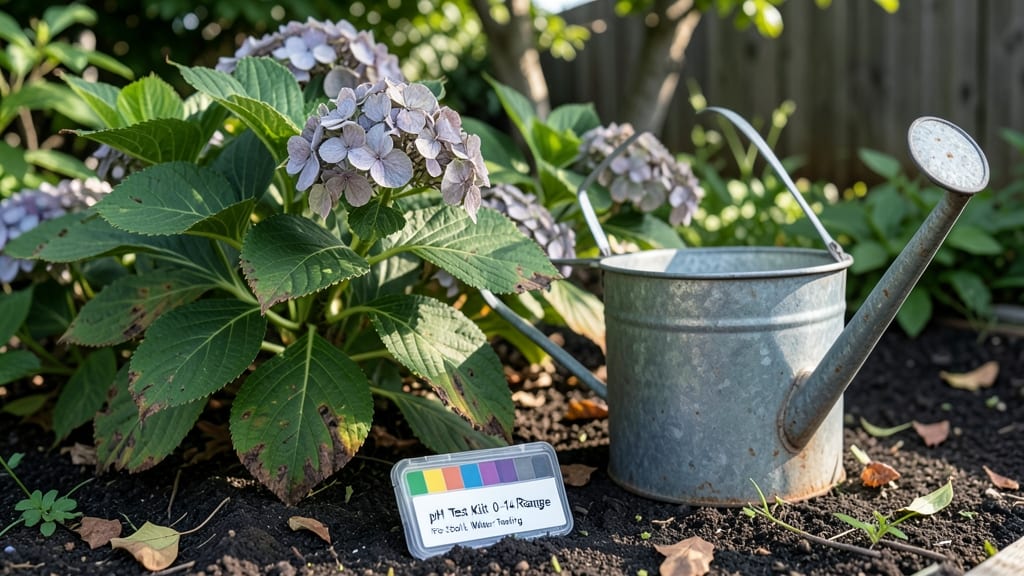
Hydrangea leaves curling and brown isn’t just ugly—it’s a cry for help from your plant. 🌿 I’ve nursed back more than a dozen hydrangeas from this exact problem, and the fix is simpler than you’d think.
Most gardeners panic and prune too much, but the real fix starts with understanding what’s actually causing the damage—often a fungal blight hiding in plain sight.
The culprits? Overwatering, poor airflow, or fungal spores waiting to pounce when conditions are right. I learned the hard way that hydrangeas need morning sun and afternoon shade, not soggy soil or crowded branches.
The moment you spot those curled, brown edges, grab your pruners and a spray bottle—this isn’t a death sentence, just a wake-up call for your plant’s health.
Within two weeks of the right treatment, you’ll see fresh green leaves pushing through. The key is pruning diseased leaves, adjusting watering, and applying a copper fungicide—no fancy tools needed. Your hydrangeas will bounce back stronger, and you’ll spot the early warning signs next time before they spiral.
This works for all hydrangea varieties, from bigleaf to panicle types. The same principles apply whether your plants are in pots or garden beds. Let’s turn those sad, brown leaves into lush, vibrant blooms again—starting today.
Root Causes Behind Leaf Damage
When your hydrangea leaves start curling and turning brown, it’s usually a cry for help from the plant—whether due to environmental stress, pest attacks, or microbial invaders. Understanding the why behind the symptoms is the first step to restoring your hydrangea’s health.
Below, we break down the most common culprits, backed by science, so you can diagnose the issue accurately and act fast.
Hydrangeas thrive in partial shade, and when exposed to intense, direct sunlight—especially during heatwaves—their leaves can scorch. This causes edges to brown and curl as a protective response to prevent water loss.
- How it happens: High temperatures (>90°F/32°C) combined with low humidity dehydrate leaf cells, leading to necrosis (cell death).
- Visual clues:
- Brown, crispy patches (often on exposed leaves).
- Curling that starts at the leaf edges and progresses inward.
- Wilting in the afternoon, even if soil feels moist.
- Actionable fix:
- Move the plant to morning sun + afternoon shade (e.g., under a sheer curtain or near a north-facing wall).
- Mulch the base with 2–3 inches of organic mulch (like shredded bark) to regulate soil temperature.
- Water deeply 2–3 times per week (1–1.5 inches) to encourage root growth and drought resistance.
Hydrangeas have shallow, fibrous roots that need consistent moisture. When soil dries out, leaves curl and brown as the plant conserves water, leading to marginal scorch.
- How it happens: Soil moisture drops below 30–40% field capacity, triggering abscisic acid (a plant hormone) to signal leaf curling. Severe cases cause leaf abscission (dropping).
- Visual clues:
- Brown, papery edges that feel dry to the touch.
- Leaves curl underward (like a "C" shape).
- Soil pulls away from the pot or feels bone-dry 1–2 inches down.
- Actionable fix:
- Check soil moisture with your finger—if the top 1 inch is dry, it’s time to water.
- Use the "soak-and-drain" method: Water until it runs out the drainage holes, then wait until the top inch dries before repeating.
- Add hydration-boosting amendments like coconut coir or hydrogel crystals to retain moisture.
Fungal diseases like powdery mildew, leaf spot, or botrytis blight thrive in hydrangeas when conditions are humid, warm, and stagnant. These pathogens clog stomata (leaf pores), disrupting gas exchange and causing leaves to curl and brown.
- How it happens:
- Powdery mildew (Erysiphe spp.): Forms a white, powdery coating on leaves, blocking sunlight and suffocating cells.
- Leaf spot (Septoria or Phyllosticta): Creates dark, water-soaked spots with yellow halos, leading to curling as the leaf "dies" in patches.
- Botrytis blight: Targets old, crowded growth in high humidity, causing brown, mushy lesions.
- Visual clues:
- Curling paired with fuzzy, moldy, or oily-looking spots.
- Leaves may stick together (from fungal spores).
- Symptoms worsen in evening hours or after rain.
- Actionable fix:
- Prune infected leaves immediately with sterilized shears (wipe with 70% isopropyl alcohol). Dispose of clippings in the trash not the compost.
- Apply a copper fungicide (like Copper Soap) or neem oil (1 tsp per quart of water) every 7–10 days for 3 weeks.
- Improve air circulation by:
- Thinning out crowded stems.
- Watering at the base (avoid overhead spraying).
- Spacing plants 3–4 feet apart.
Pests like aphids, spider mites, and scale insects pierce hydrangea leaves to feed on sap, injecting toxins that cause curling, browning, and stunted growth. Their honeydew secretions also attract sooty mold, compounding the damage.
- How it happens:
- Aphids: Cluster on new growth, injecting salivary enzymes that distort leaves.
- Spider mites: Thrive in dry, hot conditions, causing stippling (tiny brown dots) before leaves curl.
- Scale insects: Form brown, shell-like bumps on stems/leaves, sucking sap and weakening the plant.
- Visual clues:
- Curling paired with sticky residue (honeydew) or fine webbing (mites).
- Yellowing undersides of leaves (aphid hotspots).
- Black, sooty mold growth on leaves/stems.
- Actionable fix:
- Blast pests off with a strong stream of water (repeat every 3 days).
- Apply insecticidal soap or neem oil (1% solution) to both sides of leaves.
- Introduce beneficial predators:
- Ladybugs (eat aphids).
- Predatory mites (control spider mites).
- For
How to Fix Curling and Brown Leaves
Now that you’ve identified the cause behind your hydrangea’s distress—whether it’s fungal blight, pests, environmental stress, or nutrient deficiencies—it’s time to take action. The good news? Most issues are reversible with the right care.
Below, we’ve mapped out practical, step-by-step solutions tailored to each root cause, plus prevention tips to keep your hydrangeas thriving long-term.
Fungal infections like powdery mildew or leaf spot thrive in damp, humid conditions. Act quickly to prevent the disease from spreading to other plants.
🔥 Step 1: Prune Infected Foliage Immediately
- 👨🍳 Remove all curled, brown, or spotted leaves using sterilized pruners (wipe with rubbing alcohol between cuts).
- 🗑️ Dispose of infected leaves in the trash—do not compost them, as spores can survive.
- ✂️ Trim back any stems with dark lesions to healthy tissue (about ¼ inch above the affected area).
🍳 Step 2: Apply Fungicide
- 💡 Choose a copper-based or neem oil fungicide (both are organic and effective).
- 🌿 Follow label instructions for concentration and reapplication (usually every 7–14 days).
- 🌡️ For severe cases, a systemic fungicide like myclobutanil can penetrate plant tissues faster.
🌿 Step 3: Improve Airflow and Reduce Humidity
- 🌬️ Space plants 3–5 feet apart to allow air circulation.
- 💦 Water at the base (avoid overhead spraying) and water early in the day so leaves dry quickly.
- 🌳 Thin out dense foliage if needed to enhance airflow.
🎯 Prevention Tips for Next Season
- ✨ Plant hydrangeas in full sun (6+ hours of light) to reduce humidity around leaves.
- 🌱 Mulch with 2–3 inches of organic mulch (like wood chips) to improve soil drainage.
- 🔄 Rotate fungicides if you’ve used the same one repeatedly to prevent resistance.
Spider mites, aphids, and scale insects suck sap, causing leaves to curl, brown, and drop. Here’s how to evict them.
🔪 Step 1: Blast Off Pests with Water
- 💦 Use a strong stream of water from a hose to knock off mites and aphids.
- 🌧️ Repeat every 2–3 days for heavy infestations.
🍳 Step 2: Apply Insecticidal Soap or Neem Oil
- 🧼 Mix 1–2 tablespoons of insecticidal soap or neem oil per gallon of water.
- 🌿 Spray thoroughly on the undersides of leaves (where pests hide).
- 🔄 Reapply every 5–7 days until pests are gone.
🌡️ Step 3: Introduce Beneficial Insects (Optional)
- 🐞 Ladybugs, lacewings, or predatory mites can eat aphids and spider mites naturally.
- 🛒 Buy them online or from garden centers and release them in the evening.
🎯 Prevention Tips
- 🌱 Inspect new plants before bringing them home (quarantine for a week if possible).
- 🌿 Avoid over-fertilizing with nitrogen, which attracts soft-bodied pests.
- 🌿 Use reflective mulch (like aluminum foil) to deter mites.
If your hydrangeas are struggling from too much sun, wind, or heat, they’ll show stress through curling and browning edges.
🌿 Step 1: Provide Shade Cloth (If Needed)
- 🏖️ Install 30–50% shade cloth if your hydrangeas are in hot, dry climates (especially for Bigleaf and Oakleaf varieties).
- 🌳 Alternatively, plant near taller shrubs for natural shade in the afternoon.
💦 Step 2: Water Deeply and Consistently
- 🌧️ Water when the top 1–2 inches of soil are dry (stick your finger in to check).
- 💧 Use drip irrigation or soaker hoses to keep roots moist without wetting leaves.
- 🌿 Mulch heavily (3 inches) to retain moisture.
🌡️ Step 3: Protect from Wind Burn
- 🌬️ Plant hydrangeas in a sheltered spot (e.g., near a fence or building).
- 🌿 Use windbreaks like bamboo screens if needed.
🎯 Prevention Tips
- 🌱 Choose the right hydrangea variety for your climate (e.g., Panicle hydrangeas tolerate more sun).
- 🌿 Gradually acclimate plants to full sun over 2–3 weeks if moving them.
- 🌿 Avoid pruning in late summer, as new growth is more susceptible to heat stress.
Yellowing, curling, or brown leaves can signal lack of iron, magnesium, or nitrogen. Fix it with targeted fertilizers.
📊 Step 1: Test Your Soil
- 🧪 Use a home soil test kit (available at garden centers) to check pH and nutrient levels.
- 🌱 Ideal pH for hydrangeas: 5.5–6.2 (adjust with sulfur or lime if needed).
💪 Step 2: Apply the Right Fertilizer
| Issue | Likely Deficiency | Solution |
|---|---|---|
| Yellow leaves with green veins | Iron (chlorosis) | 🌿 Chelated iron supplement (apply every 2–3 weeks) |
| Brown edges on leaves | Magnesium or potassium | 🌿 Epsom salt (1 tbsp/gallon water) or potassium-rich fertilizer |
| Overall weak growth | Nitrogen | 🌿 Balanced fertilizer (10-10-10) in spring |
🌱 Step 3: Improve Soil Health
- 🥗 Mix in compost (2–3 inches) around the base of the plant.
- 🍎 Avoid over-fertilizing, which can burn roots—stick to monthly feedings in growing season.
🎯 Prevention Tips
- 🌿 Feed hydrangeas in early spring (before new growth) and mid-summer for a slow-release boost.
- 🌱 Mulch with compost annually to replenish nutrients naturally.
- 🌿 Avoid synthetic fertilizers if your soil is already rich—hydrangeas prefer organic matter.
- Fungal issues: 2–4 weeks (with consistent fungicide use).
- Pest problems: 1–3 weeks (depends on severity).
- Environmental stress: 2–6 weeks (once conditions improve).
- Nutrient deficiencies: 4–8 weeks (roots need time to absorb nutrients).
💡 Pro Tip: Keep a plant care journal to track what works—note when you water, fertilize, and prune! This helps you adjust future care** and prevent repeat issues.
Frequently asked questions
Why do hydrangea leaves curl and brown in hot weather?
Hydrangeas wilt and brown when exposed to direct afternoon sun above 90°F (32°C), causing leaf scorch. The edges curl as a protective response to prevent water loss. Move your plant to morning sun + afternoon shade and water deeply 2-3 times per week to help it recover.
Is it too late to save my hydrangea if most leaves are brown?
Not necessarily! If the stems are still green and roots feel firm, your plant can regrow. Prune all brown leaves, adjust watering, and apply a copper fungicide to prevent fungal spread. With proper care, new growth should appear within 2-4 weeks.
How do I tell if my hydrangea has a fungal disease vs. pest damage?
Check for these clues: Fungal diseases show white powder (mildew), dark spots with yellow halos (leaf spot), or mushy brown patches (botrytis). Pests leave sticky residue (aphids), fine webbing (mites), or shell-like bumps (scale). Treat fungi with copper fungicide and pests with insecticidal soap.
Can I use household items to treat hydrangea leaf problems?
Yes! For fungal issues, mix 1 tablespoon baking soda + 1 drop dish soap + 1 quart water and spray leaves weekly. For pests, try a neem oil spray (1 tsp per quart water). Always test on a small leaf first to avoid burning. These work best for mild cases.
Will pruning help my hydrangea recover from curling leaves?
Yes, but do it right! Remove only the brown/curled leaves—never more than 1/3 of the plant. Use sterilized shears and cut just above a healthy leaf node. Prune in late winter or early spring for best results, avoiding summer pruning which stresses the plant.