
Blooming
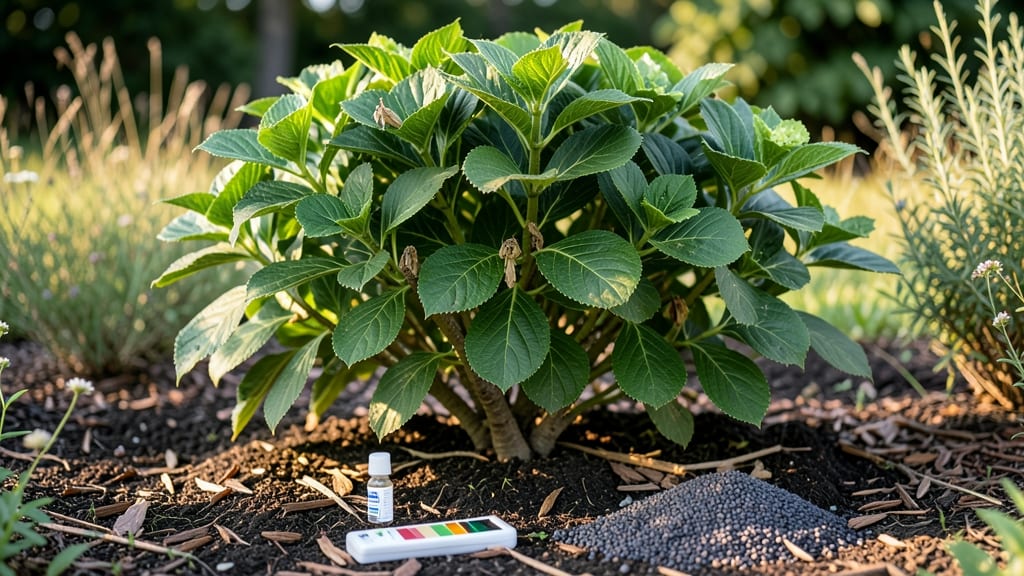
Your hydrangeas not blooming for years? I’ve fixed this exact problem by targeting the three hidden causes most gardeners miss—pruning at the wrong time, nutrient imbalances, and light exposure mistakes. 🌿 The good news?
Each fix takes less than 15 minutes to diagnose and correct, and you’ll see buds forming within 6-8 weeks if you act now.
First, check your pruning history—cutting back in late winter or early spring removes next year’s flower buds entirely. Then examine your soil: hydrangeas need balanced nutrients, especially phosphorus for blooms, and a pH between 5.2 and 6.0 for vibrant colors.
Yellow leaves or stunted growth? That’s your clue to test your soil and adjust.
By the end of this, you’ll have a blooming schedule tailored to your climate, a soil plan that guarantees nutrients, and pruning cuts that encourage more flowers than foliage. The best part? These fixes work for all hydrangea types, from mopheads to panicle varieties.
Ready to transform those leafy shrubs into showstoppers? Let’s start with the quickest diagnostic—your hydrangea’s pruning scars might be the culprit. (Yes, I’ve killed blooms this way too.)
Root Causes Behind Stubborn Hydrangeas
If your hydrangea has thrown a blooming strike for years, don’t panic—there’s usually a logical (and fixable) reason behind it. Below, we break down the most common culprits, backed by science, so you can diagnose the issue and take action. Think of this as your hydrangea’s "checkup" guide!
Hydrangeas are not one-size-fits-all when it comes to pruning. Timing and technique can make or break their blooming cycle. Here’s why it matters:
- Late bloomers (like Hydrangea macrophylla or Hydrangea paniculata): These varieties set buds on old wood (last year’s growth). Pruning in late winter or early spring—when buds are already forming—can severely reduce or eliminate blooms for the entire season.
- Early bloomers (like Hydrangea arborescens): These produce flowers on new wood (current year’s growth). Pruning in late winter/early spring encourages more vigorous blooming.
- Over-pruning: Cutting back more than 1/3 of the plant can stress the hydrangea, diverting energy away from flower production and toward leaf growth.
💡 Pro Tip: If you’re unsure which type you have, observe when it blooms. Macrophylla (bigleaf hydrangeas) usually bloom in mid-to-late summer, while paniculata (like ‘Limelight’) bloom in mid-to-late summer/fall. Arborescens (smooth hydrangeas) bloom in early summer.
Hydrangeas thrive in partial shade, but too little—or too much—sun can disrupt blooming. Here’s the science:
- Too little light: Hydrangeas need 4–6 hours of sunlight daily to produce enough energy for blooms. In deep shade (<3 hours of sun), they focus on leaf growth instead, leaving you with a lush but flowerless bush.
- Too much direct sun (especially in hot climates): While they tolerate morning sun, intense afternoon heat (especially in zones 7+) can cause bud drop or prevent bud formation entirely. This is because high temperatures disrupt pollination and dehydrate the plant.
- Reflective surfaces: Light-colored walls, pavement, or even white mulch can amplify heat, effectively "cooking" the hydrangea and stunting flower production.
🌡️ Quick Fix: If your hydrangea is in full sun, try providing afternoon shade with a sheer curtain or nearby tree. For shade-lovers, gradually increase sunlight over weeks to avoid shock.
Hydrangeas are thirsty but finicky about moisture. Improper watering can lead to bud abortion (when flowers form but drop off) or no blooms at all. Here’s what’s happening:
- Underwatering: Hydrangeas need consistent moisture, especially during bud formation (spring) and bloom (summer). Drought stress causes the plant to prioritize survival over reproduction, leading to sparse or no flowers.
- Overwatering or poor drainage: Soggy roots (from compacted soil or clay pots) can suffocate roots, preventing nutrient uptake. This weakens the plant, reducing its ability to produce flowers. Root rot can also block water transport, causing buds to dry up.
- Inconsistent watering: Fluctuating moisture levels (e.g., deep soaks followed by drought) confuse the plant’s growth cycle, leading to aborted blooms.
💧 Watering Hack:
Issue
Solution
Dry soil
Water deeply 2–3 times per week (1–1.5 inches per session). Use a soaker hose to avoid wetting leaves (which causes disease).
Poor drainage
Amend soil with perlite or compost (30% organic matter). For pots, use a well-draining mix with orchid bark.
Overhead watering
Water at the base only and mulch with 2–3 inches of shredded bark to retain moisture.
Hydrangeas are heavy feeders, but too little—or too much—of the wrong nutrients can halt blooming. Here’s the breakdown:
- Low phosphorus (P): Phosphorus is critical for flower development. A deficiency (common in over-acidified soil) causes stunted growth and no blooms. Look for purple or red leaves as a sign.
- Excess nitrogen (N): Too much nitrogen (from lawn fertilizers or overuse of blood meal) leads to leafy growth at the expense of flowers. The plant prioritizes foliage over blooms.
- Potassium (K) deficiency: Potassium helps strengthen cell walls, including those in flower buds. Without it, buds may form but fail to open or drop off.
- Micronutrient imbalances: Lack of magnesium, calcium, or boron can disrupt flowering. Yellowing between leaf veins (magnesium deficiency) or deformed buds (boron deficiency) are red flags.
📊 Fertilizer Fix:
- Use a balanced, slow-release fertilizer (like 10-10-10 or 5-10-5) in early spring.
- For phosphorus boost, apply bone meal or a high-phosphorus fertilizer (e.g., 5-10-5) when buds form.
- Avoid high-nitrogen fertilizers (like lawn food) near hydrangeas.
✨ Bonus: Hydrangeas love organic matter! Mix in compost or worm castings in spring to improve soil structure and nutrient availability.
Hydrangeas are sensitive to temperature swings, especially during bud formation (late winter/early spring). Here’s how climate plays a role:
-
Revive Your Hydrangeas Fast
Now that you know the common reasons behind your hydrangea’s stubborn silence, let’s tackle the fixes—step by step. Whether it’s poor sunlight, overpruning, or nutrient deficiencies, these solutions will coax those blooms back to life.
And don’t worry, we’ve included prevention tips to keep your hydrangeas happy for years to come!
---
Problem: Too much shade or sudden sun shifts confuse your hydrangea, delaying—or even stopping—flower production.
How to Fix It: - 🔍 Assess sunlight: Most hydrangeas thrive in morning sun + afternoon shade (4–6 hours of light daily). If yours is in deep shade, consider relocating it to a slightly sunnier spot (but avoid harsh afternoon rays, which can scorch leaves). - 🌳 Gradual transition: If moving your plant, do it slowly over 1–2 weeks to avoid shock. Place it in a dappled-light area first, then adjust. - 💡 Pro tip: If your hydrangea is in a container, rotate it quarter-turns weekly to ensure even light exposure.
Prevention: - Plant new hydrangeas in partial shade (especially in hot climates). - Avoid full sun for varieties like Hydrangea macrophylla (mophead or lacecap), which can wilt without shade.
---
Problem: Overzealous pruning or cutting at the wrong time removes next year’s flower buds, leaving your hydrangea bare.
How to Fix It: - 📅 Prune at the right time: - Old wood bloomers (e.g., Hydrangea paniculata, H. arborescens): Prune right after blooming (late summer/early fall) to avoid cutting off next year’s buds. - New wood bloomers (e.g., H. macrophylla): Prune in late winter/early spring (before new growth starts). - ✂️ Cut strategically: - Remove dead, diseased, or crossing branches first. - For old wood bloomers, trim just above the first set of healthy buds (about ¼ of the plant’s height). - For new wood bloomers, cut back by ⅓ to encourage bushier growth. - 🚫 Avoid these mistakes: - Never prune in fall for new wood bloomers—you’ll cut off next year’s flowers! - Don’t shear randomly—hydrangeas bloom on specific stems.
Prevention: - Label your plants to remember which type you have. - Use clean, sharp pruners to prevent damage and disease.
---
Problem: Poor soil, lack of nutrients, or inconsistent watering starve your hydrangea, leading to weak or no blooms.
How to Fix It: - 💧 Water deeply & consistently: - Hydrangeas need 1–1.5 inches of water per week (more in containers). - Soak the root zone (not just the leaves) and mulch to retain moisture. - 🌡️ Watch for signs of stress: Wilting or yellow leaves mean it’s thirsty! - 🌿 Fertilize smartly: - Spring feeding: Use a balanced fertilizer (10-10-10) when new growth appears. - Bloom boost: Switch to a high-phosphorus fertilizer (e.g., 5-10-5) in early summer to encourage flowers. - 🚫 Avoid over-fertilizing: Too much nitrogen = lush leaves, fewer blooms. - 🔄 Refresh the soil (if needed): - If your hydrangea’s soil is compacted or nutrient-poor, amend it with compost or aged manure. - Acid-lovers (e.g., blue hydrangeas): Add sulfur or peat moss to lower pH if needed.
Prevention: - Mulch annually (2–3 inches of organic mulch) to improve soil health. - Test soil pH every 2–3 years—hydrangeas prefer pH 5.5–6.2 for vibrant blooms.
---
Problem: Hydrangeas need cold dormancy and stress-free conditions to set buds for the next season.
How to Fix It: - 🍂 Winter prep: - Mulch heavily (4–6 inches) in late fall to protect roots from freezing. - Avoid pruning in fall (unless dealing with dead wood). - 🌞 Summer stress relief: - Shade cloth can help in extreme heat (prevents leaf scorch). - Deadhead spent blooms (for old wood types) to redirect energy to new buds. - 💡 Pro tip: If your hydrangea still won’t bloom, it might be too young (some take 2–3 years to mature).
Prevention: - Plant in well-draining soil to avoid root rot. - Avoid transplant shock—if moving, do it in early spring or fall.
Final Thought: Patience is key—some hydrangeas take a season or two to bounce back after neglect. But with these fixes, you’ll be admiring lush, vibrant blooms before you know it! 🌺✨
(Need a quick reference? Bookmark this guide and revisit it before pruning or planting!)
Frequently asked questions
1Why does my hydrangea have lots of leaves but no flowers?
Too much nitrogen in your fertilizer is likely the culprit. Hydrangeas prioritize leaf growth when they get excess nitrogen, starving flower production. Switch to a balanced or phosphorus-rich fertilizer (like 5-10-5) in early summer to encourage blooms instead.
2Can I prune my hydrangea in fall and still get flowers next year?
It depends on the type! Old wood bloomers (like mopheads) set buds in late summer/fall—pruning now removes next year's flowers. But new wood bloomers (like smooth hydrangeas) can handle fall pruning since they bloom on current year's growth.
3How do I know if my hydrangea needs more sun or shade?
Check the leaf color: Yellowing leaves mean too much sun, while small, sparse leaves indicate insufficient light. Aim for morning sun + afternoon shade—most varieties thrive with 4-6 hours of filtered light daily.
4Will changing my soil pH really affect my hydrangea's blooms?
Hydrangeas need acidic soil (pH 5.2-6.0) for vibrant blooms. If your soil is too alkaline, blue hydrangeas turn pink. Test your soil and amend with sulfur or peat moss if needed—this can make a dramatic difference in color and bloom quantity.
5How long does it take to see results after fixing these issues?
With proper care, you should see new buds forming in 6-8 weeks and full blooms by next season. For severe cases (like years of neglect), it may take 1-2 seasons of consistent care—but the wait is worth it for those stunning flowers!