
Planting
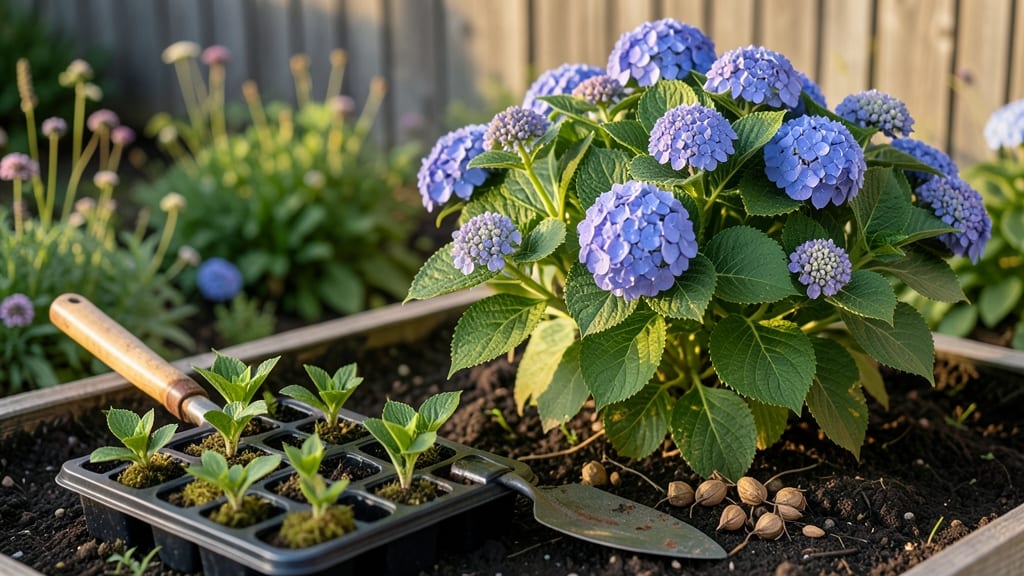
Determining the best hydrangea planting zone depends on your USDA zone (3–9), with most varieties flourishing in zones 5–8. Soil pH—key for bloom color—should be acidic (4.5–5.5) for blue flowers or neutral (6.0–7.0) for pink hues.
Your location’s USDA zone isn’t just about survival—it dictates which hydrangea types thrive best.
For example, panicle hydrangeas (like 'Limelight') handle zones 3–8, while bigleaf varieties (such as 'Endless Summer') prefer zones 6–9. 🌸 Beyond hardiness, zone-specific care matters: colder climates need winter mulch, while hotter zones may require afternoon shade to prevent leaf scorch.
The right variety paired with proper soil pH ensures vibrant blooms and fewer stress-related issues.
Adjusting soil pH is simpler than you think. Test your soil with a kit (available at garden centers), then amend with elemental sulfur to lower pH for blue flowers or lime to raise it for pink blooms. Pro tip: changes take time—re-test after 2–3 months.
If your hydrangeas suddenly shift color, it’s often a sign your soil pH has drifted. For instance, a pH of 6.5 might turn a once-blue 'Nikko Blue' into a soft lavender—adjusting it back to 5.0 restores the deep blue you love.
💡 In This Article
- How USDA Zones Affect Hydrangea Variety Selection
- Soil pH Adjustments for Blue vs. Pink Hydrangea Blooms
How USDA zones affect hydrangea variety selection
USDA zones determine hydrangea hardiness by measuring average minimum winter temperatures. For instance, zone 3 (below -40°F) favors panicle hydrangeas (Hydrangea paniculata), like 'Limelight', which endure harsh winters with their woody stems.
These varieties store energy in their sturdy stems, allowing them to regrow from the base after frost damage. In contrast, zone 9 (above 20°F) suits oakleaf hydrangeas (H. quercifolia), which thrive in mild winters but struggle with prolonged cold snaps below 10°F. 🌡️
The number of frost-free days also matters—regions with 180+ days (like zone 9) can grow tropical-looking varieties like mountain hydrangeas (H. serrata), while shorter seasons (zones 4–6) benefit from early-blooming types such as 'Annabelle' (H. arborescens), which finishes flowering before fall frosts.
Humidity plays a role too: bigleaf hydrangeas (H. macrophylla) in zones 6–9 prefer consistent moisture, while smooth hydrangeas (H. arborescens) in zones 3–8 tolerate drier conditions better.
Seasonal care shifts by zone. In colder climates (zones 3–5), mulch hydrangeas with 4–6 inches of organic matter (like straw) in late fall to insulate roots from -20°F temperatures. Warmer zones (7–9) may need afternoon shade to prevent leaf scorch from 90°F+ heat.
For example, 'Endless Summer' (H. macrophylla) in zone 8 might wilt without shade, while 'Grandiflora' (H. paniculata) in zone 5 thrives with full sun and winter protection. 🌿
Zone-specific blooming times also vary. Panicle hydrangeas in zones 3–6 often bloom on new wood, rebounding after winter dieback, while bigleaf types in zones 6–9 set buds on old wood—meaning late frosts can damage flowers before they open.
This is why gardeners in zone 7 might prune H. macrophylla in late winter (after frost risk passes) but delay pruning H. paniculata until spring.
Consider microclimates too. A zone 6 yard might have a sheltered microclimate (e.g., near a south-facing wall) that supports zone 7 varieties. Conversely, a low-lying area in zone 7 could experience zone 6 temperatures during cold snaps.
Always observe your garden’s unique conditions—hydrangeas are forgiving, but matching variety to microclimate ensures lush, stress-free growth. 🌱
For example, 'Little Lime' (H. paniculata)—a compact zone 4–8 variety—handles both cold snaps and summer heat, making it a versatile pick. Meanwhile, 'Nikko Blue' (H. macrophylla) in zone 6 needs winter mulch but may struggle in zone 9’s heat without afternoon shade.
These nuances explain why nursery tags often list both USDA zones and specific care notes. 📝