
Diseases
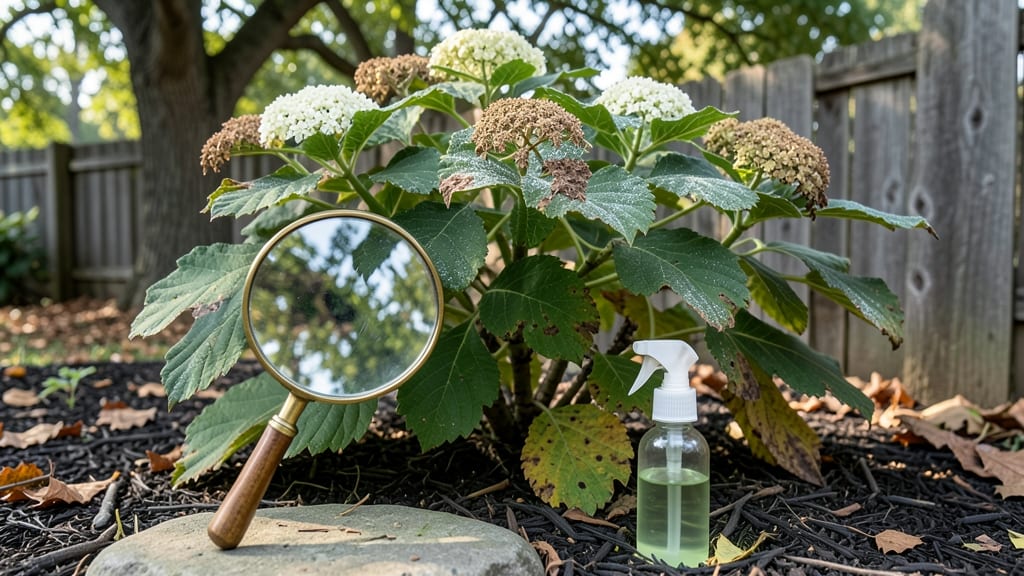
Your oakleaf hydrangea’s leaves are turning brown and crispy, and you’re staring at a plant that’s lost its lush, velvety charm. 🌿 Fungal and bacterial diseases like powdery mildew, leaf spot, and botrytis can turn those stunning oak-shaped leaves into sad, spotted messes—but there’s hope if you catch it early.
Most infections start with poor air circulation, wet foliage, or stress from heat or drought. I’ve seen oakleaf hydrangeas go from vibrant to wilted in weeks, but the right mix of pruning, fungicide, and prevention can bring them back.
The key is acting fast before the disease spreads to the stems.
You’ll learn to spot the early signs—tiny brown spots, white powder, or yellowing edges—and how to treat them with organic sprays like neem oil or copper fungicide. With the right care, your hydrangea can bounce back stronger than ever, ready to put on its signature fall show.
This works for both fungal and bacterial issues, and the methods adapt to your climate and how severe the problem is. Let’s get your hydrangea back to its stunning best before the season’s over.
Root Causes Of Leaf Troubles
Oakleaf hydrangeas (Hydrangea quercifolia) are prized for their stunning foliage and vibrant blooms, but their leaves can fall prey to fungal and bacterial diseases—often due to environmental stress or poor cultural practices.
Understanding why these issues arise is the first step to prevention and treatment. Below, we break down the most common culprits, backed by science and actionable insights.
Fungal pathogens like powdery mildew (Erysiphe spp.) and leaf spot (Septoria or Phyllosticta) thrive in damp, stagnant conditions. Oakleaf hydrangeas are particularly susceptible because their large, textured leaves trap moisture.
- Why it happens:
- Excess moisture softens leaf tissue, creating entry points for pathogens.
- Compacted or clay-heavy soil slows drainage, keeping roots waterlogged.
- Frequent overhead watering (especially in the evening) prolongs leaf wetness, ideal for fungal spores.
- Actionable fix:
- Test soil drainage by digging a 12-inch hole, filling it with water, and timing how long it takes to drain. Ideal time: under 2 hours.
- Amend soil with compost or perlite to improve aeration.
- Water at the base (not over leaves) and early in the day to allow foliage to dry.
Many oakleaf hydrangea diseases—such as anthracnose (Colletotrichum spp.)—are airborne, spreading via wind, rain, or infected plant debris.
- Why it happens:
- Humid climates (especially in spring/fall) create perfect conditions for spore germination.
- Old leaves or mulch left in the garden harbor overwintering spores.
- Weakened plants (from stress, drought, or nutrient deficiency) are easier targets.
- Actionable fix:
- Clean up fallen leaves in autumn and sterilize pruners with 70% isopropyl alcohol.
- Space plants properly (3–5 feet apart) to improve airflow and reduce humidity around foliage.
- Apply preventive fungicides (like neem oil or copper fungicide) in early spring before spores activate.
Bacterial leaf spot (Xanthomonas or Pseudomonas) often enters through physical damage, such as pruning cuts, hail, or insect bites.
- Why it happens:
- Improper pruning (using dull tools or cutting too close to stems) creates open wounds.
- Insect activity (e.g., Japanese beetles) leaves puncture wounds where bacteria can invade.
- High humidity + warm temperatures (75–85°F) accelerate bacterial growth.
- Actionable fix:
- Prune during dry weather and sterilize tools between cuts.
- Remove infected leaves immediately (don’t compost them—bag and discard).
- Avoid overhead irrigation to prevent splashing bacteria onto wounds.
Oakleaf hydrangeas struggle with heat stress (above 90°F) or cold shock (below 20°F), both of which weaken defenses against pathogens.
- Why it happens:
- Sudden heat waves cause leaf scorch, making plants vulnerable to secondary infections.
- Late spring frosts damage new growth, leaving it susceptible to fungal invasion.
- Poor acclimation (e.g., moving plants indoors/outdoors abruptly) stresses foliage.
- Actionable fix:
- Mulch heavily (3–4 inches of shredded bark) to regulate soil temperature.
- Provide afternoon shade in hot climates with lightweight fabric shade cloth.
- Hardy the plant gradually if relocating—acclimate over 1–2 weeks.
Lack of magnesium, nitrogen, or iron leads to chlorosis (yellowing) and weakened cell walls, making leaves easier targets for disease.
- Why it happens:
- Compacted or acidic soil (oakleaf hydrangeas prefer pH 4.5–5.5) locks out essential nutrients.
- Over-fertilizing with nitrogen promotes lush growth but weakens structural integrity.
- Drought stress forces plants to prioritize root survival over leaf health.
- Actionable fix:
- Test soil pH and amend with sulfur (to lower pH) or lime (to raise it).
- Use a balanced fertilizer (10-10-10) in early spring, followed by Epsom salt (for magnesium) mid-season.
- Deep water weekly (1–1.5 inches) during dry spells to prevent stress.
Insects like scale, aphids, or mites don’t just sap nutrients—they injure leaves, creating entry points for diseases.
- Why it happens:
- Sap-sucking pests (e.g., aphids) excrete honeydew, a sticky substance that fosters sooty mold (Capnodium).
- Chewing insects (e.g., Japanese beetles) tear leaves, leaving wounds for bacteria/fungi.
- Actionable fix:
- Monitor plants weekly for pests—neem oil or insecticidal soap can prevent outbreaks.
- Introduce beneficial insects (ladybugs, lacewings) to control populations naturally.
- Remove heavily infested leaves to break the pest-disease cycle.
Key Takeaway: Most oakleaf hydrangea leaf diseases stem from environmental mismanagement—whether it’s too much water, poor airflow, or stress-induced weakness. By addressing these root causes, you can prevent 80% of potential issues before they start. 🚀
How to Fix Oakleaf Hydrangea Leaf Issues
Reviving your oakleaf hydrangea’s lush foliage starts with targeted action—whether you’re battling fungal spots, bacterial blights, or environmental stressors. Below, we break down practical, step-by-step solutions for each common cause, along with prevention tips to keep your plant thriving.
No green thumb required—just follow the fixes tailored to your hydrangea’s specific woes!
Fungi thrive in damp, shady conditions, so early intervention is key to stopping the spread.
🔥 Remove Infected Leaves Immediately
- How: Snip off yellowed, spotted, or powdery leaves with clean pruners (sterilize with rubbing alcohol between cuts).
- Why: Fungal spores spread via contact—removing the source prevents contamination.
- Pro Tip: 💡 Drop infected leaves in a sealed bag (not your compost!) to avoid reinfecting the soil.
🍳 Apply Fungicidal Sprays (Organic or Chemical)
| Solution | How to Use | Best For |
|---|---|---|
| Neem Oil Spray | Mix 1 tbsp neem oil + 1 tsp mild soap + 1 quart water. Spray early morning (avoid direct sun). Repeat every 7–10 days. | Powdery mildew, early leaf spot |
| Baking Soda Mix | 1 tsp baking soda + 1 quart water + a few drops of soap. Spray undersides of leaves. | Mild fungal issues (preventative) |
| Copper Fungicide | Follow label rates (e.g., Cheshunt Compound). Best for severe anthracnose. | Resistant fungal outbreaks |
🌡️ Improve Airflow and Light
- Prune for airflow: Thin out dense branches to let sunlight and air circulate.
- Adjust watering: Water early in the day (not overhead) to let leaves dry quickly.
- Space plants: Keep hydrangeas 3–4 feet apart to reduce humidity pockets.
Bacteria spread via water splashes or tools, so sanitation is critical.
👨🍳 Sterilize Tools and Hands
- How: Wash pruners with 70% rubbing alcohol or a 10% bleach solution (1 part bleach to 9 parts water) before and after pruning.
- Why: Bacteria like Xanthomonas can linger on tools and reinfect cuts.
🥘 Prune Strategically
- Remove infected leaves/stems 1 inch below the damage to eliminate bacterial colonies.
- Avoid pruning when leaves are wet—wait until morning after rain.
🔪 Use Copper-Based Bactericides
- Product: Copper hydroxide (e.g., Kocide 3000).
- How: Spray every 10–14 days during wet seasons (spring/fall).
- Caution: 🌡️ Avoid spraying in extreme heat (above 90°F) to prevent leaf burn.
⏰ Adjust Watering Habits
- Water at the base (not overhead) to prevent splashing bacteria onto leaves.
- Use drip irrigation or soaker hoses for targeted moisture.
Sometimes, "diseases" are just your hydrangea crying out for better care.
💡 Fix Overwatering or Poor Drainage
- Test soil moisture: Stick your finger 2 inches deep—if damp, wait to water.
- Amend soil: Mix in perlite or compost to improve drainage.
- Raise pots: Ensure containers have drainage holes and elevate them slightly.
🌿 Shield from Scorching Sun
- Provide afternoon shade (especially in zones 7+ where heat stress peaks).
- Mulch heavily: Use 3 inches of mulch (wood chips or pine bark) to retain moisture.
🎯 Fertilize Smartly
- Avoid high-nitrogen fertilizers (they promote leafy growth but weaken disease resistance).
- Use balanced fertilizer (e.g., 10-10-10) in early spring and mid-summer.
Once you’ve treated the issue, lock in long-term health with these habits:
- 🌱 Plant in the right spot: Oakleaf hydrangeas prefer partial shade (4–6 hours of sun).
- 🍂 Clean up annually: Remove all fallen leaves and debris in late fall to starve overwintering pathogens.
- 🔄 Rotate fungicides: If using chemicals, alternate between copper, neem, and sulfur to prevent resistance.
- 🌡️ Monitor humidity: Use a hygrometer—keep indoor humidity below 60% if growing in containers.
Remember: 🌟 Consistency beats intensity. A little daily care (like checking leaves for spots or adjusting watering) saves hours of scrubbing later.* Start with the fixes above, and your oakleaf hydrangea will bounce back with bold, disease-free foliage in no time!
Frequently asked questions
What are the first signs of powdery mildew on oakleaf hydrangeas?
Look for white, powdery patches on leaf tops and undersides—especially in shaded areas. Early stages appear as faint white spots that grow into a thick, cottony layer. The affected leaves may yellow or curl as the mildew spreads. Act fast by pruning infected foliage and applying neem oil spray.
Can I use regular dish soap to treat fungal leaf spots?
Yes, but only as part of a baking soda mix—never alone. Combine 1 tablespoon mild dish soap, 1 teaspoon baking soda, and 1 quart water. Spray on leaves in the morning (avoid direct sun). This mild solution helps prevent fungal spores from germinating, but repeat every 7–10 days for effectiveness.
Why do my oakleaf hydrangea leaves turn brown at the edges even when I water properly?
This is often a sign of heat stress or low humidity. Oakleaf hydrangeas need consistent moisture—check soil 2 inches deep before watering. Provide afternoon shade in hot climates, and mulch with 3 inches of wood chips to retain moisture. Brown edges can also signal magnesium deficiency—try a foliar spray of Epsom salt.
Is it safe to prune infected leaves during rainy weather?
No, always prune on dry days to prevent spreading spores or bacteria. Wet leaves make it easier for pathogens to jump to healthy foliage. Sterilize your pruners with 70% rubbing alcohol between cuts, and remove infected leaves 1 inch below the damage to eliminate hidden spores.
How often should I apply fungicide to prevent diseases?
For prevention, apply fungicide every 2–3 weeks during spring and fall—peak seasons for fungal spores. Use neem oil or copper fungicide alternately to avoid resistance. If your hydrangea is already infected, increase frequency to weekly until symptoms disappear, then taper back to preventive maintenance.