
Succulent
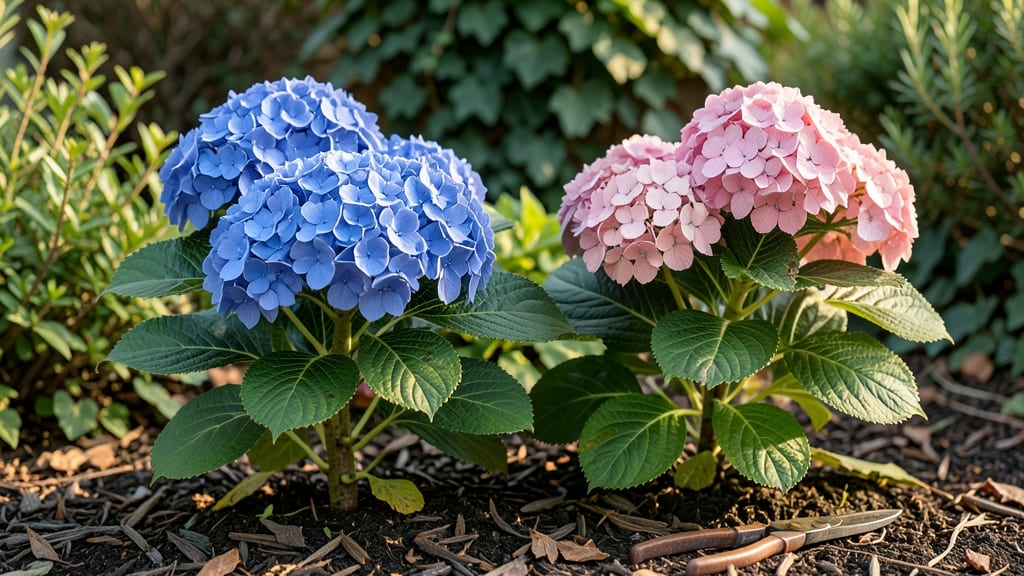
Pink and blue hydrangeas turn every garden corner into a living watercolor. 🌸 These showstoppers aren't just seasonal splashes—they're the backbone of a year-round color scheme that feels effortless yet polished.
I've used them to transform dull borders into Instagram-worthy backdrops, and the best part? They thrive with minimal fuss once you get the soil pH right.
The magic happens when you pair them strategically: blue hydrangeas glow against silver foliage like lamb's ear, while pink varieties pop beside lavender or dusty miller. In containers, they become the star of cottage-core displays, especially when mixed with boxwood or heuchera.
And here's the secret—adjusting soil pH from acidic to alkaline shifts their color dramatically, so you can customize their palette like a painter's palette.
Imagine a front yard where spring's blush pinks deepen into summer's royal blues, then fade into autumn's soft lavenders—all on the same plant. That's the power of these hydrangeas working as your garden's mood board.
They handle both formal garden lines and wild cottage-style borders, making them the ultimate chameleon for any design style.
For containers, try pairing them with dwarf conifers for height contrast or salvia for texture. In borders, layer them with ornamental grasses and hostas to create movement. The key?
Prune lightly in late winter to encourage bold, healthy blooms—no heavy-handed cutting required. Your garden will look like a curated photoshoot, not just a plant collection.
📚 In This Guide
- What you need
- Instructions
- Tips and common mistakes
- Wrapping up and next steps
What you need
- ● Pink & Blue Hydrangea Plants: Choose Hydrangea macrophylla (mophead or lacecap varieties) for vibrant color shifts. Buy 3-5 mature plants (3-5 gallons each) for a fuller look.
- ● Well-Draining Soil: Mix 1 part garden soil with 1 part peat moss or coconut coir + 1 part perlite (for acid-loving varieties). Test soil pH (aim for 5.5–6.0 for blue, 6.0–7.0 for pink).
- ● Organic Mulch: 3–4 inches of pine bark or wood chips to retain moisture and acidify soil.
- ● Pruning Tools: Bypass pruners (for clean cuts)
- ● Loppers (for thicker stems)
- ● Garden shears (for shaping)
- ● Fertilizer: Balanced granular (10-10-10) or acid-loving plant food (like Miracle-Gro Azalea, Camellia & Rhododendron). Apply 2–3 times/year (spring, summer, fall).
- ● Watering Supplies: Hose with adjustable nozzle or drip irrigation system (hydrangeas love 1–1.5 inches/week).
- ○ Support Stakes (Optional): 3–4 ft bamboo stakes or metal garden rings for heavy blooms.
- ● 🌡️ Color Control: Add aluminum sulfate (1 tbsp/gallon of water) to soil for blue blooms; skip it for pink.
- ● ✨ Seasonal Extras: Winter: Burlap wraps for young plants in freezing climates.
- ● Summer: Shade cloth (30%) to prevent leaf scorch.
How to maintain vibrant pink and blue hydrangeas all year
Here’s how I keep my hydrangeas blooming in both colors with almost no pruning—just a few key adjustments.
🌿 Step 1: Understand Your Hydrangea Varieties
Pink and blue hydrangeas belong to two main types: mophead (big, rounded blooms) and lacecap (flatter, delicate flowers). The color comes from soil pH—acidic soil (pH 5.5 or lower) produces blue, while alkaline soil (pH 6.5 or higher) yields pink. Test your soil first with a simple kit to know where you stand.
I always plant at least one of each type so I can experiment with color shifts. For example, my Endless Summer lacecap turns a stunning blue in the fall when I add sulfur to the soil. The key is patience—color changes take 4-6 weeks after soil adjustments.
☀️ Step 2: Position for Maximum Bloom and Color Intensity
Hydrangeas thrive in morning sun and afternoon shade—especially in hot climates. Too much direct afternoon sun can scorch leaves and fade petals. I place mine where they get 3-4 hours of morning sunlight, then dappled shade the rest of the day. This keeps foliage lush and flowers vibrant longer.
Watch for leaves curling or turning yellow—this is your signal the plant is getting too much sun. If you’re in a hot, dry area, mulch heavily with 3-4 inches of organic mulch to retain moisture and cool roots. I use shredded bark because it breaks down slowly and improves soil over time.
💧 Step 3: Water and Feed for Consistent Color
Hydrangeas are thirsty plants, especially when blooming. Water deeply twice weekly during dry spells, aiming for 1-1.5 gallons per plant. Let the top 2-3 inches of soil dry out between waterings—this prevents root rot while keeping blooms hydrated. I water in the early morning so leaves dry quickly, reducing fungal risks.
Feed with a balanced fertilizer (10-10-10) in early spring, then switch to an acid-loving plant formula in summer if you want to maintain blue blooms. I avoid high-nitrogen fertilizers—they encourage leafy growth at the expense of flowers. Instead, I use a slow-release granular fertilizer in spring and a liquid seaweed tonic in midsummer for a gentle boost.
✂️ Step 4: Prune Strategically for Year-Round Blooms
Most hydrangeas bloom on old wood (last year’s growth), so pruning is minimal. I only trim in late winter or early spring, removing 10-20% of the oldest stems at ground level. This opens up the center for air circulation and encourages new growth. Never prune in fall—you’ll cut off next year’s blooms.
For reblooming varieties like Endless Summer, you can lightly trim back 1/3 of the oldest stems in early spring and another 1/3 in summer after the first flush of flowers. This keeps them compact and flowering almost nonstop. Always use clean, sharp pruners to avoid tearing stems or spreading disease.
🌱 Step 5: Adjust Soil pH for Color Changes
To shift colors, amend the soil in early spring. For blue blooms, add sulfur or aluminum sulfate (follow package rates). For pink, work in lime or wood ash. I mix amendments into the top 6 inches of soil around the base of the plant, then water deeply to activate them. Re-test soil pH after 4-6 weeks—color changes take time.
Here’s the thing—hydrangeas are finicky about pH shifts. If you add too much sulfur, you might end up with lavender blooms (a mix of pink and blue). I keep notes of what I add each year so I don’t overdo it. Also, rain can wash out amendments, so plan to reapply in late summer if you want consistent color.
Tips & tricks for perfect year-round hydrangea color
These are the small details that make all the difference when growing vibrant pink and blue hydrangeas—trust me, I've learned them the hard way!
Soil pH Testing: Don't guess about your soil pH—buy an inexpensive test kit and check it every spring before making amendments. I've seen gardeners add sulfur thinking they need blue blooms, only to end up with lavender flowers because their soil was already acidic. The 4-6 week wait for color changes means timing is everything—test first, then amend!
Sunlight Strategy: The 3-4 hours of morning sun is non-negotiable for vibrant blooms, but here's what nobody tells you—if your hydrangeas are in full sun all day, their leaves will yellow and crisp by midday. I've found that moving them to partial shade after 10 AM makes a dramatic difference in leaf health. For container plants, rotate them weekly so all sides get even light exposure.
Watering Wisdom: Those 1-1.5 gallons per plant twice weekly should go directly to the root zone—never the foliage. I use a soaker hose buried 2 inches deep to deliver water slowly and prevent fungal issues. The top 2-3 inches of soil should dry between waterings, but if you notice wilting, water immediately. Hydrangeas hate soggy roots just as much as they hate drought.
Pruning Precision: When trimming those 10-20% oldest stems in late winter, look for stems that are hollow or have no buds—they're dead wood. For rebloomers like Endless Summer, I mark the 1/3 of oldest stems with a ribbon before cutting so I don't accidentally remove too much. Always use bypass pruners—they make cleaner cuts that heal faster and reduce disease risk.
Pro Tips for Pink And Blue Hydrangeas
- These are the small details that make all the difference when growing vibrant pink and blue hydrangeas—trust me, I've learned them the hard way!
- Soil pH Testing: Don't guess about your soil pH—buy an inexpensive test kit and check it every spring before making amendments.
- Sunlight Strategy: The 3-4 hours of morning sun is non-negotiable for vibrant blooms, but here's what nobody tells you—if your hydrangeas are in full sun all day, their leaves will yellow and crisp by midday.
Frequently asked questions
about pink and blue hydrangeas—because every gardener deserves clarity! Here are answers to the most common queries to help you master these stunning blooms.Why do my pink hydrangeas turn blue?
Hydrangeas change color based on soil pH! Pink blooms thrive in neutral to slightly alkaline soil (pH 6.0–7.0), while blue blooms love acidic soil (pH 5.0–5.5). Test your soil and adjust with lime (to raise pH) or sulfur (to lower it). Pro tip: Aluminum in acidic soil also boosts blue hues!
When is the best time to prune pink and blue hydrangeas?
Timing depends on your variety! Bigleaf hydrangeas (H. macrophylla) bloom on old wood, so prune right after flowering (late summer/early fall). For panicle or oakleaf types (which bloom on new wood), prune in late winter/early spring. Avoid heavy pruning in fall—it can damage buds!
Can I grow pink and blue hydrangeas in containers?
Containers are perfect for hydrangeas—just choose a large pot (15+ gallons) with drainage holes and use well-draining potting mix. For color control, amend the soil with hydrangea-specific fertilizer or mirror bloom (a pH-adjusting additive). Move pots to partial shade in hot climates to prevent leaf scorch.
What if my hydrangeas don’t change color?
If your hydrangeas stay stubbornly pink or blue, check these fixes:
- Soil pH: Test it with a kit (available at garden centers). Aim for pH 5.5 for blue or 6.0–7.0 for pink.
- Aluminum levels: Add aluminum sulfate (1 tsp per gallon of water) to acidic soil for deeper blues.
- Fertilizer: Over-fertilizing can lock out color changes. Use a balanced, slow-release fertilizer instead.
- Patience: Color shifts take 1–2 growing seasons to fully adjust!
Are there drought-tolerant pink/blue hydrangea varieties?
While hydrangeas love moisture, some varieties handle dry spells better. Try:
- ‘Endless Summer’ (Bigleaf) – Reblooms and tolerates brief droughts.
- ‘Limelight’ (Panicle) – Drought-resistant once established.
- ‘Oakleaf’ (Oakleaf) – Deep roots make it more resilient.
Wrapping up and next steps
Transforming your garden into a vibrant canvas with pink and blue hydrangeas is easier than you think—especially when you skip the heavy pruning! These stunning blooms thrive with just a little care, offering year-round color and charm.
Whether you’re a seasoned gardener or a beginner, the key is consistency: water wisely, feed occasionally, and prune lightly to keep your hydrangeas happy and flourishing.
Ready to dive in? Start small—pick one hydrangea variety and give it a try! Before you know it, your outdoor space will be bursting with color, all while keeping maintenance simple. Happy gardening! 🌸🌿