
Pruning
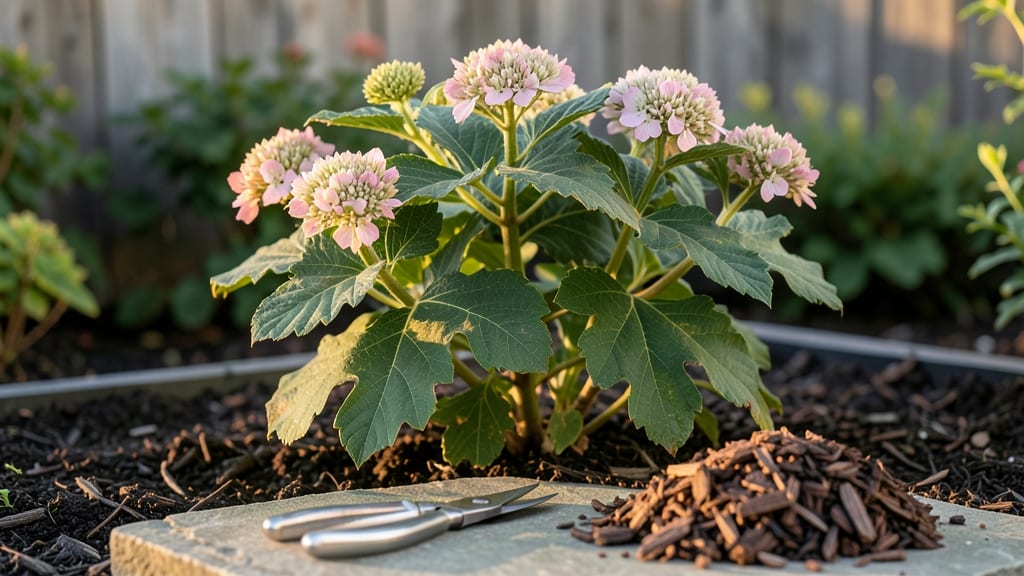
Pruning oak leaf hydrangeas in late winter transforms them from scraggly to stunning. ✂️ I’ve learned the hard way that timing matters—cutting at the wrong season can rob you of next year’s blooms.
These hydrangeas reward patience with their dramatic, oak-shaped leaves and cascading flowers, but they need the right approach to stay healthy and showy.
The best time is late winter to early spring, just as buds begin to swell but before new growth starts. You’ll need clean, sharp pruners and a clear plan: remove dead, crossing, or weak branches first, then shape the plant by thinning out crowded stems.
Oak leaf hydrangeas bloom on old and new wood, so avoid heavy pruning that could sacrifice next season’s flowers.
After pruning, expect new growth within weeks, with blooms arriving by midsummer. The plant’s natural shape emerges as you work, and you’ll notice leaves developing their signature lobed texture. Just remember: never prune in fall—that’s when the plant sets buds for next year’s flowers.
This method works for both young plants and mature shrubs, though larger specimens may need 2-3 years of gradual shaping. The key is consistency—prune the same way each year, and your hydrangea will thrive for decades.
📚 In This Guide
- What you need
- Instructions
- Tips and common mistakes
- Wrapping up and next steps
What you need
- ● Pruning shears or loppers – Sharp, bypass-style (for clean cuts on smaller stems; 4-6" blades). For thicker branches, use loppers (8-10" reach).
- ● Hand pruners – For precision cuts on thin stems (1.5-2.5" blades).
- ● Gloves – Heavy-duty gardening gloves (to protect against thorns and rough bark).
- ○ Disinfectant (optional but recommended) – 70% isopropyl alcohol or a 10% bleach solution (to sterilize tools and prevent disease).
- ○ Pruning sealant (optional) – For large cuts (>1" diameter) (helps prevent water loss and infection).
- ● Garden twine or zip ties – For temporary support if you’re training or shaping young plants.
- ● Bucket or trash bag – For collecting pruned branches (to keep your workspace tidy).
- ● Extension pole pruners – For high branches (reaches up to 8-10 feet).
- ● Safety glasses – To shield eyes from debris (especially when pruning thick stems).
- ● Sharpie or marker – For labeling cuts if you’re experimenting with shaping techniques.
- ● Compost bin or mulch – To recycle pruned material (oak leaf hydrangea cuttings can root in water!).
Pruning oak leaf hydrangeas: step-by-step technique for year-round interest
Here's my foolproof method for keeping oak leaf hydrangeas thriving with vibrant foliage and seasonal blooms.
✂️ Step 1: Identify Growth Habits and Prune After Blooming
Oak leaf hydrangeas bloom on new wood, meaning last year's growth produces this year's flowers. The best time to prune is late winter to early spring, right after the plant has finished flowering. You'll notice old flower heads turning brown and crispy—this is your signal to act. I always wait until after the first flush of new growth appears in spring to avoid cutting back too aggressively.
Start by removing any dead, diseased, or crossing branches first. These compete for energy and can weaken the plant. Use sharp, clean pruners to make cuts just above a leaf node or outward-facing bud. This ensures the plant directs energy toward new growth rather than sealing off wounds. I like to make my cuts at a 45-degree angle about ¼ inch above the bud—this helps water run off and prevents rot.
✂️ Step 2: Shape the Plant and Thin Out Overcrowded Branches
Next, step back and assess the plant's overall shape. Oak leaf hydrangeas naturally grow in a rounded form, so aim to maintain that silhouette. Remove any branches that grow inward or cross over others—these create rubbing points that can damage bark and invite pests. Look for branches that are thinner than a pencil and remove them entirely at the base. These won't contribute much to the plant's structure.
Focus on thinning out the center of the plant to improve air circulation. Good airflow reduces humidity in the foliage, which prevents fungal diseases like powdery mildew. I usually thin about 20-30% of the plant's branches, but don't overdo it—you want to maintain a full, lush look. If you're unsure, err on the side of caution and leave more branches. You can always prune more next year.
✂️ Step 3: Encourage Bushier Growth with Strategic Cuts
To promote a bushier, fuller plant, cut back some of the remaining branches by about ⅓ of their length. Focus on the oldest stems first—they've already produced flowers and won't bloom again this year. Make your cuts just above a set of leaves or a bud that faces outward. This encourages the plant to branch out from that point, creating a denser, more compact shape.
For younger plants or those that need rejuvenation, you can cut back even more aggressively. If a branch is older than 3 years and hasn't produced good blooms, consider removing it entirely. The plant will redirect its energy to newer, more vigorous growth. After pruning, step back and admire your work—you should see an open, airy structure that allows sunlight to reach the center.
🌿 Step 4: Post-Pruning Care for Healthy Regrowth
After pruning, give the plant a light application of balanced fertilizer (10-10-10) to support new growth. Water deeply right after pruning to help the plant recover and reduce stress. You'll notice new shoots emerging from the cut branches within 2-4 weeks, signaling that the plant is responding well. Keep the soil consistently moist but not soggy—oak leaf hydrangeas prefer well-draining soil and hate sitting in waterlogged conditions.
Monitor the plant closely for the first few weeks after pruning. If you see any signs of stress, such as wilting or yellowing leaves, adjust your watering or fertilizing routine. Avoid heavy pruning in the heat of summer—this can shock the plant and stunt new growth. Instead, focus on light maintenance pruning to shape the plant and remove any spent flowers as they fade. This keeps the plant looking tidy and encourages continuous blooming.
Tips & tricks for pruning oak leaf hydrangeas
Here's what nobody tells you about pruning these beauties—tricks that'll keep your oak leaf hydrangeas thriving for years.
Timing is Everything: That late winter to early spring window is non-negotiable for oak leaf hydrangeas. I've learned the hard way—pruning too early can leave your plant vulnerable to cold snaps, while waiting too long risks cutting off potential blooms. Look for those crispy brown flower heads as your first signal, then wait until you see fresh green growth pushing through. This timing ensures you're always cutting back on last year's growth while preserving next year's blooms.
Tool Prep Matters: Your pruners are just as important as your timing. Always use sharp, clean tools to make precise cuts—dull blades crush stems and create jagged wounds that invite disease. I like to sterilize my pruners with rubbing alcohol between cuts, especially when dealing with diseased branches. That 45-degree angle cut you make about ¼ inch above the bud isn't just decorative—it helps water run off properly and prevents rot from setting in.
Visual Cues for Better Pruning: When you're shaping the plant in Step 2, step back frequently to assess the rounded silhouette. Imagine your plant as a dome—any branches growing inward or crossing others are your targets. For the pencil-thin branches, hold them between your thumb and forefinger to gauge thickness before removing. And when you're cutting back branches by ⅓ in Step 3, look for outward-facing buds—they'll become your new growth points and help create that bushier look you're aiming for.
Post-Pruning Recovery: That 2-4 week window for new shoots to emerge is your plant's way of telling you it's working hard to recover. During this time, keep an eye out for stress signals like wilting or yellowing leaves—these often indicate either overwatering or underwatering. I've found that mulching around the base after pruning helps maintain even soil moisture while preventing weeds. And remember, those spent flowers you remove during maintenance pruning? They're not just for looks—they prevent the plant from wasting energy on seed production.
Pro Tips for Pruning Oak Leaf Hydrangea
- Here's what nobody tells you about pruning these beauties—tricks that'll keep your oak leaf hydrangeas thriving for years.
- Timing is Everything: That late winter to early spring window is non-negotiable for oak leaf hydrangeas.
- Tool Prep Matters: Your pruners are just as important as your timing.
Frequently asked questions
Got questions about pruning your Oak Leaf Hydrangea? You’re not alone! Here are some of the most common concerns—and straightforward answers—to keep your plant thriving.
When is the best time to prune Oak Leaf Hydrangea?
Prune your Oak Leaf Hydrangea right after flowering in late summer or early fall (August–October). This timing ensures you don’t cut off next year’s blooms, which form on old wood. Avoid pruning in late fall or winter, as cold stress can harm the plant.
How much can I trim back my Oak Leaf Hydrangea?
You can lightly to moderately prune (up to ⅓ of the plant) to shape it or remove dead growth. Avoid heavy pruning—this plant thrives with minimal cuts. Focus on thinning out crowded branches and removing any leggy or weak stems for better airflow and blooms.
What if I prune at the wrong time and lose next year’s flowers?
Don’t panic! Oak Leaf Hydrangeas are forgiving. If you prune too early (spring), you might lose some blooms, but the plant will still produce new growth. Just avoid drastic cuts—stick to shaping and deadheading spent flowers instead. Next year’s blooms will rebound!
Can I prune Oak Leaf Hydrangea in winter?
It’s not recommended to prune in winter (November–February) because cold stress can damage the plant. If you must prune, wait until late winter or early spring (just before buds swell), but prioritize only removing dead or broken branches—no heavy shaping.
What should I do if my Oak Leaf Hydrangea isn’t blooming after pruning?
Check these common issues:
- Over-pruning: Too many cuts can stress the plant. Stick to light shaping.
- Poor sunlight: Ensure it gets partial shade (4–6 hours of sun).
- Underwatering: Keep soil consistently moist (not soggy).
- Old wood decline: If the plant is mature, blooms may slow—prune to rejuvenate but avoid heavy cuts.
Wrapping up and next steps
Pruning your oak leaf hydrangea doesn’t have to be intimidating—just follow the right timing and techniques, and you’ll reward yourself with stunning, long-lasting blooms year after year! 🌿 Whether you’re shaping for the first time or refining your skills, consistency is key.
Now that you’re armed with the know-how, grab those pruners and give your hydrangea the care it deserves.
Ready to transform your garden? Start by observing your plant’s growth cycle and plan your next pruning session—your future blooms will thank you! 🌸