
Blooming
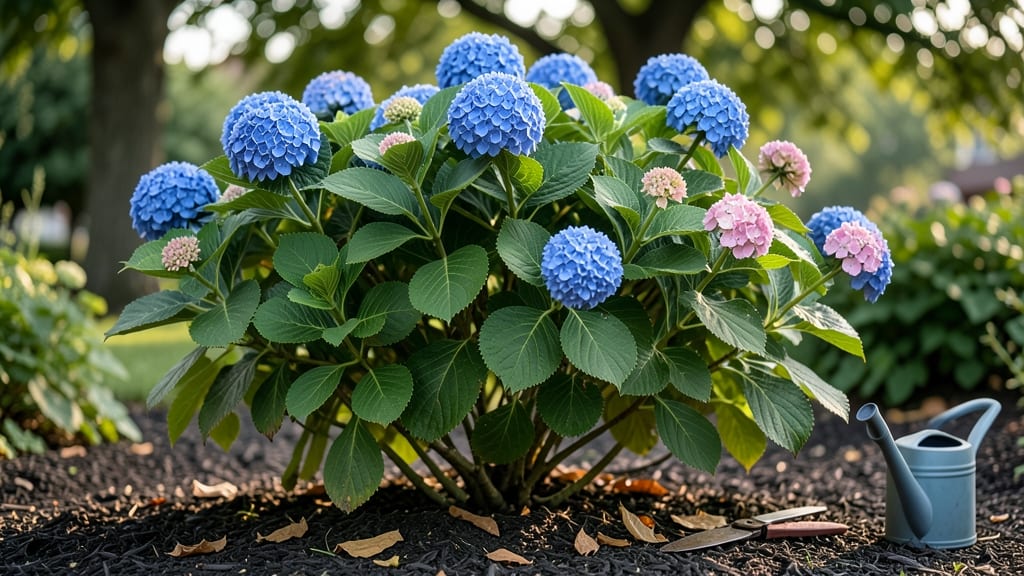
Hydrangeas are famous for their vibrant blooms, but the exact timing depends on whether you're growing bigleaf, panicle, or oakleaf varieties. 🌸 For instance, 'Endless Summer' bigleaf hydrangeas often start blooming in early June, while panicle types like 'Little Lime' may begin as early as May in warmer climates.
Oakleaf varieties tend to bloom slightly later, sometimes stretching into early fall, which is why they're prized for their extended seasonal display. The key factor is temperature—most hydrangeas need consistent warmth to trigger their buds, though some late-bloomers can handle cooler autumn nights better than others.
Your local climate plays a surprisingly big role too. In colder zones (like USDA 4-6), hydrangeas might wait until June or July to bloom, while in warmer regions (zones 7-9), they often start as early as April or May.
I've seen dramatic differences even within the same neighborhood—hydrangeas near south-facing walls or in microclimates with reflected heat can bloom weeks earlier than those in shady spots. If you're eager to see blooms sooner, pruning at the right time (just after flowering) can help encourage earlier bud formation next season.
💡 In This Article
- Hydrangea Bloom Seasons by Variety
- Adjusting Hydrangea Blooming for Your Climate Zone
Hydrangea bloom seasons by variety
Hydrangeas aren't one-size-fits-all when it comes to bloom timing. The three main types—bigleaf, panicle, and oakleaf—each have distinct seasonal patterns influenced by their native growing conditions. Bigleaf hydrangeas (like the popular 'Endless Summer') typically bloom from June to August, with buds forming on old wood from the previous year.
This means they need winter chilling (around 400-600 hours below 45°F) to trigger spring blooms, which explains why they often wait until late spring in colder regions.
Panicle hydrangeas (such as 'Limelight' or 'Little Lime') are more flexible, often blooming from June through September and sometimes extending into October. What sets them apart is their ability to produce flowers on both old and new wood, giving gardeners more control over timing through pruning.
Oakleaf varieties (like 'Pincushion') are the late bloomers of the group, typically flowering from July to October, with their distinctive foliage turning fiery shades of red and orange in fall—a bonus for autumn interest.
The science behind these differences lies in their growth cycles. Bigleaf hydrangeas rely on winter dormancy to set next year's buds, which is why they're more sensitive to early spring warmth. Panicle types, however, can adapt better to warmer climates because their buds form later in the season.
Oakleaf hydrangeas have evolved to handle cooler autumn temperatures, which is why their blooms often last well into fall. 🌿 For example, in my Zone 7 garden, 'Limelight' panicle hydrangeas start blooming in early June, while nearby 'Annabelle' (another panicle type) might not peak until mid-July.
Color changes also play a role in bloom timing. The pH of your soil affects flower pigmentation—acidic soil (pH <6.0) produces blue flowers, while alkaline soil (pH >7.0) yields pink blooms. Interestingly, this chemical process doesn't directly impact bloom timing, but it does influence how vibrant the flowers appear once they open.
For instance, 'Nikko Blue' bigleaf hydrangeas will bloom later in the season if planted in alkaline soil because the plant prioritizes adjusting its chemistry before flowering.
One variety that defies expectations is 'Endless Summer'—a bigleaf hydrangea that blooms on both old and new wood. This means it can produce flowers twice in one season if given proper care.
In my experience, these plants often start blooming in late May in warmer zones and continue through August, with a possible secondary flush in fall if temperatures remain mild. The secret to their extended blooming is consistent moisture and partial shade, which helps maintain the plant's energy balance.