
Fertilization
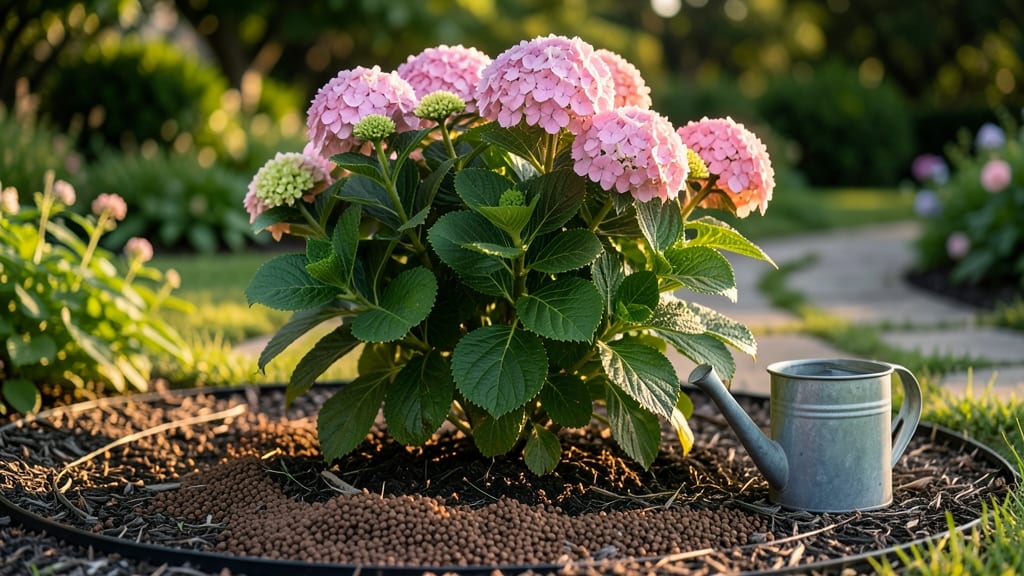
To fertilize hydrangeas in Georgia at the right time means feeding them twice a year—once in early spring and again in fall—when the soil is cool and the plants are actively growing.
Georgia’s humid summers and mild winters create the perfect climate for vibrant 🌸 hydrangeas—but timing your fertilization wrong can mean dull blooms or even plant stress. Get the schedule right, and your hydrangeas will reward you with bold, colorful flowers all season long.
Most gardeners make the mistake of fertilizing in summer, thinking it will boost blooms. But in Georgia’s heat, extra nutrients can actually stress the plant, leading to fewer flowers. Instead, focus on feeding in March and September, when the weather is cooler and the roots can absorb nutrients efficiently.
Below, I’ll break down the best fertilization schedule for Georgia’s climate zones, whether to use organic or synthetic fertilizers, and how to avoid common mistakes that ruin blooms. By the end, you’ll know exactly when to feed your hydrangeas for the best color and health.

Best fertilization schedule for Georgia hydrangeas by season
Georgia’s climate—with its hot summers and mild winters—provides ideal conditions for hydrangeas, but fertilization timing is key to vibrant blooms. Acid-loving varieties (like Hydrangea macrophylla) thrive with precise feeding, while others need balanced care. A well-timed schedule prevents burned foliage and ensures colorful blooms from spring to fall.
Your hydrangeas need two main feeding periods: early spring to kickstart growth and late summer for fall blooms. Georgia’s three climate zones (Coastal Plain, Piedmont, Mountains) may shift timing slightly—cooler mountain areas can fertilize 2-3 weeks later than hotter coastal regions.
Always adjust for soil pH (aim for 5.5-6.0 for blue blooms).
Here’s your month-by-month fertilization guide, tailored to Georgia’s growing seasons and hydrangea needs:
| Season | Month | Task | Fertilizer Type | Notes for Georgia |
|---|---|---|---|---|
| Spring | March | Light feed | Balanced 10-10-10 (½ cup) | Apply after last frost; encourages new growth |
| April-May | Full feed | Slow-release granular or organic | Peak blooming season; avoid high nitrogen | |
| Summer | June-July | None | - | Skip to prevent heat stress; water deeply instead |
| August | Light feed | Balanced or bloom booster | Supports late-season blooms (especially for H. paniculata) | |
| Fall | September | Light feed | Slow-release organic | Strengthens roots before winter; ideal for acid-loving varieties |
| October | Full feed | Balanced 12-12-12 | Last feeding before dormancy; stop by November | |
| Winter | Nov-Feb | None | - | Dormant season; avoid fertilizing to prevent winter burn |
For blue hydrangeas, add aluminum sulfate (1 tbsp per gallon of water) every 4-6 weeks during growing months to maintain acidic soil. In neutral soil (common in Piedmont), use chelated iron instead. Always water deeply after fertilizing to prevent root burn.
In Atlanta’s Piedmont region, where summers are hotter and drier, reduce feeding in July-August to avoid stress. Coastal areas like Savannah can fertilize 1-2 weeks earlier due to milder winters. Mountain zones (e.g., Blue Ridge) may delay spring feeding until mid-April to wait for warmer soil.
If your hydrangeas produce fewer blooms or dull colors, it’s often a sign of over-fertilizing in summer or wrong pH levels. Test your soil in early spring (before fertilizing) and adjust with sulfur (for acidity) or lime (for alkalinity).
For potted hydrangeas, fertilize every 6 weeks with half the dose.
Pro tip: Mix compost into the soil in early spring for a slow-release nutrient boost. Avoid synthetic fertilizers with high nitrogen (like 30-0-0)—they promote leafy growth at the expense of blooms. Instead, opt for balanced or bloom-specific formulas (like 10-30-20).
Remember, hydrangeas are heavy feeders but hate overcrowded roots. Prune dead blooms in late winter (before new growth) and thin out old wood every 2-3 years to improve air circulation and nutrient absorption. With this schedule, your Georgia hydrangeas will thrive year after year.
🌸
How to choose the right fertilizer for Georgia hydrangeas (and when to apply it)
Georgia’s acid-loving hydrangeas thrive with the right fertilizer balance, but choosing between organic vs. synthetic options—and timing applications—can be tricky.
The NPK ratio (nitrogen, phosphorus, potassium) directly impacts whether your hydrangeas produce lush foliage or show-stopping blooms, while Georgia’s soil pH (5.0–6.0 ideal) determines how well they absorb nutrients. Let’s break down the best choices for your Georgia garden.
Most gardeners swear by balanced fertilizers like 10-10-10 or 12-12-12 for hydrangeas, but the organic route (compost, worm castings, or fish emulsion) offers slower nutrient release, which aligns better with Georgia’s hot summers. Synthetic fertilizers deliver quick results but risk burning roots if overapplied during peak heat.
Your hydrangea variety also matters—blue bloomers (like 'Nikko Blue') need more aluminum (from acidic soil), while pink/white types tolerate slightly higher pH.
Organic Fertilizers for Georgia Hydrangeas
| Pros | Cons |
|---|---|
| Improves soil structure over time | Slower results (takes 4–6 weeks) |
| Safe for Georgia’s heat (less burn risk) | Requires more frequent applications |
| Boosts microorganisms in acidic soil | Can attract pests if overused |
Synthetic Fertilizers for Georgia Hydrangeas
| Pros | Cons |
|---|---|
| Fast bloom enhancement (2–3 weeks) | Risk of root burn in heat |
| Precise NPK control for color | Depletes soil organic matter long-term |
| Long-lasting slow-release options available | Requires soil pH testing for best results |
For Georgia’s climate, I recommend a hybrid approach: Use organic fertilizers in spring (March–April) to build soil health, then switch to a balanced synthetic like 10-10-10 in early fall (September) to fuel next year’s blooms. Skip fertilization entirely in summer (June–July)—Georgia’s 90°F+ temps stress plants, and feeding can stunt growth or cause bloom failure.
Pro tip: Test your soil pH before fertilizing. Georgia’s clay-heavy soils often need sulfur or aluminum sulfate to lower pH for blue hydrangeas. If your soil is already acidic (pH 5.0–5.5), a low-phosphorus fertilizer (like 5-5-5) prevents leafy growth over blooms.
For pink/white varieties, aim for pH 6.0–6.2 and use a higher-phosphorus blend (e.g., 10-20-10).
Apply fertilizers in early morning or late evening to avoid leaf scorch from Georgia’s intense sun. Water deeply after feeding to help nutrients reach roots.
For container hydrangeas, use half the dose—they dry out faster and are more sensitive to salt buildup from synthetic fertilizers. Mulch with pine bark or compost after fertilizing to lock in moisture and nutrients.
Over-fertilizing is a common Georgia mistake. I’ve seen hydrangeas collapse from too much nitrogen in summer, leading to weak stems and fewer blooms. If your plant’s leaves turn yellow or brown, flush the soil with water and hold off on feeding for 6–8 weeks.
Remember: Georgia’s heat slows nutrient uptake, so less is often more.
For peak color, time your last heavy feed in late summer (August)—this gives roots time to absorb nutrients before fall blooming begins. If you’re pruning hydrangeas (like mopheads or lacecaps), fertilize 2–3 weeks after pruning to avoid burning fresh cuts.
And always follow label rates: Georgia’s humid air makes plants hungrier than they appear!