
Light Requirements
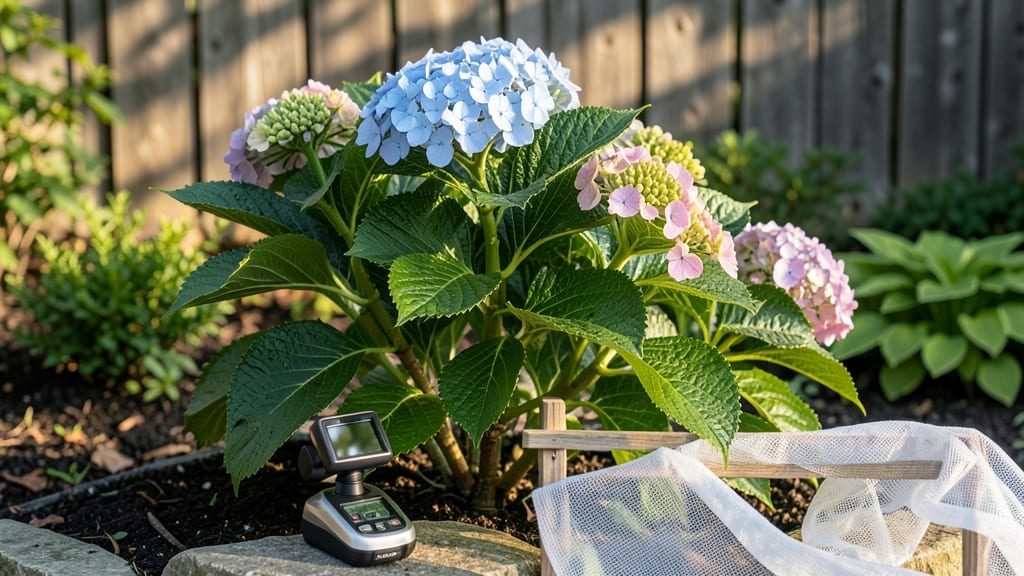
Hydrangeas can take full sun in cooler climates but struggle in intense heat, often needing afternoon shade to prevent leaf scorch and wilting. Varieties like 'Limelight' or 'Endless Summer' tolerate more sun than delicate types like 'Nikko Blue.'
Sun tolerance in hydrangeas depends heavily on your climate and the specific variety you're growing. 🌞 In regions with mild summers, these plants can thrive in full sun, especially when paired with consistent moisture.
However, in hotter areas, the midday heat can cause stress, leading to browned edges or crispy leaves. I’ve found that providing dappled shade during peak afternoon hours—like under a tree canopy or lattice structure—can make all the difference for sun-sensitive varieties.
The key is balancing light exposure with hydration, as hydrangeas are particularly vulnerable to dehydration when basking in direct sunlight.
Another critical factor is soil moisture—hydrangeas need consistently damp soil to offset the drying effects of sun. Adding 2-3 inches of mulch around the base of the plant helps retain moisture and regulate root temperature.
For gardeners in warmer zones, I recommend choosing heat-tolerant varieties like 'Limelight' or 'Endless Summer,' which have adapted to handle more sunlight while still producing stunning blooms. These varieties often feature thicker leaves and deeper root systems, giving them a natural advantage in sunnier conditions.
💡 In This Article
- How Sunlight Affects Hydrangea Health and Growth
- Best Hydrangea Varieties for Sunny Gardens
How sunlight affects hydrangea health and growth
Hydrangeas respond to sunlight through a complex interplay of leaf anatomy and physiological processes. Their broad leaves contain stomata—tiny pores that regulate moisture and gas exchange—making them highly sensitive to intense light.
When exposed to direct midday sun (10 AM–4 PM), these stomata open wider to cool the plant, but the rapid transpiration can dehydrate the leaves faster than roots can absorb water. This imbalance often leads to wilting or crispy edges, especially in temperatures above 85°F.
The science here involves the plant’s photoprotection mechanisms: while some sunlight triggers chlorophyll production for energy, excessive UV radiation can damage cell membranes, causing the brown scorch marks many gardeners notice.
Root systems also play a critical role in sun tolerance. Hydrangeas have shallow, fibrous roots that spread horizontally rather than dive deep. In full sun, these roots can overheat if the surrounding soil dries out, reducing their ability to absorb water efficiently.
The ideal soil temperature for hydrangea roots hovers around 60–70°F—any hotter, and root activity slows, further stressing the plant.
This is why mulching with 3–4 inches of organic matter (like shredded bark or compost) is essential: it insulates roots while retaining moisture, creating a cooler microclimate near the soil surface. 🌿
Sunlight also directly impacts blooming cycles and flower color development. Hydrangeas like 'Nikko Blue' rely on cooler temperatures to produce their signature blue hues, while varieties such as 'Limelight' thrive in sunnier conditions but may shift to pink if soil pH isn’t carefully managed.
The intensity of light affects flower size too: full sun can lead to smaller blooms but often increases the number of flowers per cluster.
For example, 'Endless Summer' hydrangeas, bred for sun tolerance, produce abundant blooms even in 6+ hours of direct sunlight daily, whereas 'Annabelle' may struggle with leaf burn in such conditions.
Climate matters more than you might think. In cooler regions (USDA Zones 3–5), hydrangeas often handle full sun without issues because afternoon temperatures rarely exceed 80°F. But in Zone 7 or higher, the same plant may need afternoon shade to survive.
The key is observing your hydrangea’s behavior: if leaves curl upward or develop a papery texture, it’s a sign of sun stress. Adjusting shade cloth (30–50% coverage) can mitigate this while still allowing beneficial light penetration for photosynthesis.
Watering strategy is the final piece of the puzzle. Hydrangeas in full sun require 1–1.5 inches of water per week, either from rainfall or manual watering.
Drip irrigation or soaker hoses work best, delivering moisture directly to the root zone without wetting the foliage—which can promote fungal diseases in hot conditions. I’ve seen dramatic improvements in sun-stressed hydrangeas after switching to deep, infrequent watering (every 2–3 days) rather than light, frequent sprinkles.
The goal is to keep the soil consistently moist, mimicking the humid, shaded environments these plants prefer in the wild.
One often-overlooked detail is the role of humidity. Low humidity exacerbates sun stress by increasing evaporation rates from leaves. In arid climates, consider grouping hydrangeas with other moisture-loving plants (like hostas or ferns) to create a more stable microclimate.
Even a simple DIY solution—like placing a tray of water near the plants—can boost humidity slightly and reduce stress. 💧