
Pruning
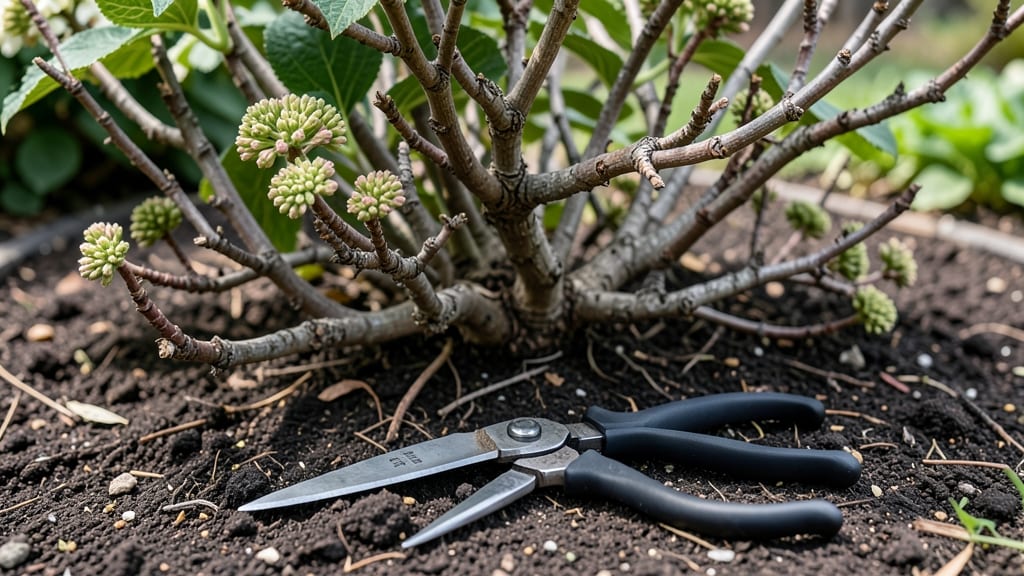
Hydrangeas do need cutting back for winter, but the timing and method depend entirely on whether your plants are deciduous or evergreen varieties. Deciduous types like mophead and lacecap hydrangeas should be pruned in late winter or early spring, while evergreens like oakleaf and panicle varieties often need little to no trimming. Always use sharp, clean tools to prevent disease and follow variety-specific guidelines to protect next year's blooms.
Your pruning strategy should align with your hydrangea's blooming habits. Deciduous varieties bloom on new wood, so cutting them back in late winter removes dead growth and encourages fresh shoots for summer blooms.
Evergreen types, however, often bloom on old wood, so minimal trimming is safer—just remove any dead or damaged stems. I've found that sterilizing shears with rubbing alcohol between cuts prevents bacterial spread, which is especially important when working with multiple plants. 🌸
Beyond pruning, winter protection matters just as much. For deciduous varieties, apply a 3-inch layer of mulch around the base after the ground freezes to insulate roots, while evergreens benefit from wrapping with burlap to shield tender foliage from harsh winds.
I always check for signs of winter stress—like brown, crispy leaves—before deciding whether additional protection is needed. Proper winter care ensures your hydrangeas bounce back stronger in spring.
💡 In This Article
- When and How to Prune Different Hydrangea Varieties
- Winter Care Tips to Protect Hydrangeas from Cold Damage
When and how to prune different hydrangea varieties
The key difference between hydrangea varieties lies in their blooming habits and how they respond to cold. Deciduous types like mophead (Hydrangea macrophylla) and lacecap (H. macrophylla 'Norma') bloom on new wood—meaning their flowers develop on current season's growth.
This makes them ideal for late winter/early spring pruning (February-March in most climates), when dormant buds are ready to sprout. Cutting back 1/3 of the plant's height removes dead stems while stimulating vigorous new shoots for summer blooms.
Evergreen varieties like oakleaf (H. quercifolia) and panicle (H. paniculata) follow different rules. Oakleaf hydrangeas bloom on old wood, so pruning should be minimal—just removing dead or crossing branches in late winter.
Panicle types, however, are more flexible: they bloom on both old and new wood, so you can prune after flowering (late summer/fall) to shape the plant without sacrificing blooms.
The secret is recognizing these differences—old wood bloomers show buds in late winter, while new wood types have smooth stems waiting for spring's warmth. 🌿
Proper pruning technique matters just as much as timing. Always use bypass pruners (not anvil pruners) to make clean cuts at a 45-degree angle, about 1/4 inch above a leaf node. This prevents water from pooling and rotting the stem.
For deciduous types, focus on removing stems older than 3 years—they produce fewer blooms and take up energy. Evergreens need only a light touch, as aggressive pruning can remove next year's flower buds before they even form.
What most gardeners overlook is the importance of pruning after the last frost date in your zone. In colder regions (Zones 3-5), wait until late April or May—when nighttime temperatures consistently stay above 40°F—to avoid damaging tender new growth.
In warmer zones (6-9), February pruning works perfectly. The goal is to give the plant enough time to recover before summer's heat stress begins.
Here's a quick visual guide to identify which stems to keep:
- Deciduous (new wood): Remove all stems older than 3 years—look for brown, woody stems with no green bark. Keep 2-3 healthy stems per plant for balance.
- Evergreen (old wood): Only prune dead, diseased, or crossing branches. Never remove more than 20% of the plant's volume in one season.
- Panicle (flexible): Can be pruned either after flowering (late summer) or in late winter—whichever suits your garden design.
The payoff for proper pruning? Deciduous types can produce 25-30% more blooms the following season, while evergreens maintain their distinctive foliage without stress. I've seen oakleaf hydrangeas with 18-inch-long leaves after careful winter pruning—proof that less really is more for these varieties.
The key is patience and observing your plant's unique response each year. ✨