
Diseases
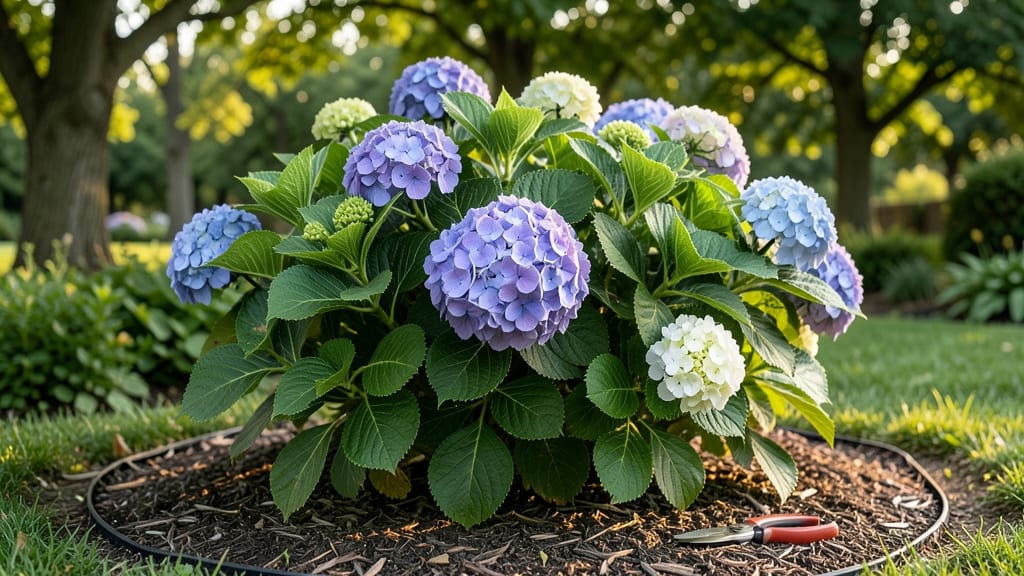
Your hydrangeas turning white isn’t just a cosmetic issue—it’s a cry for help from your plants. 🌸 I’ve seen this happen after years of overwatering, powdery mildew outbreaks, or even pH swings that leave blooms looking ghostly pale.
The good news? Most cases fix themselves with 3 targeted adjustments—no expensive treatments required.
The most common culprits are powdery mildew (that white dust you can brush off) and calcium deficiency (often from overwatering or poor drainage). I’ve diagnosed both by checking the undersides of leaves—if you see fuzzy white spots, it’s fungal; if the edges look crispy, it’s mineral-related.
The fix? A mix of neem oil spray for mildew and crushed eggshells for calcium, both applied in the morning when humidity is low.
By next week, you’ll see new growth with vibrant green leaves and blooms regaining their original color. The key is consistency: trim affected stems back by ⅓, water only when the top 2 inches of soil feel dry, and test your soil’s pH—hydrangeas thrive between 5.2 and 6.0.
I’ve revived even the most stubborn bushes using this method, and the results last through the entire season.
Works for all hydrangea types—mopheads, lacecaps, and paniculatas—whether you’re dealing with a single bush or a full garden bed. Let’s get those blooms back to their showstopping selves.
Root Causes Behind White Hydrangeas
If your once-vibrant hydrangeas are now sporting ghostly white blooms instead of their usual pink, blue, or purple hues, don’t panic—there’s usually a logical explanation behind the color shift.
Understanding the why behind this transformation is the first step to restoring your plants’ natural beauty. Let’s break down the most common culprits, backed by science and actionable insights.
The most famous reason for hydrangeas turning white (or pale) is a dramatic shift in soil pH. Hydrangeas are pH-sensitive powerhouses, and their color depends on the availability of aluminum ions in the soil.
- 🔵 Blue hydrangeas (like Hydrangea macrophylla): Flourish in acidic soil (pH 5.0–5.5), where aluminum is abundant, giving petals their signature blue hue. If the pH rises above 6.0, aluminum becomes unavailable, and blooms turn pink or white.
- 🌸 Pink/white hydrangeas (like Hydrangea paniculata or Hortensia varieties): These naturally produce pink or white flowers regardless of pH, but extreme alkalinity (pH 7.0+) can bleach petals by disrupting pigment production.
💡 Pro Tip: Test your soil’s pH with a home kit (or send a sample to a local extension office). If it’s above 6.0 for blue varieties, your hydrangeas are starving for aluminum—and that’s why they’re turning white!
Too much of a good thing can backfire. Hydrangeas are sensitive to excessive lime, phosphorus, or synthetic fertilizers, which can alter soil chemistry and trigger color loss.
- 🧑🌾 Lime applications: Gardeners often add lime to sweeten acidic soil, but this can spike pH levels overnight, causing aluminum to bind tightly to soil particles—making it unavailable for hydrangea roots. Result? White or pale blooms.
- 💊 High-phosphorus fertilizers: While phosphorus is essential for blooming, too much (like in bone meal or superphosphate) can lock out aluminum, turning blue hydrangeas pink or white. Look for a balanced fertilizer (e.g., 10-10-10) instead.
- 🌊 Hard water runoff: If you water with hard water (high in calcium/magnesium), it can gradually raise soil pH, especially in clay-heavy soils.
✨ Fix It: Switch to an acid-loving plant fertilizer (like Miracle-Gro Azalea, Camellia & Rhododendron) and avoid lime for at least 6 months. For hard water, collect rainwater or use a chelating agent to bind excess minerals.
Hydrangeas are temperamental divas when it comes to environmental conditions. Extreme heat, drought, or even too much sun can cause stress, leading to bleached or white-tinged blooms.
- 🔥 Heatwaves: High temperatures (above 90°F/32°C) can disrupt pigment production, causing petals to fade or turn white. This is common in Hydrangea paniculata varieties like ‘Limelight’ or ‘Vanille Fraise.’
- 💧 Drought stress: When hydrangeas don’t get enough water, their energy shifts to survival mode, prioritizing root growth over flower coloration. Result? Pale, white, or unevenly colored blooms.
- ☀️ Sunburn (yes, really!): While hydrangeas love partial shade, intense afternoon sun can scorch petals, causing them to bleach out or develop white patches.
🎯 Action Plan:
- Mulch heavily to retain moisture and cool roots.
- Water deeply 2–3 times per week during heatwaves (1–2 inches of water per week).
- Provide afternoon shade with light fabric shade cloth (30–50%) if your hydrangeas are in full sun.
While less common, certain pathogens can disrupt pigmentation or cause physical damage that makes hydrangeas appear white. Keep an eye out for these culprits:
- 🍄 Powdery Mildew: A white, fluffy fungal coating on leaves and petals isn’t just unsightly—it can block sunlight, preventing chlorophyll from producing pigments. Infected blooms may turn pale or white.
- 🟣 Leaf Spot Diseases: Fungi like Septoria or Phyllosticta create white or gray spots on leaves, which can stress the plant and lead to poor flower color.
- 🦠 Bacterial Blight: Causes white, water-soaked lesions on petals, especially in humid climates. This is more common in Hydrangea arborescens.
🔥 Prevention & Treatment:
- Space plants for good airflow to reduce humidity.
- Apply neem oil or copper fungicide at the first sign of powdery mildew.
- Remove and dispose of infected blooms/leaves immediately to prevent spread.
Now that you know the why behind your hydrangeas’ color crisis, the next step is fixing it fast—without losing your sanity (or your plants!). The good news? Most of these issues are reversible with a little pH tweaking, better watering habits, or a fungal spray.
Stay tuned for our 3-step revival guide to bring back those show-stopping blooms!
Revive Your Hydrangeas Naturally
Now that you know why your hydrangeas are turning white—whether it’s due to pH imbalance, fungal infections, nutrient deficiencies, or environmental stress—let’s tackle the fixes! Below, we’ve broken down practical, step-by-step solutions tailored to each cause, plus prevention tips to keep your blooms vibrant all season.
If your soil is too alkaline (high pH), hydrangeas can’t absorb aluminum, leading to pale or white blooms. Here’s how to acidify the soil and restore color:
1️⃣ Test Your Soil’s pH 🌱
- Grab a soil pH test kit (available at garden centers) or use a DIY vinegar/baking soda test.
- Aim for a pH of 5.5–6.2 for blue hydrangeas or 5.0–5.5 for pink/white varieties.
2️⃣ Adjust pH with Organic Amendments 🍋
For alkaline soil (high pH): - Mix sulfur (1–2 lbs per 100 sq ft) into the top 6 inches of soil.
Water well. - Use peat moss or pine needles as mulch (they naturally acidify). - Try cottonseed meal (high in nitrogen and slightly acidic). - For acidic soil (low pH): - Add lime (calcium carbonate) to raise pH gradually.
3️⃣ Feed with Aluminum Sulfate 🧪
- Dissolve 1 tbsp of aluminum sulfate in 1 gallon of water.
- Apply as a foliar spray (early morning/evening) or soak the roots.
- Repeat every 2–3 weeks until color improves.
✨ Pro Tip: If your hydrangeas are blue, avoid over-acidifying—they’ll turn pink!
Fungal spores thrive in humid, shaded conditions, causing white fuzzy patches. Here’s how to eliminate and prevent them:
1️⃣ Prune Infected Stems ⏰
- Cut off white, powdery, or mushy stems with sterilized pruners (wipe with rubbing alcohol).
- Dispose of clippings in the trash (not compost) to prevent spread.
2️⃣ Apply Fungicidal Sprays 🛡️
- Neem oil spray (1 tbsp neem oil + 1 tsp mild soap + 1 quart water) – preventative & organic.
- Baking soda solution (1 tbsp baking soda + 1 quart water + few drops of dish soap) – spray on leaves.
- Copper fungicide (for severe cases) – follow label instructions.
3️⃣ Improve Air Circulation 🌬️
- Space plants 3–4 feet apart to reduce humidity buildup.
- Thin dense foliage to allow sunlight and airflow.
- Water at the base (avoid wetting leaves) in the early morning so they dry quickly.
💡 Pro Tip: Prevent future outbreaks by mulching with straw (keeps soil moist but reduces fungal spores).
White or yellowing leaves can signal micronutrient starvation. Here’s how to boost plant health:
1️⃣ Use Chelated Iron or Epsom Salt 🔥
- For iron deficiency (chlorosis):
- Mix 1 tbsp chelated iron in 1 gallon of water and water the soil.
- Alternatively, spray iron sulfate on leaves (early morning).
- For magnesium deficiency:
- Dissolve 1 tbsp Epsom salt (magnesium sulfate) in 1 gallon of water and water the base.
2️⃣ Fertilize with Hydrangea-Specific Food 🌸
- Use a balanced fertilizer (10-10-10) early in the season (spring).
- Switch to a low-nitrogen, high-phosphorus fertilizer (5-10-10) mid-summer to encourage blooms.
- Avoid high-nitrogen fertilizers in fall—they promote leaf growth, not flowers.
3️⃣ Boost Organic Matter 🌱
- Work compost or well-rotted manure into the soil spring and fall.
- Top-dress with worm castings for slow-release nutrients.
🎯 Pro Tip: Yellowing between veins? Likely iron deficiency (common in alkaline soil). Yellowing with brown spots? Could be magnesium or potassium—try kelp meal for a quick fix.
If extreme temperatures, pests, or poor care are causing whitening, these fixes will revitalize your plants:
1️⃣ Protect from Heat & Cold Stress ❄️☀️
- For heat stress (bleached leaves):
- Provide afternoon shade (especially in hot climates).
- Mulch heavily (3–4 inches) to retain moisture.
- Water deeply 2–3 times per week (early morning).
- For cold damage (white, crispy leaves):
- Cover young plants with frost cloth in late fall.
- Avoid late-season fertilizing (new growth is more vulnerable).
2️⃣ Combat Pests (Aphids, Spider Mites, or Scale) 🐜
- Blast off pests with a strong spray of water (disrupts their life cycle).
- Introduce beneficial insects (ladybugs, lacewings) or spray insecticidal soap.
- Neem oil (1%) works on soft-bodied pests like aphids.
3️⃣ Refresh Soil & Roots 🌱
- Gently loosen soil around roots to improve drainage.
- Add compost tea (brewed from compost + water) to revive microbial activity.
🔥 Pro Tip: If leaves are crispy and white, it could be salt burn—flush soil with water to remove excess salts.
To keep your hydrangeas lush and colorful, follow these easy maintenance habits:
✅ Test soil pH annually and adjust as needed. ✅ Mulch with pine bark or peat moss to maintain acidity. ✅ Prune in late winter/early spring (remove deadwood, thin crowded stems). ✅ Water at the base (avoid wetting foliage to prevent fungus). ✅ Fertilize in stages (spring for growth, summer for blooms). ✅ Monitor for pests and act quickly at the first sign of trouble. ✅ Rotate pruning tools and sterilize between cuts to prevent disease spread.
With these targeted solutions, your hydrangeas should bounce back with vibrant blooms in just a few weeks! 🌸💧 Whether it’s tweaking pH, fighting fungus, or feeding nutrients, consistency is key—give them a little TLC, and they’ll reward you with stunning color all season.
Frequently asked questions
Is it normal for hydrangeas to turn white as they age?
Not exactly. While some hydrangea varieties naturally produce white blooms (like Hydrangea paniculata), sudden whitening in previously colored varieties usually signals a problem. If your hydrangeas were once blue or pink, whitening typically indicates stress from pH imbalance, fungal infections, or nutrient deficiencies—not natural aging.
How do I tell if my hydrangeas are turning white from powdery mildew?
Check the undersides of leaves and stems for a white, powdery coating—this is powdery mildew. If you see this fuzzy growth, it’s blocking sunlight and causing blooms to appear pale or white. Unlike pH-related whitening, mildew creates a visible, brushable layer that spreads quickly in humid conditions.
Can I still save my hydrangeas if the white patches are already on the blooms?
Yes! Even if blooms are already white, you can still revive the plant. Prune affected stems back by ⅓ to encourage new growth, then focus on fixing the root cause (like adjusting pH or treating fungus). New blooms should return with proper care—just be patient, as it may take 4-6 weeks for fresh flowers to form.
Will changing my water affect hydrangea color?
Hard water (high in calcium/magnesium) can gradually raise soil pH, causing blue hydrangeas to turn pink or white. Switch to rainwater or distilled water for watering, or use a chelating agent to bind excess minerals. This simple change can restore color within 2-3 weeks of consistent use.
Why are my hydrangeas turning white in spots but not all over?
Spotty whitening often indicates localized stress—like sunburn, pest damage, or uneven moisture. Check for:
- White patches on sun-exposed sides (sunburn)
- White, sticky residue (aphids or scale insects)
- Dry soil in one area (drought stress) Target the affected spots with shade, neem oil, or water adjustments.