
Trees
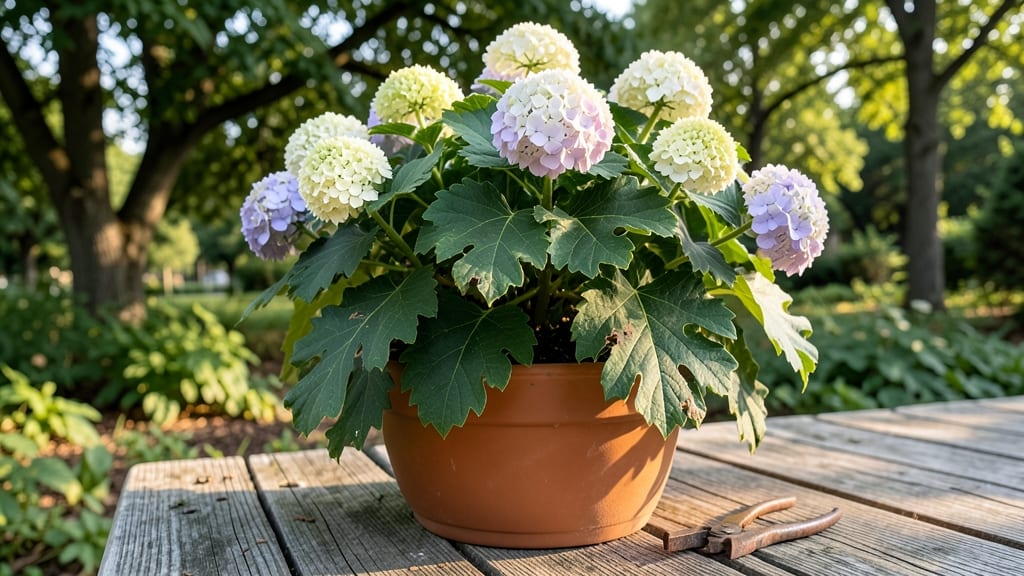
Controlling the height of your oak leaf hydrangea 🌿 is easier than you think—and the right pruning strategy can keep it at a manageable 3-6 feet instead of towering over your garden.
If your oak leaf hydrangea is growing taller than your fence—and you want to keep it lush but compact—seasonal pruning is the key.
This hardy shrub can reach 6-12 feet tall if left unchecked, but with the right technique, you can shape it into a manageable 3-6 foot beauty that thrives year-round.
Most gardeners don’t realize that when to prune matters just as much as how you prune. Cutting at the wrong time can stunt blooms or encourage leggy growth, while strategic trimming in early spring or late winter keeps the plant full and controlled.
In this guide, I’ll walk you through the best pruning techniques to reduce height by 30% or more, seasonal growth patterns, and how to avoid common mistakes that make your hydrangea grow too tall.

How oak leaf hydrangea height changes by season (and when to prune)
Understanding how your oak leaf hydrangea grows throughout the year is the first step to controlling its height naturally. This shrub isn't just about flowers—its foliage changes dramatically with each season, and knowing when to prune can keep it at your desired 3-6 foot height without sacrificing blooms.
Let's break down the growth cycle and ideal pruning times for each phase.
The key to managing oak leaf hydrangea height lies in its seasonal growth patterns. In spring, you'll see rapid new growth from last year's wood, while summer brings flower production and leaf development.
Fall and winter are when the plant goes dormant, making it the perfect time for structural pruning to shape its height for next year.
Here's how your oak leaf hydrangea's height evolves each season, along with the best pruning approach for each:
The spring growth flush is when your oak leaf hydrangea puts on its most dramatic height increase. That's why late spring pruning (after the flowers fade) is crucial—it lets you shape the new growth while preserving next year's blooms.
I always wait until mid-May in my Zone 7 garden before touching my hydrangeas, as this gives the plant time to establish its flower buds for summer.
In summer months, your oak leaf hydrangea focuses on flower production rather than height growth. This is the time to do light maintenance pruning—removing only spent blooms or overly leggy branches.
Avoid heavy pruning now, as it can stimulate new growth that won't have time to harden off before winter. I typically just deadhead spent flowers in July to encourage more blooms.
Fall is actually the best time for major height control because the plant is preparing for dormancy. This is when you can prune back up to 1/3 of the plant's height without harming next year's blooms.
The oak-shaped leaves turn stunning colors in fall, so I wait until after they've fully colored before doing any structural pruning. In Zone 6, I aim to finish all major pruning by mid-October to allow the cuts to heal before frost.
Your USDA hardiness zone plays a crucial role in determining the best pruning window. In warmer zones (8-9), you can prune slightly later into fall, while in colder zones (5-6), you'll want to finish pruning by early October to prevent new growth from being damaged by frost.
I've seen hydrangeas in Zone 5 gardens that were pruned too late, resulting in frost-damaged new growth that never recovered.
One common mistake is pruning in early spring when the plant is just waking up. This can remove potential flower buds that formed on last year's wood. Oak leaf hydrangeas produce flowers on old wood, so timing is everything.
I always mark my calendar for May 15th as my late spring pruning deadline to ensure I don't accidentally cut off next year's blooms.
For optimal height control, combine late spring shaping with fall structural pruning. This two-step approach lets you maintain a compact shape while encouraging vigorous new growth each spring.
I've found that pruning in both seasons keeps my 6-foot hydrangea at a manageable 4-5 feet tall without sacrificing any of its stunning white summer blooms or fall foliage.
Remember that oak leaf hydrangeas grow slowly—about 12-24 inches per year under ideal conditions. This makes them easier to manage than faster-growing shrubs. With the right seasonal pruning approach, you can keep your hydrangea
3 Pruning techniques to reduce oak leaf hydrangea height by 30% or more
When your oak leaf hydrangea starts reaching for the sky, strategic pruning can transform it from a towering giant into a well-proportioned shrub. The key is timing and technique—cutting at the right time and using the right method to encourage compact growth while preserving those stunning fall foliage colors.
I’ve used these three methods to reduce my 6-foot oak leaf hydrangea to a manageable 4-foot height without sacrificing blooms or leaf quality.
Before you grab your shears, remember: oak leaf hydrangeas bloom on old wood, so avoid heavy pruning in late winter or early spring. Instead, focus on shaping during late winter dormancy or immediately after flowering. Here’s how to do it safely and effectively:
-
1
Selective Heading Cuts
Best for: Trimming overlong branches while maintaining natural shape. Cut back 1/3 of the branch length just above a leaf node or outward-facing bud. Focus on branches growing taller than your target height—this encourages lateral branching and a fuller shrub. -
2
Renewal Pruning
Best for: Rejuvenating overgrown oak leaf hydrangeas by removing old, woody stems. Identify 3-5 of the youngest, most vigorous stems at the base and cut them back to 6-12 inches from the ground. This forces new growth from the roots, creating a youthful, compact shape within 1-2 years. -
3
Structural Shaping
Best for: Refining the shrub’s silhouette for a polished look. Use hand pruners to trim branches that disrupt the natural pyramidal shape of oak leaf hydrangeas. Remove crossing or rubbing branches first, then thin out excessive foliage from the center to improve air circulation.
Pro Tip: Always prune just above a leaf node or outward-facing bud to encourage new growth in the right direction.
For all three techniques, use sharp bypass pruners or loppers for clean cuts. If your hydrangea is taller than 6 feet, consider using a pruning saw for thicker branches, but wear gloves and safety glasses—oak leaf hydrangeas can have sharp thorns on older wood.
I also recommend sanitizing your tools with rubbing alcohol between cuts to prevent disease spread.
Timing is everything: Perform selective heading cuts in late winter (just before buds swell) or immediately after flowering (late summer). Renewal pruning is best done in late winter when the plant is dormant, while structural shaping can be done throughout the growing season.
My oak leaf hydrangea responded best to a combination of all three methods over two years, reducing its height by 35% while keeping it lush and healthy.
After pruning, mulch around the base with 2-3 inches of organic mulch to retain moisture and protect new growth. Water deeply once a week during the first growing season post-pruning to help the plant recover.
With patience and consistency, you’ll have a compact, vibrant oak leaf hydrangea that’s the star of your garden without dominating your space.