
Size
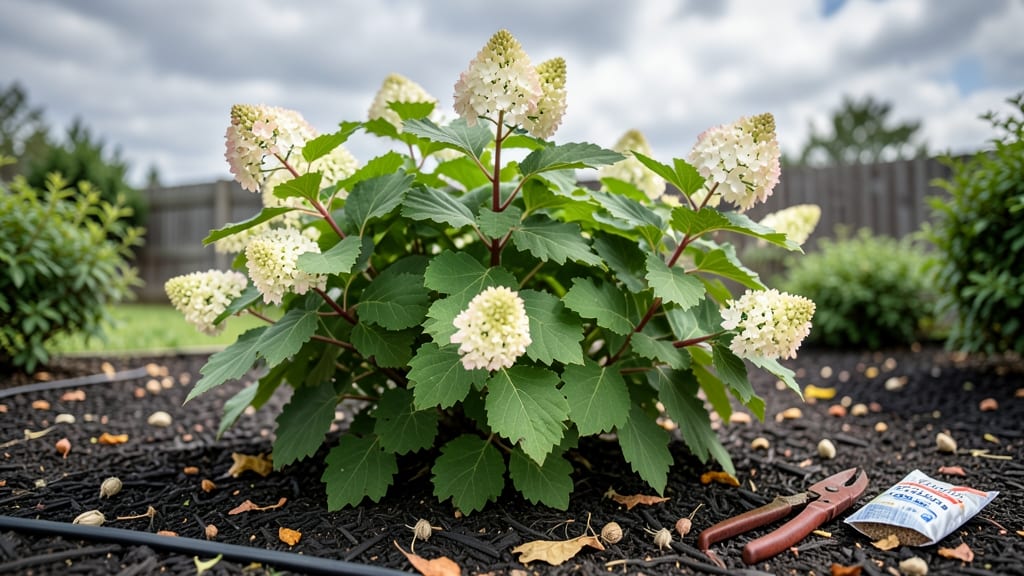
The oak leaf hydrangea size you choose will shape your garden’s future—these shrubs can stretch from 3 feet to towering 8 feet tall, depending on variety and care.
If you’re dreaming of a lush, low-maintenance shrub that adds year-round interest to your garden, the oak leaf hydrangea (Hydrangea quercifolia) could be your perfect match—but first, you need to know exactly how big it’ll grow to plan your space wisely.
Standard varieties reach 6 to 8 feet at maturity, while dwarf types stay compact at 3 to 5 feet. The key? Sunlight, soil, and pruning—get those right, and you’ll avoid a shrub that outgrows its welcome.
Below, I’ll break down the exact spacing you need, how fast they grow, and the 3 pruning secrets that keep them in check—so you can enjoy their stunning foliage without the headache.


Oak leaf hydrangea mature size: how tall & wide they grow
The oak leaf hydrangea (Hydrangea quercifolia) is a stunning shrub known for its lush foliage and seasonal blooms, but its mature size can vary dramatically depending on the variety and growing conditions.
Understanding these dimensions is crucial for landscape planning, whether you're designing a small garden or a large backyard. Let’s break down exactly how tall and wide these shrubs grow so you can choose the perfect fit for your space.
Standard oak leaf hydrangeas typically reach heights between 6 to 8 feet at maturity, with a spread of 5 to 7 feet. However, this isn’t a one-size-fits-all rule.
Dwarf varieties like 'Pee Wee' stay compact at 3 to 5 feet, making them ideal for containers or small gardens. Meanwhile, larger cultivars can stretch closer to 10 feet in exceptional conditions. The key is knowing how your specific variety will grow to avoid overcrowding or wasted space.
| Variety | Mature Height | Mature Spread | Growth Rate | Best For |
|---|---|---|---|---|
| Standard (e.g., 'Snow Queen') | 6–8 ft | 5–7 ft | Moderate (1–2 ft/year) | Large gardens, hedges |
| Dwarf (e.g., 'Pee Wee') | 3–5 ft | 3–4 ft | Slow (6–12 in/year) | Containers, small spaces |
| Semi-Dwarf (e.g., 'Alice') | 5–7 ft | 4–6 ft | Moderate (1 ft/year) | Medium gardens, borders |
| Large (e.g., 'Puryear') | 8–10 ft | 6–8 ft | Fast (1.5–2 ft/year) | Woodland gardens, privacy screens |
Your oak leaf hydrangea’s growth rate is another critical factor. In ideal conditions—partial shade, well-draining soil, and consistent moisture—these shrubs can grow 1 to 2 feet per year during their first few years.
Dwarf varieties grow more slowly, adding only 6 to 12 inches annually, while larger types may surge 2 feet or more in a single season. This rapid growth makes early pruning essential to shape your plant and control its final dimensions.
When planning your landscape, remember that oak leaf hydrangeas develop a rounded, multi-stemmed habit. Their spread often equals or exceeds their height, so a 6-foot-tall shrub might occupy 8 feet of space at maturity.
If you’re planting multiple shrubs, leave 5 to 7 feet between them to prevent competition for nutrients and sunlight. For dwarf varieties, 3 to 4 feet of spacing is usually sufficient.
Sunlight plays a surprising role in size regulation. While oak leaf hydrangeas thrive in partial shade, too much direct sun can lead to leaf scorch and stunted growth. In full sun conditions, these shrubs may grow taller but produce fewer blooms and weaker stems.
Conversely, deep shade can slow growth entirely. Aim for morning sun and afternoon shade to balance size and vigor.
Soil quality also influences mature size. Oak leaf hydrangeas prefer acidic, organic-rich soil with a pH between 5.0 and 6.0. Poor soil can limit root development, resulting in a smaller, less robust shrub.
Amend your soil with compost or peat moss before planting to ensure healthy growth. In clay-heavy soils, consider raising beds or adding sand to improve drainage.
Pruning is your best tool for managing size. Late winter or early spring is the ideal time to trim back dead or overcrowded branches. Avoid heavy pruning in fall, as this can stimulate new growth that won’t harden off before winter.
For dwarf varieties, you can prune more aggressively to maintain compactness, while standard types benefit from light shaping cuts to encourage a fuller form.
If you’re growing oak leaf hydrangeas in containers, expect their size to be 20–30% smaller than in-ground plants due to root restriction. Choose pots at least 18 inches wide and deep for dwarf varieties and 24 inches or larger for standard types.
Regularly check for root-bound conditions and repot every 2–3 years to accommodate growth.
For those in colder climates (USDA Zones 5–6), oak leaf hydrangeas may grow slightly slower but still reach their full mature size with proper care. In warmer zones (7–9), these shrubs can grow more aggressively, especially if given extra moisture.
Always monitor your plant’s growth habits and adjust care accordingly to keep it thriving.
Now that you know the expected size ranges, you can confidently select the perfect oak leaf hydrangea for your garden—whether it’s a dwarf variety for containers
How much space oak leaf hydrangeas need to thrive
The oak leaf hydrangea needs thoughtful spacing to thrive, especially since its mature size can range from 5 to 8 feet tall with a 4 to 6-foot spread. Planting too close can lead to overcrowding, poor airflow, and increased risk of fungal diseases.
For a single specimen, aim for at least 5 feet of clearance in all directions to allow branches to spread naturally without competition.
If you're planting multiple shrubs, space them 6 to 8 feet apart to create a cohesive hedge or border. This spacing ensures each plant receives adequate sunlight and nutrients, preventing stunted growth or weak blooms.
In smaller gardens, consider dwarf varieties like 'Pee Wee,' which max out at 3 to 4 feet tall—perfect for tight spaces or containers.
Oak Leaf Hydrangea Spacing: Pros & Cons
✅ Pros of Proper Spacing
- Better airflow reduces fungal risks
- Healthier blooms with full sunlight access
- Easier pruning and maintenance
- Longer lifespan for the shrub
❌ Cons of Poor Spacing
- Crowded roots compete for nutrients
- Weak stems from lack of support
- Smaller blooms due to shade competition
- Higher pest risk from damp foliage
Pruning plays a crucial role in managing size. After flowering, trim back one-third of the previous year’s growth to encourage bushier growth and prevent the shrub from becoming too leggy. Avoid heavy pruning in late summer, as this can remove next year’s flower buds that form on old wood.
For container gardening, choose pots at least 18 inches wide and deep to accommodate root growth. Oak leaf hydrangeas in containers need regular watering and may require annual repotting to prevent root-bound conditions.
In large landscapes, use them as focal points or along property lines, where their vibrant fall foliage shines.
Avoid planting near overhead power lines or structures, as mature shrubs can reach 8 feet tall. In windy areas, stake young plants to prevent toppling.
Mulch around the base with 2 to 3 inches of organic mulch to retain moisture and suppress weeds, which can compete for space and nutrients.
If your garden is small, opt for dwarf varieties or prune aggressively in early spring to keep the shrub compact. With the right spacing and care, your oak leaf hydrangea will thrive for decades, offering seasonal color from spring blooms to fiery fall leaves.