
Aphids
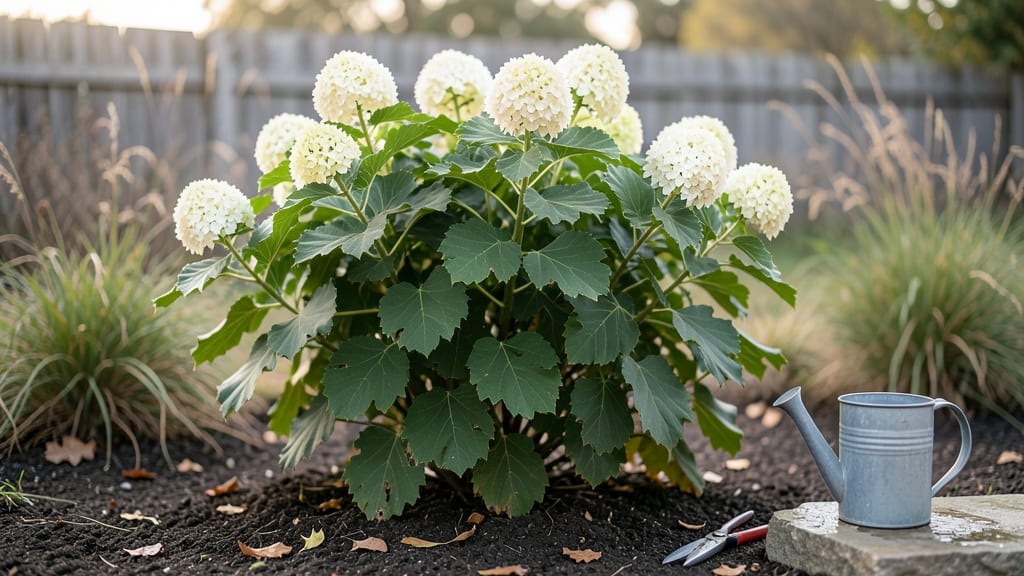
Oakleaf hydrangea colors transform your garden like a living watercolor palette. 🌿 Their foliage shifts from deep bronze in spring to fiery reds in fall, with creamy blooms that age to blush pink—all while requiring less fuss than most annuals.
This is the plant that keeps your landscape vibrant even when you forget to water. The secret lies in their three-season foliage that outshines flowers, plus blooms that last from summer into frost.
Pair deep purple oakleaf hydrangeas with silver foliage like lamb's ear for striking contrast, or let their burgundy tones complement goldenrod and black-eyed Susans. Containers? Try them with dusty miller for a dramatic height contrast.
You'll end up with a garden that feels alive year-round, where every season brings new colors without extra work. The foliage alone makes these shrubs worth growing—imagine that deep green turning to crimson by October, then staying stunning through winter's first frost.
Works in sun or shade, from foundation plantings to mixed borders. Here's how to make them the star of your garden without the high-maintenance drama.
📚 In This Guide
- What you need
- Instructions
- Tips and common mistakes
- Wrapping up and next steps
What you need
- ● Oakleaf hydrangea plants (1–3, depending on desired coverage; choose Hydrangea quercifolia varieties like 'Snow Queen,' 'Amethyst,' or 'Pee Dee').
- ● Well-draining potting mix or garden soil (amend with 2–3 inches of organic compost for nutrient-rich growth).
- ● Mulch (2–3 inches of shredded bark, pine straw, or wood chips to retain moisture and regulate soil temp).
- ● Balanced fertilizer (10-10-10 or slow-release granular; apply twice a year—spring and early summer).
- ● Pruning shears (clean, sharp bypass pruners for precision cuts).
- ● Gloves (heavy-duty gardening gloves to protect from thorns and soil).
- ● Watering can or hose with nozzle (deep watering 1–2 times per week; hydrangeas love moisture!).
- ○ pH test kit (optional but helpful—oakleaf hydrangeas thrive in acidic soil (pH 4.5–5.5) for vibrant colors).
- ○ Epsom salt (optional; 1 tablespoon per gallon of water monthly for deeper greens and richer blooms).
- ○ Stakes or cages (optional; supports young plants in windy areas).
How to maximize oakleaf hydrangea's season-long color shifts
Here's the simple approach I've used to coax stunning seasonal color changes from oakleaf hydrangeas—no special tricks required.
🌿 Step 1: Choose the Right Planting Location
Oakleaf hydrangeas thrive in partial shade—think 4-6 hours of morning sun with afternoon shade protection. That balance is key for their dramatic color shifts. I always plant mine where they get dappled light through nearby trees; the filtered sunlight keeps leaves vibrant without scorching.
Check your site in early spring before planting. If leaves already show signs of stress by midday (like crispy edges), move the location 2-3 feet farther from direct sun. The goal is to preserve that lush foliage while still getting enough light for blooms.
☀️ Step 2: Adjust Light Exposure for Color Control
For deeper burgundy-red fall colors, plant in more shade—even morning sun only works. The less direct light, the more intense the red pigmentation becomes. I've seen oakleaf hydrangeas go from chartreuse in summer to deep wine-red in fall when given just filtered light.
Want bluer flowers? Add 1-2 extra hours of sun during the growing season. The flowers won't change color dramatically, but the foliage will stay greener longer. Watch for leaves turning yellowish—that's your cue to move the plant 1 foot closer to shade immediately.
💧 Step 3: Water Deeply and Consistently
Water 1-2 times per week until the top 6 inches of soil feel moist—not soggy, just damp. Oakleaf hydrangeas hate dry spells, which cause leaves to curl and brown at the edges. I always water early morning so leaves have all day to dry, preventing fungal issues.
During heatwaves, increase to 3 times per week and add 2-3 inches of mulch around the base. The mulch keeps roots cool and retains moisture. You'll notice leaves stay plump and glossy instead of wilting or developing brown patches.
✂️ Step 4: Prune Strategically for Best Color
Prune right after flowering (late summer) to encourage next year's blooms and color. Remove 1/3 of the oldest stems at the base—they've already bloomed and won't produce vibrant fall color. I always use clean, sharp shears to avoid tearing stems.
Never prune in fall or winter—you'll cut off next year's flower buds. The goal is to keep the plant compact and bushy, which improves air circulation and prevents mold. You'll see brighter, more uniform color in subsequent seasons.
🌱 Step 5: Feed for Vibrant Color Shifts
Apply a balanced 10-10-10 fertilizer in early spring when new growth appears. Use 1 tablespoon per foot of plant height—so a 3-foot hydrangea gets 3 tablespoons. This gives the plant the nutrients it needs for bold foliage color changes.
Skip fall fertilization—it encourages tender new growth that won't survive winter. Instead, add 2 inches of compost around the base in early spring for slow-release nutrition. You'll notice more intense color shifts from summer to fall with this approach.
Tips & tricks for perfect oakleaf hydrangea color shifts
These simple tricks will help you coax the most dramatic seasonal color changes from your oakleaf hydrangeas with minimal effort.
Light Monitoring: Use a simple trick to track your plant's light exposure: place a small white card near the plant during peak sun hours. If the card shows only faint shadows by midday, your plant is getting enough filtered light. If it's fully shaded, move the plant closer to a light source—or add a sheer curtain if it's getting too much direct sun. This visual cue helps you adjust placement without guessing.
Seasonal Adjustments: In Step 2, when you're aiming for deeper burgundy colors, consider adding a lightweight shade cloth (30-40% shade) during the hottest afternoon hours. This mimics natural shade conditions and intensifies the red pigmentation without stressing the plant. I've seen the difference firsthand—plants under shade cloth develop a richer, more vibrant fall color compared to those in full morning sun alone.
Watering Wisdom: For Step 3's watering routine, I've found that using a moisture meter (or even a simple screwdriver) to check soil moisture at the 6-inch depth is more reliable than guessing. Push the screwdriver in—if it comes out clean, it's time to water. This prevents both underwatering (which causes leaf browning) and overwatering (which can lead to root rot). Early morning watering is key because it gives leaves plenty of time to dry before evening, reducing fungal risks.
Pruning Precision: When you're removing 1/3 of the oldest stems in Step 4, look for stems that are thicker and have already bloomed—they're the ones that won't contribute to next year's vibrant color. Cut just above a leaf node or bud where new growth can emerge. I always sanitize my shears with rubbing alcohol between cuts to prevent spreading disease. This careful pruning keeps your plant healthy and ensures those stunning seasonal color shifts year after year.
Pro Tips for Oakleaf Hydrangea Colors
- These simple tricks will help you coax the most dramatic seasonal color changes from your oakleaf hydrangeas with minimal effort.
- Light Monitoring: Use a simple trick to track your plant's light exposure: place a small white card near the plant during peak sun hours.
- Seasonal Adjustments: In Step 2, when you're aiming for deeper burgundy colors, consider adding a lightweight shade cloth (30-40% shade) during the hottest afternoon hours.
Frequently asked questions
Got questions about oakleaf hydrangea colors?
You’re not alone! Here are answers to the most common queries—from color shifts to care tips—so you can keep your plant looking its absolute best all season.
Why do oakleaf hydrangea leaves change color so dramatically?
Oakleaf hydrangeas are masters of seasonal color! Their leaves shift from deep bronze-red in spring, to lush green in summer, and finally to fiery orange-red in fall. This happens naturally due to anthocyanin pigments (the same compounds that make apples red) reacting to sunlight, temperature changes, and even stress. No extra effort needed—just enjoy the show!
When is the best time to plant oakleaf hydrangeas for vibrant colors?
Plant them in early spring or fall for the best results. Spring gives roots time to establish before summer heat, while fall planting lets them settle before winter dormancy. Avoid extreme heat or frost—both can stress young plants and dull their color potential. Pro tip: Amend soil with compost to boost nutrient uptake for richer hues!
Can I control or enhance the colors of my oakleaf hydrangea?
While you can’t force specific colors, you can optimize conditions for the most dramatic shifts:
- Sunlight: Plant in partial shade (morning sun + afternoon shade) to prevent leaf scorch while maximizing color intensity.
- Watering: Keep soil consistently moist (but not soggy)—drought stress can mute fall colors.
- Fertilizer: A balanced, slow-release fertilizer in early spring promotes lush foliage and vibrant pigments.
Why are my oakleaf hydrangea leaves turning brown or yellow?
Brown or yellow leaves usually signal stress, but don’t panic—here’s how to troubleshoot:
Issue
Likely Cause
Fix It!
Crispy, brown edges
Underwatering or too much sun
Water deeply 1–2x/week and move to partial shade.
Uniform yellowing
Overwatering or root rot
Let soil dry slightly between waterings and improve drainage.
Pale or dull leaves
Nutrient deficiency (often iron or nitrogen)
Apply a chelated iron supplement or balanced fertilizer.
Are there alternatives to oakleaf hydrangeas with similar fall color?
If you love oakleaf hydrangeas but want options, try these low-maintenance, high-color plants:
- Smoke bush (Cotinus): Fiery orange-red foliage and smoky plumes (drought-tolerant!).
- Japanese maple (Acer palmatum): Delicate lace-like leaves in crimson, orange, or purple.
- Sweetspire (Clethra alnifolia): Fragrant summer blooms + deep red fall foliage.
- Ninebark (Physocarpus): Tough shrub with gold, orange, or purple fall colors.
Wrapping up and next steps
The oakleaf hydrangea’s effortless, ever-changing hues—from fiery reds to deep purples—prove that stunning color doesn’t require high-maintenance care. Whether you’re drawn to its season-long drama or its low-fuss charm, this plant is a standout for any garden.
Ready to elevate your outdoor space? Plant one this season and let nature’s palette do the work for you! 🌿✨
- Next step: Pick your favorite color phase and choose a variety that thrives in your climate.
- Pro tip: Pair it with complementary plants (like ferns or azaleas) for a showstopping seasonal display!