
Watering
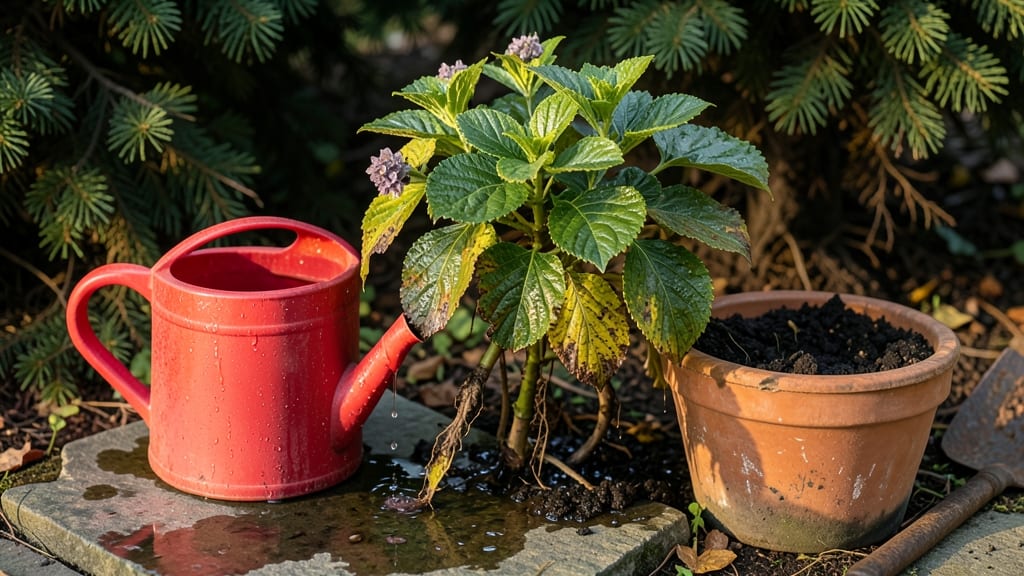
Even the most overwatered hydrangeas can bounce back—here’s how to nurse them back to vibrant life with three foolproof tricks. 💚
The problem starts when roots suffocate in soggy soil, starving the plant of oxygen. You’ll spot it first in the leaves: yellowing, wilting, or leaves that feel mushy when touched. The good news? Hydrangeas bounce back fast once you adjust watering, improve drainage, and prune the damaged parts.
Within a week, you’ll see new green growth pushing through, and by summer, those blooms will be back—vibrant and fuller than before. The key is checking soil moisture before watering (stick your finger in—if it’s damp, wait) and giving roots room to breathe with well-draining soil.
For severe cases where the stems feel hollow or the plant won’t perk up, it might need professional help. But in most cases, these steps work foolproof—even for my famously overwatering-prone hydrangeas.
The Hidden Triggers Behind Soggy Hydrangeas
Overwatering hydrangeas might seem like a harmless gardening mistake—after all, who doesn’t love a thirsty plant? But when roots drown in excess moisture, a cascade of problems follows, leaving your lush blooms wilting and your soil smelling foul.
Let’s break down the real reasons this happens, so you can fix it before it’s too late.
Hydrangeas thrive in well-draining soil, but if your garden beds or pots lack proper drainage, water pools around the roots instead of flowing away. This creates an oxygen-deprived zone where roots suffocate—leading to:
- Root rot: Fungal pathogens like Phytophthora and Pythium flourish in waterlogged soil, attacking roots and cutting off nutrient uptake. 💡 Pro tip: Test drainage by digging a 6-inch hole, filling it with water, and timing how long it takes to drain. If it’s slower than 4 hours, amend your soil with perlite, sand, or compost.
- Compacted soil: Heavy clay or tightly packed dirt blocks water escape, trapping moisture. ✨ Fix it: Aerate with a garden fork or mix in organic matter (like coconut coir) to improve porosity.
- Container constraints: Pots without drainage holes act like bathtubs for your hydrangeas. 🔥 Warning: Even "self-watering" containers can overwater if not monitored.
Hydrangeas don’t need daily drinks—they’re drought-tolerant once established! But well-meaning gardeners often water on a schedule rather than checking soil moisture, leading to:
- Ignoring weather: Rainy days + your watering routine = double the moisture. 🌡️ Action step: Use the "finger test": Stick your finger 2 inches into the soil. If it’s damp, wait.
- Shallow watering: Light sprinkles only wet the top inch of soil, encouraging roots to stay near the surface where they dry out quickly—then you water again, repeating the cycle. 👨🍳 Fix: Water deeply (1–1.5 inches) but infrequently, encouraging roots to grow downward where moisture is stable.
- Automatic systems gone wrong: Drip irrigation or sprinklers set on timers can drown plants if left running during rain or in high-humidity climates. 🎯 Tip: Adjust settings seasonally and use rain sensors.
Your hydrangeas might be getting more water than they need because of their location’s unique conditions. Here’s how:
- Humid climates: Air already saturated with moisture means soil stays damp longer. 💡 Solution: Space plants 3–5 feet apart for airflow and avoid mulching too heavily (stick to 2–3 inches).
- Shady spots: Less sunlight = slower evaporation. Hydrangeas in full shade may need 20–30% less water than those in partial sun. 🔥 Watch for: Yellowing leaves (a sign of overwatering) vs. crispy edges (underwatering).
- Windbreaks: Trees or fences can trap moisture, creating a "greenhouse effect." ✨ Workaround: Prune nearby foliage to improve airflow.
Next up: How to tell if your hydrangeas are truly overwatered (and what to do about it!).
Revive Your Hydrangeas Fast
Overwatered hydrangeas may look sad, but with the right care, they can bounce back to their vibrant best! The key is identifying the root cause and taking action—whether it’s adjusting your watering routine, improving drainage, or giving your plants a little TLC.
Below, we break down practical fixes for each common issue, plus prevention tips to keep your hydrangeas thriving long-term.
If your hydrangeas have yellowing leaves, mushy stems, or a foul smell at the base, root rot is likely the culprit. Overwatering suffocates roots by cutting off oxygen, leading to fungal growth.
🔥 Step 1: Stop Watering Immediately
- Let the soil dry out completely before watering again. Stick your finger 2–3 inches deep—if it’s damp, wait.
- Avoid watering on a schedule; instead, check moisture levels every 2–3 days in hot weather.
🍳 Step 2: Improve Drainage
- Repot if needed: If your hydrangea is in a container, move it to a pot with drainage holes (or add a layer of gravel at the bottom).
- Amend garden soil: Mix in perlite, sand, or compost (20–30%) to loosen heavy clay soil.
- Raise the plant: Elevate containers on feet or bricks to prevent water pooling.
👨🍳 Step 3: Trim Damaged Roots & Leaves
- Snip away: Use sterilized scissors to cut off:
- Black, mushy roots (healthy roots are firm and white).
- Yellow/brown leaves (keep only green stems for regrowth).
- Disinfect tools with rubbing alcohol to avoid spreading disease.
⏰ Step 4: Let It Recover
- Place the plant in partial shade (hydrangeas hate direct sun when stressed).
- Water lightly only when the top 1–2 inches of soil are dry.
- Wait 1–2 weeks before fertilizing—roots need time to heal.
If your hydrangeas are drooping but not yellow, they might be suffering from fungal issues (like powdery mildew) or bacterial leaf spot—common when water lands on leaves.
🌡️ Fix: Water at the Base, Not the Canopy
- Use a soaker hose or drip irrigation to deliver water directly to the soil.
- Water early in the day (before 10 AM) so leaves dry quickly.
- Avoid overhead sprinklers—they encourage fungal growth.
✨ Prevention Tips
- Space plants 3–4 feet apart for airflow.
- Prune for airflow: Trim back dense growth to reduce humidity pockets.
- Apply fungicide (like neem oil or copper spray) preventatively in humid climates.
Even after recovery, hydrangeas are sensitive to soggy soil. Here’s how to keep them happy:
| Mistake | Fix It |
|---|---|
| No drainage holes | Repot or add a gravel layer at the bottom of containers. |
| Watering daily | Switch to deep, infrequent watering (1–2 times per week in summer). |
| Heavy, compacted soil | Mix in compost or coconut coir to improve aeration. |
| Ignoring mulch | Add 2–3 inches of mulch (wood chips or straw) to retain even moisture. |
💡 Pro Tip:
Hydrangeas in containers dry out faster than in-ground plants. Check soil moisture daily in summer—containers need more frequent watering but better drainage than garden beds.
Before jumping to fixes, rule out other issues:
- Underwatering? (Brown, crispy edges? → Water deeply.)
- Pests? (Aphids or spider mites? → Spray with soapy water.)
- Nutrient deficiency? (Pale leaves? → Fertilize with acid-loving plant food in spring.)
With these steps, your hydrangeas should perk up in 2–4 weeks—just give them time and consistent care! 🌿✨
Frequently asked questions
How can I tell if my hydrangeas are overwatered vs. underwatered?
Check the leaves and stems: overwatered hydrangeas show yellowing leaves, mushy stems, and may have a foul smell at the base. Underwatered plants have brown, crispy leaf edges and may wilt during the day but recover at night. Pro tip: Gently squeeze a stem—if it feels soft or hollow, it's likely overwatered.
My hydrangea leaves are yellow but the plant still looks healthy. Is this overwatering?
Not necessarily! Yellow leaves can also signal nutrient deficiencies (like iron chlorosis) or fungal issues. Check the roots: If they're firm and white, it's likely a nutrient issue. If they're black/mushy, you're overwatering. For yellow leaves with healthy roots, try adding chelated iron fertilizer or adjusting soil pH.
Can I save a hydrangea that's completely wilted and mushy?
Possibly! First, cut off all black/mushy stems and leaves, then repot in fresh, well-draining soil. Place it in bright indirect light and water only when the top 2 inches of soil are dry. If the remaining stems are firm and green, new growth should appear in 2-3 weeks. If not, it may be too far gone. Severe cases might need professional help.
How often should I water hydrangeas in containers vs. garden beds?
Containers dry out much faster—check soil moisture daily in summer and water when the top 1 inch is dry. Garden hydrangeas need watering when the top 2 inches are dry (usually 2-3 times per week in summer). Always use pots with drainage holes and avoid letting them sit in saucers of water.
Will mulch help prevent overwatering?
Actually, mulch can worsen overwatering if applied too thickly (over 3 inches). The right amount (2-3 inches) helps regulate soil moisture, but too much traps humidity against the plant. For hydrangeas, use organic mulch like wood chips and keep it 2 inches away from the stem to prevent rot.